Venerable
Philip of Zell
A holy hermit of Zell in Germany from the age of the undivided Church.
- Era
- 8th century
- Place
- Zell
- Order
- Venerables
Life
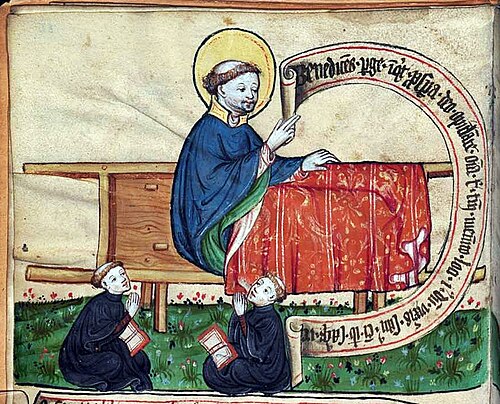
Philip of Zell (Philipp) was an Anglo-Saxon priest and hermit who died after 750 at Zell in the Palatinate, Germany. He is venerated as a saint in the diocese of Speyer and is regarded as patron for the blessing of children in marriage.
He is one of the early heralds of the faith in the Palatinate; his grave was once the most important pilgrimage place of the region. Zell and the Zellertal take their names from Philip's "cella". In the time of King Pepin (751 to 768), returning from Rome, where a pope had ordained him priest, he settled here as a hermit. In place of a pagan cult site he built a chapel dedicated to the Archangel Michael, with a cell, and planted an orchard. Companions soon gathered. At nearby Großbockenheim, according to legend, he also built a Christian chapel where there had been an ancient spring sanctuary, a place of pilgrimage to this day.
He was venerated as a saint already in life, many miracles are told of him, and the stream of pilgrims did not cease after his death. His life was written around the year 850 by an unnamed monk, who invokes the testimony of the inhabitants and of the priest Horoskolf, disciple and companion of Philip, who outlived his spiritual father and reached a very great age. Around 850 the relics were raised and placed in the newly built church of the Saviour; Archbishop Hrabanus Maurus of Mainz wrote the altar inscriptions, and through this Philip was officially honored as a saint. The cult was devastated by the Hungarian invasions of the 10th century and restored in the 970s. After 1749, when the pilgrimage church was completed, the cult revived.