Venerable
Simon the Myrrh-streamer
Athonite monk
Athonite monk of the thirteenth century, who died in 1287; a myrrh-streaming saint commemorated on 28 December.
- Feast
- December 28old style January 10
- Reposed
- 128713th century
- Place
- Simonopetra, Mount Athos
- Order
- Venerables
Life
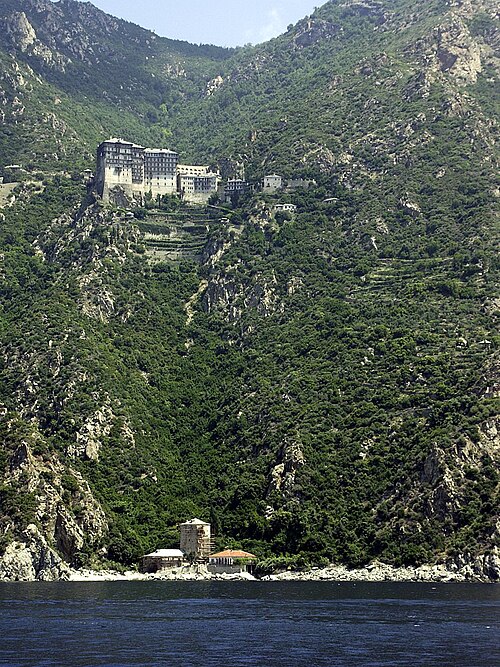
Venerable Simon (Symeon) the Myrrh-streamer was an Athonite monk of the thirteenth century, founder of the Simonopetra Monastery on the Holy Mountain Athos. His relics streamed myrrh, whence his name. He is commemorated on 28 December by the old calendar, which is 10 January by the new.
Life
The Synaxarion says that Simon fled the world and withdrew to Athos, where he first lived under the guidance of an old monk, leading a strict life. Out of humility he asked a blessing to live in solitude and withdrew as a hermit into a small, damp cave near the rock now called Simonopetra, Simon's Rock. One night, a few days before Christmas, in a dream or vision, the Mother of God is said to have asked him to build a monastery on the rock, promising to protect it and to look after him and the monastery. According to another version, he saw one night a star so bright that he took it for the Star of Bethlehem. He watched it for several nights and saw it motionless, at first thinking it a demonic temptation, but on Christmas Eve the star stood over a high rock and a voice told him to lay the foundations of the monastery there, for the salvation of souls. He built the monastery and named it New Bethlehem, dedicated to the Nativity of Christ.
The monastery says it was founded in 1267. While it was being built, three brothers from a rich family of Macedonia (or Thessaly), hearing of his virtues, gave him their inherited wealth and entered the monastery as disciples. The number of monks grew. The Synaxarion tells that once pirates landed and wished to plunder the monastery. Abbot Simon went to meet them to soften them, but the pirates rushed to kill him and were struck blind, and were then healed by the hermit's prayer. Afterward they were baptized and became monks.
His end and veneration
His date of birth is unknown, but he is said to have lived in the second half of the thirteenth century, and the monastery's records say he died in 1287. Some Serbian sources give 28 December 1257, though others 1287. The British Museum has proposed a life between about 1200 and 1300. He remained in the monastery to the end, working miracles in life and after death. His tomb streamed myrrh with healing power for a long time.
In the second half of the fourteenth century the daughter of the Serbian despot John Uglješa, who resided at Serres, was delivered from an unclean spirit through the intercession of Saint Simon, and in gratitude the despot endowed the monastery with many properties and made it an important monastic foundation. Simonopetra remains dedicated to the Nativity of Christ.
Commemorated the same day December 28
 Nicanor the DeaconApostle · One of the Seven DeaconsDec 28
- Theonas of AlexandriaSaint · Patriarch of AlexandriaDec 28
 Anthony of LérinsVenerable · Hermit of the Lérins IslandsDec 28
Cornelius of KrypetskVenerable · Monk of Krypetsk MonasteryDec 28
 Arephas NasonovHieromartyr · PriestDec 28
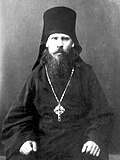 Paisius of PechengaVenerable Martyr · Abbot of Pechenga MonasteryDec 28
- Agatha of NicomediaVenerable MartyrDec 28
- Alexander DagaevHieromartyrDec 28
- Alexander TsitseronovHieromartyrDec 28
- Arcadius ReshetnikovHieromartyrDec 28
- BabylasVenerableDec 28
- Castor and CompanionsHoly MartyrsDec 28