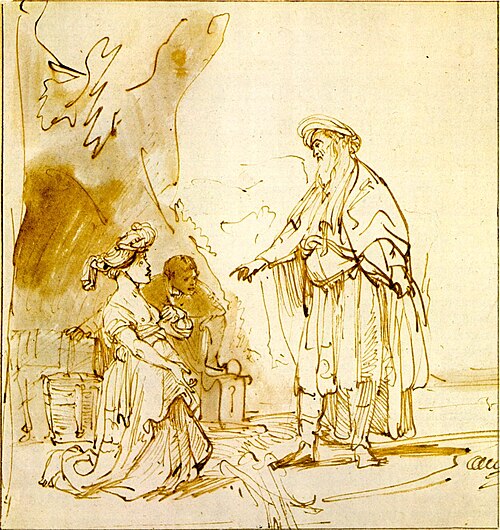
Righteous
Boaz
The Righteous
Husband of Ruth the Moabite, ancestor of King David and of the Lord according to the flesh.
- Born
- 1283 BC12th century BC
- Order
- The Righteous
Life
The righteous Boaz was a wealthy landowner of Bethlehem, the husband of Ruth the Moabite, and an ancestor of King David and, according to the flesh, of the Lord Jesus Christ. His story is told in the Book of Ruth, and Saint Matthew names him in the genealogy of Christ. The Church remembers him among the righteous forefathers of the Lord.
Boaz and Ruth
Boaz was the son of Salmon, of the tribe of Judah, and, according to the Gospel of Matthew, of Rahab (Matthew 1:5). He was a kinsman of Elimelech, the late husband of Naomi, and lived at Bethlehem in the time of the judges. The Jewish historian Josephus places him in the days of the high priest Eli.
At the start of the barley harvest Ruth, the widowed Moabite daughter-in-law of Naomi, went to glean in the fields, as the poor were allowed to do, and came to the field of Boaz. When he learned who she was and how she had stayed faithful to Naomi, he told her to remain in his fields, ordered his workers not to trouble her, invited her to eat with the reapers, and had grain left on purpose for her. He blessed her that the Lord, under whose wings she had come to take refuge, would reward her fully.
On Naomi's advice Ruth went to Boaz at the threshing floor and asked him to act as her kinsman and redeemer. Boaz agreed, but said there was a nearer kinsman. The next day he gathered ten elders of the city at the gate. The nearer kinsman declined to redeem the land of Elimelech and to take Ruth, and Boaz did both. The elders and people blessed him. Ruth bore a son, Obed, who became the father of Jesse and the grandfather of King David.
Other traditions
The Church does not preserve anything about the end of his life. The name Boaz is also that of the left bronze pillar before the portico of Solomon's Temple (1 Kings 7:21). In the Talmud some rabbis identify him with the judge Ibzan of Bethlehem. This is a rabbinic view and not Church tradition.