Right-Believing
Eorpwald of East Anglia
King of East Anglia
King of East Anglia from about 624, son of Rædwald, who was assassinated around 627.
- Reposed
- 6277th century
Life
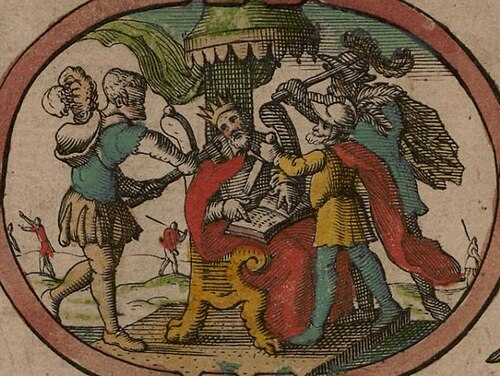
Saint Eorpwald was king of East Anglia, successor of his father, Rædwald, from the year 624, killed around 627 (or 632) by a pagan noble. He is regarded as a martyr, the first early English king to suffer death for the Christian faith.
He was of the dynasty of the Wuffingas, named after the semi-historical king Wuffa. Little is known of his life or of his short reign, because little documentary evidence about the East Anglian kingdom has survived; the primary source is Bede's Ecclesiastical History of the English People, of the eighth century. He was the son of Rædwald, who in 616 defeated and killed Æthelfrith of Northumbria and installed Edwin as king in Deira, becoming the most powerful king among the rulers of the English kingdoms. Eorpwald was probably the younger brother of Rægenhere, who fell in battle in 616, and became his father's heir only after that. Some scholars think that he had a half-brother or brother, Sigeberht, sent into exile, to ensure that Eorpwald became king.
Eorpwald was still a pagan when he became king of the East Angles, after the death of Rædwald, around 624. His paganism created tension between Christian and pagan factions within the kingdom, and his influence was reduced. In 627 King Edwin undertook the conversion of the peoples of Northumbria, Lindsey and East Anglia, and at his urging Eorpwald was, according to Bede, “persuaded to accept the Christian faith and sacraments.” His baptism is calculated to have occurred in 627, from the years that Felix of Burgundy held the East Anglian bishopric; the Anglo-Saxon Chronicle, however, gives the year 632.
Soon after his conversion he was killed by Ricberht, a pagan noble, who may have succeeded him and ruled for three years. The motive for the murder was probably political as well as religious. In 1939 a magnificent ship burial was discovered under a large mound at Sutton Hoo, in Suffolk. Although Rædwald is usually considered to have been buried with the ship, another possibility is that it was Eorpwald, or that he had his own ship burial nearby.