Venerable
Eulogius of the Scete
A 7th-century Egyptian ascetic and priest, disciple of Patriarch John the Almsgiver, known for his vision.
- Born
- 5506th century
- Order
- Venerables
Life
Venerable Eulogius of the Scete (Abba Eulogius) was an Egyptian ascetic of the seventh century, whose life is described in the Paterikon of the Scete. He was a disciple of the Patriarch of Alexandria John the Almsgiver and held the rank of priest. Our sources give no day of commemoration; the year 550 on the record is not supported by the source.
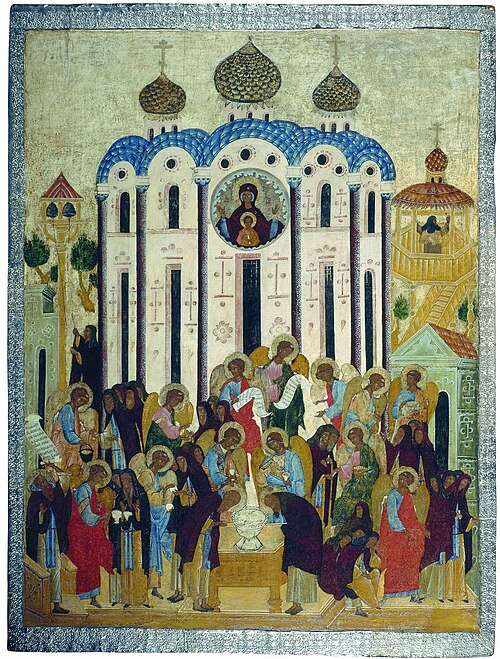
Eulogius became known through his vision, which became one of the subjects of monastic iconography. The Paterikon tells that once, at the all-night vigil, Eulogius saw angels coming out of the altar with crystal baskets full of gold, silver and copper coins, with prosphora, whole and broken into crumbs, and a small golden vessel of myrrh and a golden censer with very fragrant incense. The angels distributed to the monks who were at the service the gifts from the baskets, anointed some with myrrh or censed them, and to others the angels gave nothing. Through prayer the meaning of the angels' acts was revealed to Eulogius: those who received a gold piece are those who on Wednesdays, Fridays, Sundays and the divine feasts keep vigil soberly from evening to morning; those who received silver coins, those who keep vigil from midnight to morning; those who received a copper coin, those who are compelled to psalmody; those who received whole prosphora devote themselves to reading books; the crumbs were received by beginners who have not yet entered the perfect monastic life; those anointed with myrrh are those obedient in all things to their father and given to the service of all, whose sweat and labours are reckoned before God as myrrh; those censed with incense are those given to rumour, who come to their senses only when they enter the church; nothing was received by those careless of their salvation, who do not resist evil thoughts and do not cleanse their hearts of passions, but have given themselves to love of money and gluttony; those who left in the church the gifts received and went away empty-handed are those who occupy themselves with Hellenic books, the sciences of this world, given to pride, vanity and pleasing men.
The best known depiction of Eulogius' vision is the fresco of Dionysius, made in 1502 for the cathedral of the Nativity of the Mother of God of the Ferapontov monastery. The fresco is placed beside the prothesis, in the left altar of the cathedral, which underlines the liturgical meaning of this subject. Dionysius made a composition of a group of monks without haloes, standing in two tiers on a conventional architectural background, around an altar with a golden cross surrounded by radiance. Among the monks are angels distributing to them the gifts, according to Eulogius' vision. Dionysius omitted all the narrative details of the vision, without even singling out Eulogius among the monks or showing the difference of the gifts distributed by the angels; he made the main emphasis the liturgical unity of the earthly and heavenly Church, underlined by the light from the cross lying on the altar, which symbolizes the Tabor light described in the Gospels. In other fresco and icon depictions (the Serbian monastery of Joshanica, the Tikhvin monastery, the church of the Entry at Solvychegodsk and others), the emphasis is placed on the narrative details: Eulogius is singled out, to whom an angel explains what was seen, the monks' gifts are various, and some are wholly deprived; scrolls with texts explaining the instructive meaning of the composition are put into the hands of Eulogius and the angels.