Righteous
Lamech
The Patriarch
Patriarch before the flood, son of Methuselah and father of Noah.
- Reposed
- 2110 BC22nd century BC
- Place
- Mesopotamia
- Order
- The Righteous
Life
Lamech was one of the patriarchs before the flood, of the line of Seth, the son of Methuselah and the father of Noah. The Book of Genesis places him eighth in the line of Adam's descendants, and the holy Evangelist Luke counts him among the ancestors of the Lord Jesus Christ (Luke 3:36). He must not be confused with Lamech of the line of Cain, mentioned in Genesis 4:18-24. The Church honours him among the holy forefathers of the Lord.
His life, according to Scripture
According to the Hebrew (Masoretic) text, Lamech was a hundred and eighty-two years old when Noah was born. He lived five hundred and ninety-five years afterward, seven hundred and seventy-seven in all (Genesis 5:28-31). The Septuagint, which the Orthodox Church follows, gives other numbers: a hundred and eighty-eight years at the birth of Noah and seven hundred and fifty-three in all. By the chronology of the Hebrew text, Lamech died five years before the flood, and Adam was still alive during the first fifty-six years of his life.
The word at the birth of Noah
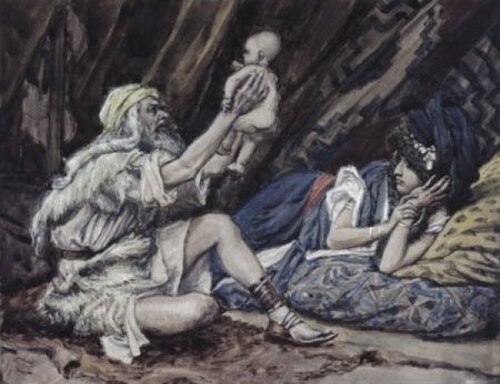
When his son was born, Lamech named him Noah and said that this one would bring comfort from the work and the toil of their hands, because of the ground that the Lord had cursed (Genesis 5:29). The name Noah is tied in Hebrew to the root of the words for "rest" and "comfort." After the flood God promised that He would never again curse the ground because of man (Genesis 8:21). The sons of Noah were Shem, Ham and Japheth.
The two Lamechs
Genesis mentions two men of this name. The first, of the line of Cain and son of Methushael, had two wives, Adah and Zillah, and was the father of Jabal, Jubal and Tubal-cain. His song speaks of vengeance seventy-sevenfold (Genesis 4:23-24). The second is Lamech of the line of Seth, who is the subject of this life.
Veneration
The Church remembers Lamech with the other patriarchs before the flood, on the Sundays before the Nativity of the Lord. Scripture says no more about him.