Venerable
Panagis Basias
Priest of Lixouri
A priest of Lixouri on Kefalonia, who reposed in 1883.
- Feast
- June 7old style June 20
- Reposed
- 188819th century
- Place
- Cephalonia
- Order
- Venerables
Life
Saint Panagis Basias was a priest of Lixouri on the island of Kefalonia, and he is venerated as a venerable saint. He was born in 1801 at Lixouri, to pious parents of good family, Michael Typaldos-Basias and Regina Dellaporta. He learned Italian, French and Latin and trained in philosophy and theology. While still young he was made a reader and worked as a teacher. Moved by the sermons of Kosmas Flamiatos and Eusebios Panas, who saw in English rule over the Ionian Islands a threat to the Orthodox faith of the inhabitants, he left the public school and taught at home.
At twenty, after his father's death, drawn by the example of Saint Gerasimus and Saint Anthimus, he went to Xiroskopelo, a small island that the English used as a place of exile for clergy. He did not stay long, for his widowed mother and his sister begged him to return; he came back into the world as a monk, but his whole life was an ascetic struggle. In 1836 he was ordained deacon and priest, with the name Paisios, by Archbishop Parthenios Makris. He sought no parish, and usually served in the chapel of Saint Spyridon at Platys Gialos, where the faithful came for the liturgy and for his fervent sermons. He was merciful and a support to the weak, and he received the gift of prophecy. When the report of his wonders had spread, to escape human praise he took on the guise of a fool for Christ. For five years he lay ill, blessing and counselling those who visited him day and night, among them the new Archbishop Germanos Kalligas, to whom he foretold his rise to the throne of Athens.
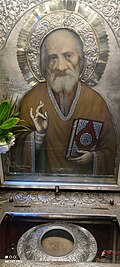
He fell asleep in 1888 (the list in the calendar gives the year 1883), and Metropolitan Germanos Kalligas gave the funeral oration. His relics were raised on 6 June 1976 and are kept in a silver reliquary in the church of Saint Spyridon at Lixouri, where his tomb also lies. The Ecumenical Patriarchate canonized him on 4 February 1986. He is commemorated on 7 June (new style).
Commemorated the same day June 7
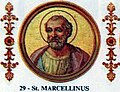 Marcellinus of RomeSaint · Bishop of RomeJun 7
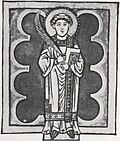 Cyriacus of RomeHieromartyr · Deacon of RomeJun 7
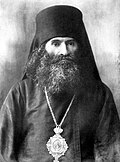 Andronik of PermHieromartyr · Archbishop of PermJun 7
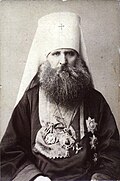 Joannicius RudnevSaint · Metropolitan of Kiev and GaliciaJun 7
 Daniel of ScetisVenerableJun 7
 Paisios BasiasVenerableJun 7
- Benjamin LukaninHieromartyr · PriestJun 7
- Abramius of KozheozeroVenerableJun 7
- Alexander MakhetovHieromartyrJun 7
- Alexander OsetrovHieromartyrJun 7
- Alexander PreobrazhenskyHieromartyrJun 7
- Alexander ZuevMartyrJun 7