Hieromartyr
Romanus of Caesarea
Deacon of Caesarea
Deacon of Caesarea, martyred at Antioch in the persecution of Diocletian.
- Feast
- November 18old style December 1
- Reposed
- 3034th century
- Place
- Antioch
- Order
- Martyrs
Life
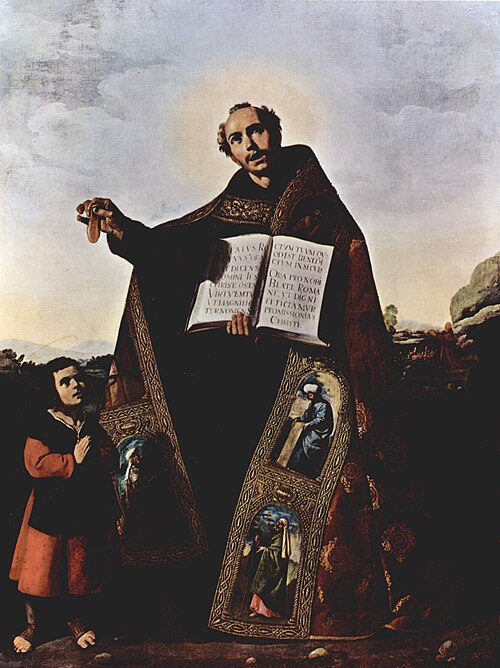
The Holy Hieromartyr Romanus was a deacon of the Church of Caesarea in Palestine and received the crown of martyrdom at Antioch, in 303 or 304, at the beginning of the persecution of Diocletian. He is also called Romanus of Antioch.
According to the sources, Romanus served at Caesarea in Palestine but lived at Antioch, where, in the midst of the persecution, he encouraged the Christians to stand firm. Once, seeing that some Christians in prison were ready to worship idols to escape their torments, he began to urge them loudly to be steadfast and faithful to Christ to the end. According to other accounts, at a pagan festival he rebuked those who worshipped idols. He was seized and condemned to be burned alive, but a heavy rain put out the fire. He was brought before the emperor Galerius, who was then at Antioch, and at his command Romanus's tongue was cut out, but, tradition says, he went on speaking clearly even without a tongue, urging all Christians to strength and courage. He was tortured in various ways in prison and finally strangled. Eusebius writes of his martyrdom in the Martyrs of Palestine.
The poet Prudentius tells other details and gives him a companion in martyrdom, Barulas, a seven-year-old boy who was whipped and beheaded for his Christian faith, and is venerated as a child martyr. For this reason some historians, among them Baronius, thought there were two martyrs named Romanus at Antioch, although probably there was only one, the one Eusebius mentions. Prudentius added legendary features, and the link between the martyrdom of Barulas and that of Romanus is probably arbitrary. Prudentius wrote in honour of Romanus a hymn of 1140 lines, the tenth in his Peristephanon. A church in Seville, San Román, bears his name. His feast is on 18 November, together with Barulas.
Commemorated the same day November 18
 NoahRighteous · The RighteousNov 18
 Odo of ClunyVenerable · Abbot of ClunyNov 18
 Alphaeus and ZacchaeusHoly MartyrsNov 18
- Constant of IrelandMartyrNov 18
- John PryakhinNew MartyrNov 18
- Maximus of MainzHieromartyr · Bishop of MainzNov 18
- Anastasius of ParamythiaSaintNov 18
- Alphaeus of Caesarea in PalestineMartyrNov 18
- Amandus and AnselmHoly VenerablesNov 18
- Anastasius of EpirusNew MartyrNov 18
- Aude of ParisSaintNov 18
- BarulasMartyrNov 18