Saint
Vassian of Alatyr
He reposed in 1698 at Alatyr, Chuvashia; venerated by the faithful, without synodal canonization.
- Reposed
- 169817th century
- Place
- Alatyr, Chuvashia
Life
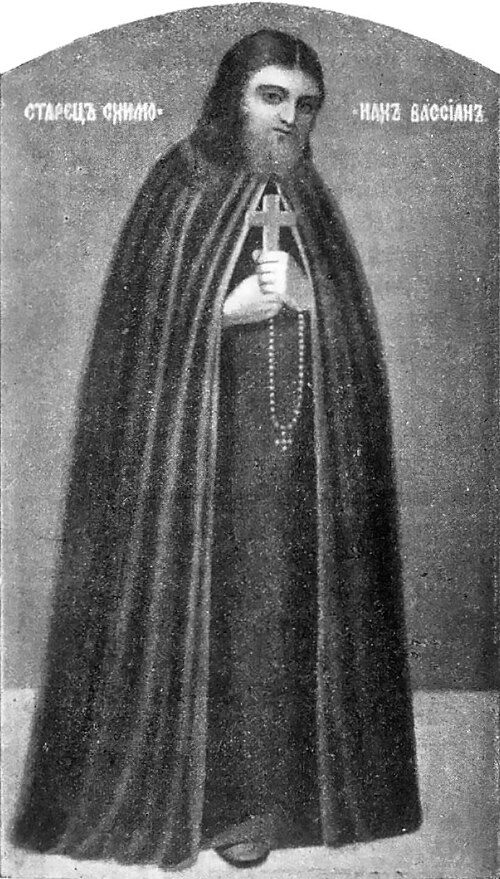
Schemamonk Vassian of Alatyr (†1698) was a monk of the Holy Trinity Monastery at Alatyr in Chuvashia. He is venerated by the faithful, without synodal canonization; his incorrupt relics were found in 1748.
On 26 August 1748, when the ground was being cleared for the building of the Holy Trinity cathedral of the monastery, a coffin was found with the incorrupt remains of a schemamonk. For a week they lay in the open air, then were carried to the wooden church of Saints Zosimas and Sabbatius and left there for the winter of 1748-1749. Elderly monks and townspeople who remembered Vassian, an ascetic at the end of the seventeenth century, said that the remains were his. In May 1749 the relics were examined. In the list of builders of the monastery at the end of the seventeenth century a Vassian appeared, but it could not be proved that he was the same as the schemamonk. The Holy Synod ordered Bishop Veniamin Putsek-Grigorovich of Nizhny Novgorod and Alatyr to bury the remains.
Despite this order the veneration of the schemamonk did not cease. He appeared to the suffering and asked them to serve a memorial service at the grave; the sick were healed. Because of the many miracles at the grave, on 25 October 1904 Bishop Gurias Burtasovsky of Simbirsk charged Archpriest Nikolai Diomidov, dean of the first district, with verifying the miracles recorded in a book called the "Memorial," kept in the monastery. On 8 October 1905 the archpriest presented a report which confirmed the testimonies of those healed. The abbot of the monastery, Archimandrite Gabriel, enlarged the crypt and made in it a chapel of Saint Demetrius of Rostov, consecrated on 5 December 1905 by Bishop Gurias. On the tomb were placed iron chains with a cross, found in a nearby well. According to tradition, the ascetic wore chains, but before his death, shunning human glory, he tried to hide them.
In the 1910s further testimonies of miracles and healings through prayers to him were gathered, but the revolution of 1917 halted the glorification. In the 1920s the monks hid the relics on the monastery grounds; as of 2004 the place where they are is unknown.