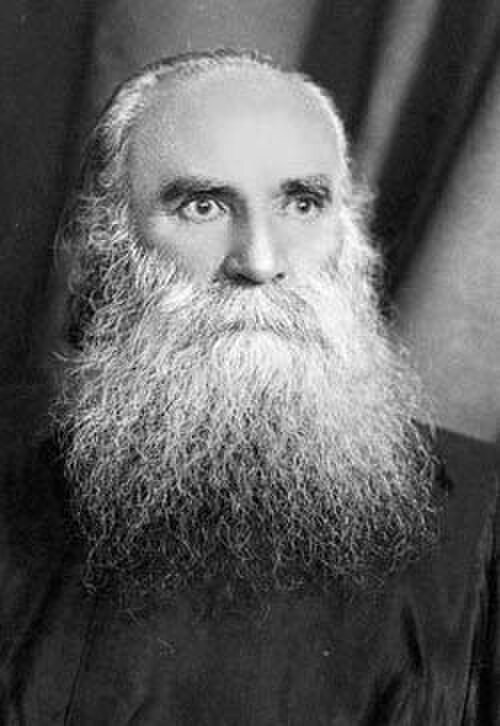
Saint
Vasyl Lypkivsky
First autocephalous Metropolitan of Kyiv
Founder of the Ukrainian Autocephalous Orthodox Church and its first Metropolitan of Kyiv, died in 1937.
- Reposed
- 193720th century
- Place
- Kyiv
- Order
- Hierarchs
Life
Vasyl Lypkivsky was a Ukrainian priest and churchman who lived from 1864 to 1937. He is known as the founder and first primate of the Ukrainian Autocephalous Orthodox Church, with the title of Metropolitan of Kyiv and All Ukraine, from 1921 to 1927.
He was a preacher, teacher, writer and translator of the services into Ukrainian. He was shot by the NKVD in 1937, and the Ukrainian Autocephalous Orthodox Church numbered him among the hieromartyrs. His consecration, performed without bishops, was not recognised by the canonical Orthodox Churches.
Family and childhood
Vasyl Kostiantynovych Lypkivsky was born in 1864 in the village of Popudnia in the Uman district of Kyiv province (now Cherkasy region). The sources give different dates of birth: 19 March (7 March Old Style) or 7 September.
His father, Kostiantyn, was a priest and dean, and his mother was named Viktoria. His grandfather Fotiy and great-grandfather Lavrentiy had also served, as priest and as cantor, in the village of Mali Dmytrushky in the same region.
A family tradition held that the Lypkivsky line came from Galicia, near the river Lypa. Two brothers of the family were said to have been carried away by a flood on the Bug river into the steppes of Podolia, where they lived in poverty until one of them was received by the Metropolitan of Kyiv and later made a priest.
Education and first ministry
Vasyl studied at the Uman theological school from 1873 to 1879 and at the Kyiv Theological Seminary from 1879 to 1884. As one of the best students he was sent to the Kyiv Theological Academy, graduating in 1889 as Candidate of Theology with a thesis on the struggle of the Maccabees against the Syrian kings.
He then taught religion at Shpola and at Cherkasy. On 20 October 1891 he was ordained priest and also served at the cathedral in Cherkasy.
In 1892 he was appointed rector of the cathedral in Lypovets and dean of the churches of the town and surrounding villages. He was also inspector of the district's parish schools, where he opened several new schools, among them a school for girls and one for training teachers.
During these years he also wrote studies of local history, on old customs, church brotherhoods and the return of Uniate communities to Orthodoxy. He stayed in Lypovets for about eleven years.
In Kyiv
In 1903 he was raised to archpriest and appointed director of the newly founded church teachers' school in Kyiv, which trained teachers for parish schools. In 1905, during the first Russian revolution, he was removed from this post because of his Ukrainian national convictions.
On 19 September 1905 he was appointed priest at the Church of the Protection of the Mother of God in the Solomianka district of Kyiv, where he later became rector, and he continued to teach in schools. From his youth he had criticised the close bond between the Church and the imperial administration, and the use of Church Slavonic in the services in Ukraine.
The movement for autocephaly
At the beginning of 1917, together with other clergy and Archbishop Alexy (Dorodnitsyn), he stood at the head of the movement for the autocephaly of the Orthodox Church in Ukraine. He took part in the congresses of clergy and laity in 1917, in the Brotherhood of the Resurrection of Christ, and in the All-Ukrainian Orthodox Church Council.
The movement called for the restoration of elective and conciliar principles in church life, services in Ukrainian, and churches built in a national style. An All-Ukrainian church council planned for Christmas 1918 was postponed several times because of the war.
On 22 May 1919 (9 May Old Style), in the Saint Nicholas Cathedral in Kyiv, Vasyl Lypkivsky celebrated the first Divine Liturgy in Ukrainian, with a choir led by the composer Mykola Leontovych. For this the Russian bishops forbade him to serve and deprived him of his priestly rank.
From July 1919 he was rector of Saint Sophia Cathedral in Kyiv, and until 1927 he remained its last rector and keeper. He founded Ukrainian parishes and translated many liturgical and theological texts into Ukrainian. Those who heard him preach remembered the vivid images of his sermons.
Primate of the Autocephalous Church
On 5 May 1920 the All-Ukrainian Church Council proclaimed the autocephaly of the Orthodox Church in Ukraine. From 14 to 30 October 1921 a council of clergy and laity met in Saint Sophia Cathedral, confirmed the autocephaly, and elected Lypkivsky metropolitan.
No Orthodox bishop agreed to consecrate him. The council held that the grace of the Holy Spirit is given to the whole Church and not only to bishops, and on 23 October 1921 the priests and lay people present laid their hands upon him.
Because of this, the Ukrainian Autocephalous Orthodox Church was not recognised by any local Orthodox Church, and its clergy came to be called "self-consecrated". A few days later a second hierarch was made in the same way, and the two then consecrated other bishops.
By early 1924, according to the English source, the Autocephalous Church had 30 bishops, about 1,500 priests and deacons and nearly 1,100 parishes. Lypkivsky visited more than 400 parishes in person (other sources say nearly 500), preaching and encouraging the faithful.
The order adopted by the council made the metropolitan only first among equals, with limited powers. Lypkivsky himself admitted with sorrow that, for lack of clergy, unprepared men had been ordained in haste, which drove many believers away. Disputes over church buildings between patriarchal and autocephalous communities also burdened the new Church.
Persecution and death
At first the Soviet authorities regarded the Autocephalous Church as a counterweight to the Russian Church. By the late 1920s they had come to see it as a dangerous expression of Ukrainian nationalism.
The metropolitan was arrested several times, and the authorities often forbade him to leave Kyiv. On 17 October 1927, under pressure from the Soviet state and part of the episcopate, the second All-Ukrainian council removed him from the office of metropolitan.
From 1927 to 1937 he lived under house arrest in Kyiv, without the right to serve in the city's churches. In 1930, under threat of repression, the Autocephalous Church was forced to dissolve itself.
The date of his last arrest is given differently: February 1937 in the English source, 22 October 1937 in the Russian one. On 20 November 1937 an NKVD troika in Kyiv sentenced him to death, and on 27 November 1937 he was shot, at the age of seventy-three.
Writings
Vasyl Lypkivsky left sermons, translations of the services into Ukrainian, and a history of the Ukrainian Church. His works were published after his death in the emigration, among them "The Orthodox Church of Christ of the Ukrainian People", "The Revival of the Church in Ukraine 1917–1930", and a volume of sermons for Sundays and feasts.
Remembrance
The exact place of his burial is unknown. A memorial cross was set up for him in Lukianivka Cemetery in Kyiv.
In 1989 he was rehabilitated by the Soviet authorities for lack of any crime. On 27 November 1997 the Third Local Council of the Ukrainian Autocephalous Orthodox Church glorified him as a hieromartyr.
Monuments to him stand in South Bound Brook in the United States (1983), in Ternopil (2000) and in Cherkasy (2019). In 2012 a street in Kyiv was named after Metropolitan Vasyl Lypkivsky, and a memorial plaque was placed on the Church of the Protection where he served.