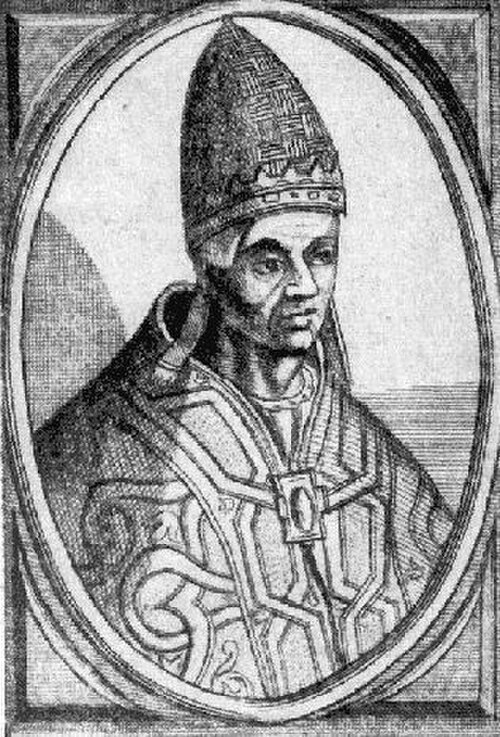
Saint
Vitalian of Rome
Bishop of Rome
Bishop of Rome from 657 to 672, during the disputes with the imperial government at Constantinople.
- Feast
- January 27old style February 9
- Reposed
- 6727th century
- Place
- Rome
- Order
- Hierarchs
Life
Saint Vitalian of Rome was bishop of Rome from 30 July 657 until his repose on 27 January 672. He led the Church in the years after the exile of Saint Martin the Confessor, patiently seeking peace with Constantinople without abandoning the faith. He is venerated as a saint in the Roman Catholic Church and in the calendar of Western saints of the Orthodox Church.
Election
Vitalian was born at Segni in Latium, and his father's name was Anastasius. After the death of Pope Eugene I in June 657 he was elected bishop of Rome and consecrated on 30 July, keeping his baptismal name. He sent the customary letters of announcement to Emperor Constans II and to Patriarch Peter of Constantinople, who leaned toward Monothelitism. The emperor confirmed the privileges of the Roman see and sent him a codex of the Gospels in a cover of gold set with precious stones.
Patriarch Peter replied in guarded terms, and church communion between Rome and Constantinople was restored. Vitalian's name was entered on the diptychs of the churches in Byzantium, the only name of a pope written there between Honorius I and the Sixth Ecumenical Council. Peter's letter to Vitalian was read at that council in 681 and served for the condemnation of Peter as a Monothelite.
The emperor's visit
In 663 Constans II came to Rome and stayed twelve days, during his campaign against the Lombards. On 5 July the pope and the clergy met him at the sixth milestone and led him to the Basilica of Saint Peter, where he brought gifts. On the following Sunday he offered a pallium woven with gold, attended the liturgy and dined with the pope. On leaving he took many bronze works from the city, among them the bronze roof tiles of the Pantheon.
Constans went on to Sicily and was murdered at Syracuse in 668. Vitalian supported his son Constantine IV against the usurper Mezezius. The new emperor had no wish to keep his father's Monothelite decree, and the pope tried to win him fully for the true faith but did not succeed. The Monothelite patriarch Theodore of Constantinople removed the pope's name from the diptychs, and it was entered again only at the Sixth Ecumenical Council.
Ravenna, England and Crete
Archbishop Maurus of Ravenna sought to take his see out from under Rome. Called to account, he refused, and he and the pope excommunicated one another. Constans took the archbishop's side and ruled that Ravenna should receive its pallium from him. The dependence on Rome was restored only under Pope Leo II.
In England, at the Synod of Whitby, King Oswiu of Northumbria had accepted the Roman way of keeping Easter and the shape of the tonsure. Vitalian sent Theodore of Tarsus, a learned monk who knew both Latin and Greek, to be archbishop of Canterbury. In Crete he acquitted, at a synod in December 667, Bishop John of Lappa, who had been deposed by Metropolitan Paul.
Repose
Vitalian fell asleep on 27 January 672 and was buried in the Basilica of Saint Peter. His memory is kept on 27 January, and in some calendars on 23 July. The calendar of Western saints of the Orthodox Church has him on both days.
Commemorated the same day January 27
 EuphemiaRight-Believing · Empress, wife of Justin IJan 27
 Julian of SoraMartyrJan 27
- Alruna of ChamVenerableJan 27
- AskiotRight-BelievingJan 27
- Aurelius of AfricaSaintJan 27
- Avitus of AfricaHieromartyrJan 27
- CandidaVenerableJan 27
- ClaudianStyliteJan 27
- Clement the Stylite of Mount SagmataStyliteJan 27
- Croine of Cill CroineVenerableJan 27
- DaniloSaint · Bishop of Karlovac and PlaškiJan 27
- Datius, Reatrus and companionsHoly Martyrs · Martyrs of AfricaJan 27