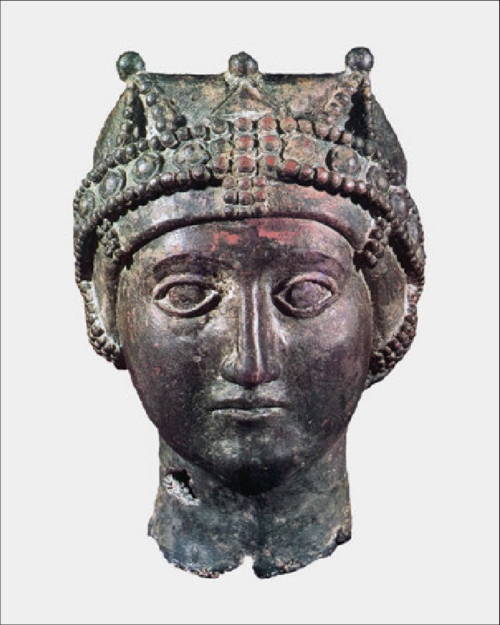
Right-Believing
Euphemia
Empress, wife of Justin I
Byzantine empress, wife of Justin I, founder of a church of St. Euphemia, who died in 523.
- Feast
- January 27old style February 9
- Reposed
- 5236th century
- Place
- Constantinople
Life
Euphemia was an empress of Byzantium, wife of Emperor Justin I. Born with the name Lupicina, of a very humble family, she received at her husband's accession the name Euphemia, after the Holy Great Martyr Euphemia the All-Praised. She died in 523 or 524. The Greek Church honours her as one of the right-believing, under the name Marciana, on 27 January.
Origins Little is known of her life. Her earlier name was Lupicina, and her origin was lowly: according to Procopius of Caesarea in the Secret History, she had been born a foreigner and a slave and was kept by her master as a concubine. Justin, a peasant from Dardania who came to Constantinople as a young man to escape poverty, rose to be an officer in the imperial army; at some point he bought or freed her and married her. Their marriage had no children.
Empress When Anastasius died in July 518, Justin, commander of the imperial guard, was chosen emperor after consultation among the palace officials and proclaimed in the Hippodrome. Both had come to power at an advanced age. Lupicina received the title of empress under the name Euphemia. The choice of name was not accidental: Saint Euphemia of Chalcedon was linked to the Fourth Ecumenical Council of 451, which had met in her very church, and historians take the name as a sign that the emperor and his wife were firm believers in the right faith. Anastasius had supported monophysitism, and Justin's accession brought a change in church policy. The Chronicle of Edessa of 540 attributes this policy to the empress Euphemia.
Procopius says that the empress had no great gifts and was unskilled in affairs of state, but other writers praise her piety and modesty. She opposed the marriage of Justinian, Justin's nephew, to Theodora, a former dancer, while at the same time she supported Justinian's adoption and his naming as heir. Only after her death, in 523 or 524, was Justinian able to have the legal obstacles removed and to take Theodora as wife.
Foundation and veneration Euphemia founded in Constantinople a monastery and a church dedicated to the Holy Martyr Euphemia, a sign of her piety. She was buried there, and Justin was laid beside her after his death in 527. The Church commemorates her on 27 January as a right-believing empress.
Commemorated the same day January 27
 Vitalian of RomeSaint · Bishop of RomeJan 27
 Julian of SoraMartyrJan 27
- Alruna of ChamVenerableJan 27
- AskiotRight-BelievingJan 27
- Aurelius of AfricaSaintJan 27
- Avitus of AfricaHieromartyrJan 27
- CandidaVenerableJan 27
- ClaudianStyliteJan 27
- Clement the Stylite of Mount SagmataStyliteJan 27
- Croine of Cill CroineVenerableJan 27
- DaniloSaint · Bishop of Karlovac and PlaškiJan 27
- Datius, Reatrus and companionsHoly Martyrs · Martyrs of AfricaJan 27