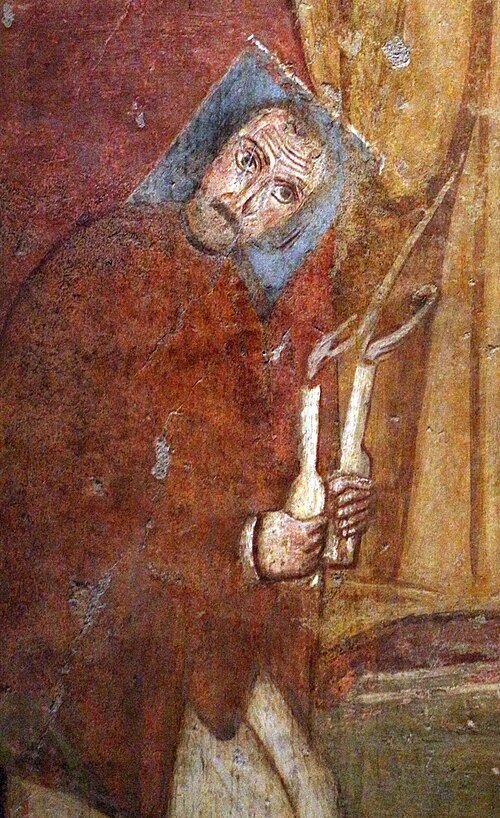
Saint
Zacharias of Rome
Bishop of Rome
Bishop of Rome from 741 to 752, the last pope of the Byzantine period of the see of Rome.
Life
Zacharias of Rome (Zachary) was bishop of Rome from December 741 until his death on 15 March 752. He was the last pope of the period when the see of Rome was under the protection of the Byzantine Empire, a prudent shepherd in a dangerous time.
Election
He was of Greek descent, from a family of Santa Severina in Calabria, the son of Polychronius. He was a deacon of the Church of Rome and, after the death of Pope Gregory III, was chosen in December. The sources do not agree on the exact day, 3 or 5 December, nor on the year, 741 or 742.
Peace with the Lombards
Gregory III's alliance with the Lombard duchy of Spoleto had put the Church's cities at risk. Zacharias turned directly to King Liutprand, who out of respect for him returned the lands seized and sent back the captives without ransom. The Book of the Popes dwells mainly on his personal influence with Liutprand and with his successor Ratchis. At the request of the Exarchate of Ravenna he persuaded the king to give up a planned attack on Ravenna.
Mission and care for slaves
He corresponded with Archbishop Boniface of Mainz, the apostle of the Germans, confirmed three new bishoprics, Würzburg, Büraburg and Erfurt, and named him papal legate to the synod of 742. He remonstrated with the Byzantine emperor Constantine V over his iconoclast policy. When Venetian merchants bought slaves in Rome to sell in Africa, he forbade the trade and paid the merchants their price, giving the slaves their freedom. He built the first church of Santa Maria sopra Minerva, restored the Lateran palace, and moved the head of Saint George to the church of San Giorgio al Velabro. According to Romanian Wikipedia, he translated into Greek the Dialogues of Saint Gregory the Great, which is why the East called Gregory the Dialogist.
He died on 15 March 752 and was buried in the basilica of Saint Peter. He is a saint of the undivided Church. English-language Orthodox calendars that include Western saints commemorate him on 15 March.
Commemorated the same day March 15
 Agapius, Atticus, Carterius, Styriacus, Tobias, Eudoxius and NictopolionHoly Martyrs · Martyrs of SebasteMar 15
 Nicander of GorodnoezerskVenerable · Founder of the Nikandrov HermitageMar 15
- Manuel of SfakiaNew MartyrMar 15
- Agapius of GazaMartyrMar 15
- Alexander of Caesarea in PalestineMartyrMar 15
- Alexander of Caesarea in PalestineMartyrMar 15
- Alexander of SideHieromartyrMar 15
- Alexis VinogradovHieromartyr · Archpriest of RzhevMar 15
- BodianSaintMar 15
- ColluthusMartyr · Deacon of AlexandriaMar 15
- Dionysius of Caesarea in PalestineMartyrMar 15
- Dionysius of Caesarea in PalestineMartyrMar 15