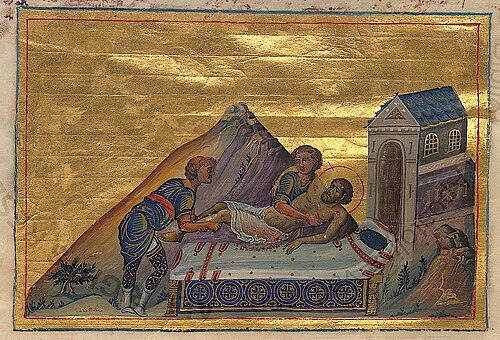
Hieromartyr
Abda of Kashkar
Bishop of Susa
Bishop of Susa in Persia, executed on the order of Shah Yazdegerd I after destroying a Zoroastrian fire temple.
Life
The Holy Hieromartyr Abdas (Abda, Abdias, Audas) was a bishop in Persia, according to some sources of Susa, killed at the order of the shah Yazdegerd I because he refused to rebuild a Zoroastrian fire temple that he had destroyed. Socrates Scholasticus calls him bishop of Persia. His feast is on 31 March (in other calendars, 5 September, 17 October or 16 May).
According to an old Armenian source he was born in the fourth century at Chaldor, to a Zoroastrian mother who raised him in virtue. Reaching manhood he was ordained priest and built in his town a monastery and a school, with some sixty teachers. He baptised many pagans, so the magi imprisoned him, and in prison he endured humiliations, hunger and pain, but remained a Christian. He became a bishop. He was a friend of Bishop Maruthas of Martyropolis; Socrates Scholasticus tells that Maruthas and Abdas, after fasting and prayer, delivered the shah's son from a demon. The shah Yazdegerd I, who kept a policy of toleration, allowed the Christians to build churches. But Abdas, carried by an unthinking zeal, destroyed a Zoroastrian fire temple (according to the Armenian sources, however, it was the priest Hashu). The shah summoned him and rebuked him gently, telling him he should have kept his men from despising his kingdom and demolishing our houses of worship, which we received from the fathers of our fathers. A priest in his entourage answered: I demolished the foundation and put out the fire, for it is not a house of God, nor is the fire the daughter of God. Demolishing a fire temple was, according to some, a way of proclaiming the victory of Christianity.
The shah ordered Abdas to rebuild it; the bishop argued with the king and refused. Then Yazdegerd grew angry and threatened to demolish all the Christian churches in Persia; Abdas refused even under threats. The shah ordered him beaten with knotted clubs; after the beating he was carried home, where he died. The shah carried out his threat and demolished the Christian churches of Persia. The earliest source that speaks of Abdas is the Ecclesiastical History of Theodoret of Cyrrhus. Later sources name other sufferers with him: the Synaxarion of Constantinople of the tenth century, the deacon Benjamin (who, according to the Serbian tradition, was freed on condition of no longer preaching, but continued and was killed three years later); the old Armenian source, the priests Hashu and Isaac, the scribe Ephrem, the subdeacon Papa, the laymen Daduk and Durdan, and Papa, Abdas's brother. Their passion took place around 420.
Commemorated the same day March 31
 Innocent of AlaskaSaint · Metropolitan of MoscowMar 31
 Hypatius of GangraHieromartyr · Bishop of GangraMar 31
 Jonah of MoscowSaint · Metropolitan of Kiev and all RusMar 31
 Balbina of RomeMartyrMar 31
 Agilulf of CologneHieromartyr · Abbot of Stavelot, Bishop of CologneMar 31
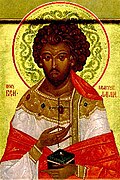 Benjamin the DeaconMartyr · Deacon and martyr of PersiaMar 31
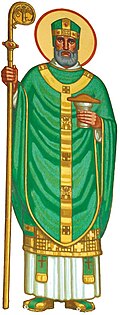 Acacius AgathangelusSaint · Bishop of MeliteneMar 31
- John BlumovichHieromartyr · PriestMar 31
- Apollonius of EgyptVenerable · Hermit of EgyptMar 31
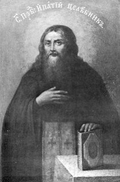 Hypatius of the CavesVenerableMar 31
- John of KalyazinVenerable · Monk of KalyazinMar 31
- 38 MartyrsHoly MartyrsMar 31