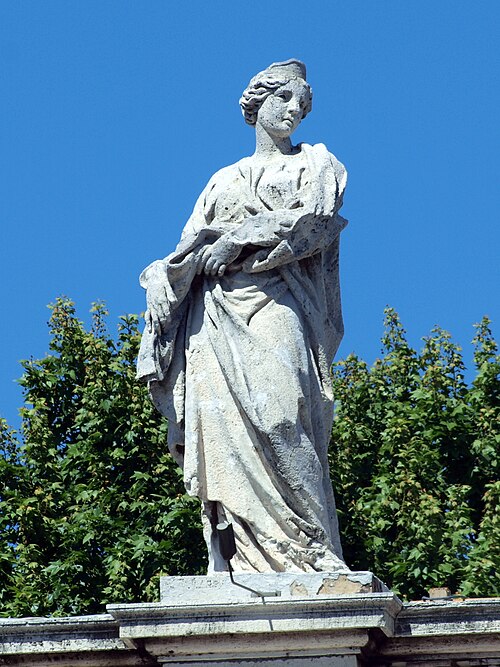
Martyr
Balbina of Rome
Virgin martyr of Rome in the second century.
Life
The Holy Martyr Balbina of Rome is venerated as a virgin martyr of the second century. Her feast is on 31 March.
The legend
Her story is found in the legendary Acts of Saints Alexander and Balbina. Balbina was the daughter of Quirinus, a tribune in the Roman army. Quirinus was ordered to hold Pope Alexander I and a man named Hermes in prison because of their Christian faith. Being in separate prisons far apart, both were shackled and well guarded. Quirinus tried to turn Hermes back to the old gods, but promised to become a Christian if Hermes could prove there is life after death. Hermes said that Pope Alexander could make the proof better and asked several times to see him; at first Quirinus agreed, but then, angry, he tightened the guard. That night Hermes prayed, an angel appeared to Pope Alexander, loosed his chains and brought him to Hermes' cell. The next morning Quirinus came as usual and found both men inside. With an open heart he talked with them. Hermes told how the pope, with God's help, had raised his son. Hearing it, Quirinus said that his daughter Balbina had a large goitre, and if the pope healed her he would believe and become a Christian. The pope asked him to bring her to the prison where he had been held at first. How will she find you there, when you are here with Hermes? asked Quirinus. He who brought me here will also bring me back, answered the pope. Quirinus hurried home and brought his daughter to that prison, where they found Alexander waiting, tightly shackled as before. They knelt before him. Balbina began to kiss the links of the chains, but the pope said to her: You shall not kiss these chains, but go and find the chains of Saint Peter; when you find them, kiss them with devotion and you will soon be well. Quirinus took Balbina and found the chains; she kissed them and was healed. Quirinus had Pope Alexander and Hermes pardoned and freed; with his wife and daughter he was baptised by the pope. Alexander ordained that the miracle of the chains be celebrated from then on and built the church of the Apostle Peter ad Vincula (in chains), today San Pietro in Vincoli. According to another account, Quirinus was charged with executing Alexander and two others, Eventius and Theodulus, arrested at Trajan's order, but converted on seeing their miracles and was baptised with his wife and daughter. In both accounts Quirinus was arrested as a Christian and beheaded on 30 March 116; he was buried in the catacomb of Praetextatus on the Via Appia, and his grave was greatly venerated.
Death and veneration
It is not known for certain what happened to Balbina after her father's death; some accounts say she lived as a virgin recluse until her death, in 130. The general view is that in 130 she was found guilty of being a Christian and sentenced to death by the emperor Hadrian; whether she was drowned or buried alive is disputed. According to another account, she was arrested with her father in 116 and beheaded in the same way. She was buried next to her father, in the catacomb of Praetextatus. Later the bones and relics of Quirinus and Balbina were brought to the church built in her honour in the fourth century, Santa Balbina on the Aventine, where they are said, for the most part, to be still in the altar. Some of her relics reached Cologne cathedral in the Middle Ages, around 1050, when Pope Leo IX gave Quirinus's body to the abbess of Neuss, Gepa. She is one of the hundred and forty saints on the colonnade of Saint Peter's Square.
Commemorated the same day March 31
 Innocent of AlaskaSaint · Metropolitan of MoscowMar 31
 Hypatius of GangraHieromartyr · Bishop of GangraMar 31
 Jonah of MoscowSaint · Metropolitan of Kiev and all RusMar 31
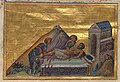 Abda of KashkarHieromartyr · Bishop of SusaMar 31
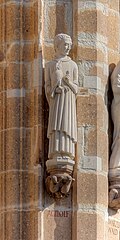 Agilulf of CologneHieromartyr · Abbot of Stavelot, Bishop of CologneMar 31
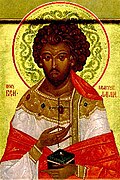 Benjamin the DeaconMartyr · Deacon and martyr of PersiaMar 31
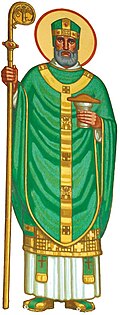 Acacius AgathangelusSaint · Bishop of MeliteneMar 31
- John BlumovichHieromartyr · PriestMar 31
- Apollonius of EgyptVenerable · Hermit of EgyptMar 31
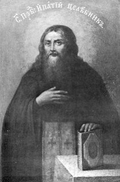 Hypatius of the CavesVenerableMar 31
- John of KalyazinVenerable · Monk of KalyazinMar 31
- 38 MartyrsHoly MartyrsMar 31