Hieromartyr
Alexander Pozdeevsky
A Russian priest put to death for his faith in Christ in 1940, during the communist persecution.
- Feast
- October 12old style October 25
- Reposed
- 194020th century
- Order
- Martyrs
Life
Saint Hieromartyr Alexander Pozdeevsky (1868 to 1940) was a priest in the village of Bolshie Soli, in the Kostroma province, and died in the Temnikovsky camp in Mordovia on 25 October 1940. He is commemorated on 25 October, on 7 February with the synaxis of the new martyrs, and on 5 June with the saints of Rostov and Yaroslavl.
He was born on 18 August 1868 in the settlement of Bolshie Soli in the Kostroma province (today the settlement of Nekrasovskoe, Yaroslavl region), into the family of a psalm-reader. He studied four years at the church school, at the Nikolaevsky school and five years at the crafts school of K. A. Popov, in the icon-painting section. In 1894 he did military service. On 30 January 1895 he was appointed, in his father's place, psalm-reader at the church of the Nativity of the Mother of God in the settlement. On 4 April 1910 Bishop Innocent (Figurovsky) ordained him deacon at the same church. From 1918 he served as priest in the same place, until the church was closed.
His first clash with the new authorities came in 1918: learning that workers of the volost executive committee had come to the village to confiscate the property of the local factory owner Trekhletova, he gave his blessing to ring the alarm bell, to gather people to defend her. After the decree on the separation of school from Church was published and teaching of religion in schools forbidden, he began to teach religion in his church, giving the children his own textbooks; there were more than fifty children. In 1930, by decision of the village soviet and the regional executive committee, the church was closed and the bells taken down; with Father Alexander's blessing a delegation of believers went to the village soviet demanding the return of the bells and vestments. In one house a house of prayer was set up, where visiting priests sometimes served. Visiting this house and taking part in "illegal counter-revolutionary gatherings" were laid to his charge. The charge also said that he "carried on active terrorist agitation". On 25 November 1937 he was sentenced to ten years in prison, which he served in the Temnikovsky camp in Mordovia. After three years of sufferings he departed to the Lord on 25 October 1940.
Commemorated the same day October 12
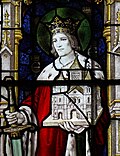 Edwin of NorthumbriaRight-Believing · King of NorthumbriaOct 12
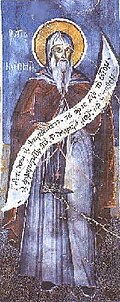 Cosmas the MelodistSaint · Bishop of MaiumaOct 12
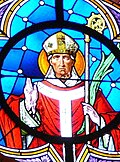 Maximilian of LorchHieromartyr · Bishop of CeleiaOct 12
 Domnina of AnazarbusMartyrOct 12
 Michael KrasnotsvetovHieromartyr · PriestOct 12
 EdistusMartyrOct 12
 Tarasius of GlushitsaVenerable · Abbot in the Vologda regionOct 12
- Theodosius of GlushitsaVenerableOct 12
 Nicholas MogilevskyConfessor · Metropolitan of Alma-AtaOct 12
- 4966 Martyrs of AfricaHoly MartyrsOct 12
- 70 MartyrsHoly MartyrsOct 12
- AedhanSaintOct 12