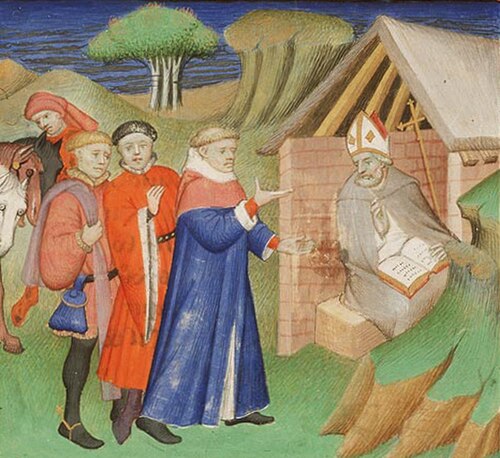
Hieromartyr
Alphege of Canterbury
Archbishop of Canterbury
Bishop of Winchester and then archbishop of Canterbury from 1006, killed by the Danes in 1012.
Life
Saint Alphege (Ælfheah) of Canterbury, hieromartyr, was an Anglo-Saxon bishop of Winchester, then archbishop of Canterbury from 1006 until 1012, when he was killed by the Danes because he refused to be ransomed. He died on 19 April 1012 at Greenwich and is venerated as a saint of the undivided Church, before the great schism. He was the first archbishop of Canterbury to die a violent death. In Orthodoxy he is counted in the Synaxis of the Saints of Britain and Ireland, and his commemoration is on 19 April.
Monk and abbot
He was born about 953 or 954, probably at Weston near Bath, in a noble family. From youth he wished to be a monk, even against his family's will. He entered first the monastery of Deerhurst, where, according to the sources, he stayed eight years and helped to renew common life, and then returned to Bath and lived as a hermit in a small cell. His piety, the strictness of his asceticism and his care for the poor made him loved by the people, and many came to him for counsel. He became abbot of Bath Abbey before 982, perhaps as early as about 977. The chronicler William of Malmesbury says he was first a monk at Glastonbury, but not all historians accept this.
Bishop of Winchester
Perhaps through the influence of Archbishop Dunstan, he was elected bishop of Winchester in 984 and consecrated on 19 October of that year. He was largely responsible for the building of a great organ in the cathedral, which could be heard from over a mile away, and for the renewal and enlargement of the city's churches. He promoted the veneration of Saint Swithun and of his predecessor, Saint Æthelwold, whose relics he moved to a new tomb in the cathedral on 10 September 996. He was also known for his care of the needy, and even as a bishop he remained a very thin ascetic.
After a Viking raid in 994 peace was made with Olaf Tryggvason, who accepted Christianity. Alphege may have taken part in the negotiations and, in any case, he confirmed Olaf in the new faith.
Archbishop of Canterbury
In 1006 he succeeded Ælfric as archbishop of Canterbury, taking with him as a relic the head of Saint Swithun. In 1007 he went to Rome to receive the pallium from Pope John XVIII, but was robbed on the way. He promoted the veneration of Saint Dunstan and ordered a second Life of him written, by Adelard of Ghent, between 1006 and 1011. He introduced some new practices into the liturgy and sent Ælfric of Eynsham to Cerne Abbey to head the monastic school. He was present at the council of May 1008, at which Wulfstan II, archbishop of York, preached the Sermon of the Wolf to the English, reproving them for the moral failings that he held to be the cause of the country's misfortunes.
Captivity and martyrdom
In 1011 the Danes again raided England and from 8 to 29 September besieged Canterbury. Helped by the treachery of Ælfmaer, whose life Alphege had once saved, they took the city, and the cathedral was plundered and burned. The archbishop was taken prisoner and held seven months. Alphege refused to allow a ransom to be paid for him and was killed on 19 April 1012 at Greenwich, according to tradition on the site of the present church of St Alfege.
A report from that time says that Thorkell the Tall tried to save him from the mob that wished to kill him, offering all he owned except his ship. Other sources say that the final blow, with the back of an axe, was given out of mercy by a convert named Thrum. Appalled at the cruelty of the others, Thorkell went over after the saint's death to the side of the English king Æthelred.
Veneration
His body was buried in Old St Paul's Cathedral and in 1023 King Cnut moved it with great ceremony to Canterbury. Pope Gregory VII canonised him in 1078. It is said that Thomas Becket, a later archbishop of Canterbury, prayed to Alphege before his murder in Canterbury Cathedral in 1170. He is honoured in the Catholic Church, the Anglican Church and some Orthodox Churches.
Commemorated the same day April 19
 ExpeditusMartyr · Centurion of MeliteneApr 19
 Tryphon of ConstantinopleSaint · Patriarch of ConstantinopleApr 19
 Viktor OstrovidovConfessor · Bishop of Izhevsk and VotkinskApr 19
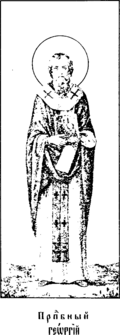 George the ConfessorSaint · Bishop of Antioch in PisidiaApr 19
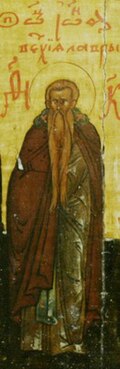 John PalaiolavritesVenerableApr 19
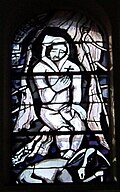 Gerold of WalsertalVenerable · Hermit in VorarlbergApr 19
- Agathangelos of EsphigmenouNew Martyr · Monk of EsphigmenouApr 19
- Agathangelus of SmyrnaVenerable MartyrApr 19
- Antoninus of NicomediaMartyrApr 19
- AristonicusMartyrApr 19
- BassusMartyr · Martyr of AfricaApr 19
- CallimachusMartyrApr 19