Martyr
Anicetus of Nicomedia
A martyr of Nicomedia, put to death for his faith in Christ.
Life
Holy Martyr Anicetus of Nicomedia is commemorated together with his nephew, Holy Martyr Photius, and many others, who suffered in the year 305. They are commemorated on 25 August.
Anicetus and Photius were from Nicomedia. Anicetus, a military official, rebuked Emperor Diocletian (284 to 305) for having set up in the city square instruments of execution to frighten the Christians. Diocletian, angered, ordered Saint Anicetus tortured and then thrown to wild beasts. But the lion let loose became gentle and fawned on him. Suddenly a great earthquake began, by which the temple of Hercules fell and many pagans died under the collapsed city wall. The executioner raised the sword to cut off the saint's head, but he himself fell senseless. They began to torture Saint Anicetus on the wheel and to burn him with fire, but the wheel stopped and the fire went out. The martyr was thrown into a cauldron of boiling tin, but the tin cooled. So the Lord kept His servant for the confirming of many. The martyr's nephew, Saint Photius, greeted the sufferer and, turning to the emperor, said: "Idolater, your gods are nothing." The sword raised over the new confessor struck the executioner himself. The martyrs were put in prison. After three days Diocletian tried to persuade them: "Bow to our gods and I will glorify you and enrich you." The martyrs answered: "May you perish with your honour and your wealth." Then they were tied by the feet to wild horses, but the saints, dragged over the ground, remained unharmed. Nor did they suffer in a heated bath, which collapsed. In the end Diocletian ordered an enormous furnace lit, and many Christians, inspired by the struggle of Saints Photius and Anicetus, entered it themselves, saying: "We are Christians." All died with prayer on their lips. The bodies of Saints Anicetus and Photius were unharmed by the fire, and even their hair remained whole. Seeing this, many of the pagans believed in Christ.
Commemorated the same day August 12
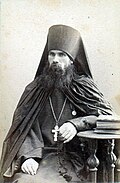 Barlaam KonoplyovVenerable Martyr · Archimandrite and abbotAug 12
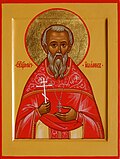 John NikolskyHieromartyr · PriestAug 12
- Gratilian of Falerii NoviMartyrAug 12
- Rufus of CapuaHieromartyr · Bishop of CapuaAug 12
- Palamon of the ThebaidVenerable · Hermit of the ThebaidAug 12
- Alexander Arapov of BelogorskVenerable MartyrAug 12
- Alexis LopatinHieromartyrAug 12
- Anthony Arapov of BelogorskVenerable MartyrAug 12
- Arcadius Noskov of BelogorskVenerable MartyrAug 12
- Barnabas Nadezhdin of BelogoryeVenerable MartyrAug 12
- Basil InfantievHieromartyrAug 12
- Beighin of Ia Coluim CilleVenerableAug 12