Right-Believing
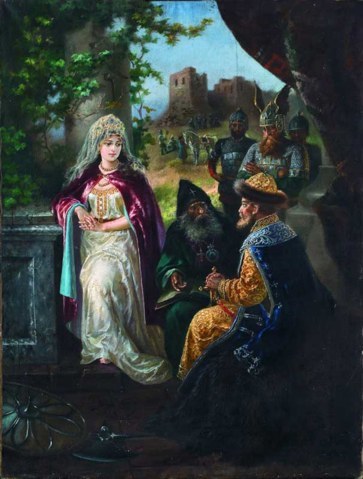
Anna of Novgorod
Wife of Yaroslav the Wise
Swedish princess and grand princess of Kiev from 1019, wife of Yaroslav the Wise, who died in 1050.
- Feast
- February 10old style February 23
- Reposed
- 105011th century
- Place
- Kyiv
Life
Saint Anna of Novgorod, in her birth name Ingegerd, was a Swedish princess and grand princess of Kiev from 1019, wife of Yaroslav the Wise. She fell asleep in 1050. She is commemorated on 10 February and on 4 October.
Her life
Ingegerd Olofsdotter was born around 1001, a daughter of the Swedish king Olof Skötkonung and Queen Estrid. In 1016 the nobles of two lands tried to marry her to King Olaf II of Norway, and Olof agreed at first, but then changed his mind and gave in marriage his other daughter, Astrid. Then he arranged the marriage of Ingegerd to the powerful grand prince Yaroslav the Wise of Novgorod, with whom Sweden had trade ties. The wedding took place in 1019. At Kiev she took the Greek name Irene. According to the sagas she received as a wedding gift Ladoga and the neighbouring lands, later called Ingria, probably from her name, and arranged for her father’s cousin, jarl Ragnvald Ulfsson, to rule them. With Yaroslav she had six sons and four daughters; three of the daughters became queens of France, Hungary and Norway. The whole family is depicted in one of the frescoes of Saint Sophia in Kiev.
Her holiness
She began the building of the cathedral of Saint Sophia in Kiev, the foundation of which was laid in 1037, and of the one at Novgorod, raised between 1045 and 1050, and she did many good deeds. She gave shelter to the exiled sons of the English king Edmund, Edmund and Edward, and to the Norwegian prince Magnus. She is also known as the mother of Vsevolod, father of Vladimir Monomakh. The family was deeply devout and pious. She was tonsured a nun with the name Anna and fell asleep in 1050; by some sources she was buried at Saint Sophia in Kiev, by others at the one in Novgorod. The Church honours her as right-believing for her work for the Church, among it the founding of the two cathedrals, and for her life of prayer and ascetic struggle.
Commemorated the same day February 10
 ScholasticaVenerable · Sister of BenedictFeb 10
 CharalampusHieromartyr · Presbyter of MagnesiaFeb 10
 Austrebertha of PavillyVenerable · Abbess of PavillyFeb 10
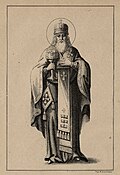 Joachim of KorsunSaint · First Bishop of NovgorodFeb 10
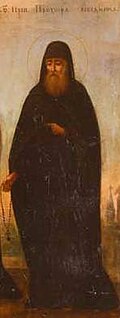 Prochorus of the Kiev CavesVenerable · Monk of the Kiev CavesFeb 10
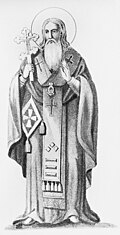 German of NovgorodSaint · Bishop of NovgorodFeb 10
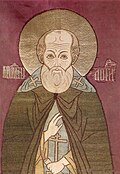 Longinus of KoryazhmaVenerable · Founder of Saint Nicholas MonasteryFeb 10
- GalinaRighteousFeb 10
 Peter GrudinskyHieromartyr · PriestFeb 10
- ValentinaMartyrFeb 10
- Airennan of TamhlachtSaintFeb 10
- Amantius of RomeMartyrFeb 10