Venerable Martyr
Antonia Timofeeva
A Russian nun put to death for her faith in Christ in 1942, during the communist persecution.
- Feast
- October 23old style November 5
- Reposed
- 194220th century
- Order
- Martyrs
Life
Holy Venerable Martyr Antonia Timofeeva, a novice, was born in 1883 (according to other data, in 1881) in the village of Gryaznoe in the Gzhatsk district of the Smolensk province, in a peasant family, and died in the camp on 5 November 1942. She was numbered among the saints by decision of the Holy Synod of the Russian Church of 6 October 2006. In older sources her monastic name appears as Euphrosyne.
The monastery and the arrests
In questionnaires of the Soviet era she was recorded as barely literate. In the family, besides her, there were three sons and a daughter, Thecla. In 1903 she entered the Alexeyevsky Monastery in Moscow as a novice. After the closing of the monastery she stayed to live in its buildings, turned by decree of Soviet power into civil dwellings, with her sister; they helped at the church and earned their living by sewing quilts.
On 28 December 1930 the novice Antonia was arrested, accused of anti-Soviet agitation, and during the investigation was held at Butyrka. She was interrogated by a student of the OGPU higher school, for whom these interrogations of priests and monks were practice needed for his diploma. To the question about political convictions she answered: I can respect a power that does not mock believers; religion should stand at the head of government of the state, for all power is given by God.
To the question what she did during the February Revolution she answered: I lived in the monastery and prayed to God for the Father Tsar and all his house. Of the years at the monastery she said that after the revolution life took a different course, that Soviet power began the persecution of believers and arrested all ministers of the Church only because they believe in God, and that for this reason she had come, involuntarily, to be dissatisfied with Soviet power; she said she had voiced her views to those praying at the church of the former Alexeyevsky monastery and had wished for the return of the tsar's power, and that she prays for those tortured and driven out by Soviet power and does not hide it. On 3 January 1931 the Special Council of the OGPU Collegium sentenced her to three years of exile in the Northern Region.
Exile and martyrdom
After serving her term she settled in the town of Kashira, but the authorities soon demanded that she leave the town, as it had residence restrictions for those who had served prison terms, and she left for the village of Sukovo in the Ozery district. From the certificate given in September 1937 by the village council at the NKVD's request, she continued to lead an active church life: she lived in the house beside the church, without registration, agitated for the acceptance of a new priest at Sukovo, and when the council refused, she brought to the council a group of churchwomen and demanded that the priest be registered, appealing to article 124 of the constitution.
On 21 September 1937 an NKVD official in Kashira summoned as witness the deacon of the Dormition cathedral in Kashira, Demetrius Razumov, who gave detailed testimony about all monks and nuns in the district; the testimony was so valuable to the NKVD that they decided to separate the nuns' cases into a special procedure. On 30 September 1937 Antonia was arrested, held in Kashira and interrogated on 2 October, when she denied having carried on counter-revolutionary activity among the collective farmers.
On 10 October the treasurer of the Kashira cathedral was interrogated as witness, who said that Timofeeva had told her in August 1937 that at Sukovo they would not register a priest, that the Bolsheviks gave the constitution to deceive the people, and that wherever Soviet power exists it will persecute the Orthodox people, but that nothing is eternal on earth and an end will come to this antichrist power too.
Her end
On 15 October 1937 the NKVD troika sentenced her to ten years in a corrective labour camp and she was sent to Bamlag. She died in the camp on 5 November 1942, according to what is believed shot. She was rehabilitated on 26 July 1994.
She is commemorated on 5 November, on 8 December in the Synaxis of the New Martyrs of the Smolensk land, on 5 September in the Synaxis of the Saints of Moscow, and on 7 February in the Synaxis of the New Martyrs and Confessors of the Russian Church (new style).
Commemorated the same day October 23
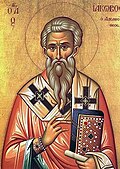 James, Brother of the LordHieromartyr · First Bishop of JerusalemOct 23
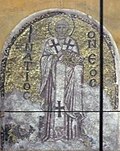 Ignatius of ConstantinopleSaint · Patriarch of ConstantinopleOct 23
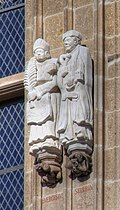 Severin of CologneSaint · Bishop of CologneOct 23
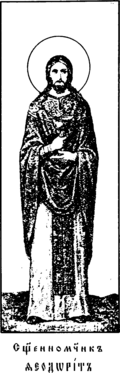 Theodoret of AntiochHieromartyr · Priest of AntiochOct 23
 Elisha of LavrishevVenerable · Founder of Lavrishev MonasteryOct 23
 Jacob of BorovichiFool-for-Christ · Fool for ChristOct 23
 Vladimir AmbartsumovHieromartyr · PriestOct 23
- Constantin SârbuHieromartyr · Priest of BucharestOct 23
- Simeon of Volodymyr-VolynskyiVenerable · Bishop of Volodymyr-VolynskyiOct 23
- Aethelflaed of RomseySaintOct 23
- Alexander SolovyovHieromartyrOct 23
 Amon of ToulSaint · Bishop of ToulOct 23