
Hieromartyr
Benjamin Voskresensky
Bishop of Romanov
Bishop with the title of Romanov from 1921, vicar of the Yaroslavl diocese, who died in 1932 and was glorified in 2000.
- Feast
- September 22old style October 5
- Reposed
- 193220th century
- Place
- Oral
- Order
- Martyrs
Life
Saint Benjamin (in the world Vasily Konstantinovich Voskresensky, 1871-1932), hieromartyr, was bishop with the title "of Romanov" from 1921, vicar of the Yaroslavl diocese, sometimes also called Bishop of Tutaev, after the new name of the town of Romanov-Borisoglebsk. A seminary teacher and schoolmaster, he was arrested several times, lived in exile in the Urals and died in the prison hospital at Uralsk. He was numbered among the New Martyrs and Confessors of Russia by the Jubilee Council of Bishops in August 2000. He is commemorated on 5 October (22 September by the old calendar).
Youth and years of teaching
He was born on 15 January 1871 in the village of Pereslavtsevo, now in the Yaroslavl region, in a large priestly family. All five sons of the house had remarkable musical gifts. In 1892 he graduated from the seminary in Yaroslavl and went on to the Moscow Theological Academy, which he finished in 1896 with the degree of candidate in theology. He was tonsured a monk and ordained hieromonk. From 1898 he was inspector at the Kutaisi seminary, in 1901 he was moved to the one in Tiflis, from 1908 he taught at the Vyatka seminary, from 1909 at the one in Vologda and from 1911 at the one in Yaroslavl.
He was a zealous promoter of church singing in the Yaroslavl diocese: he founded a choir at the Yaroslavl seminary and another in his native village, and asked that local traditions be given as much weight as possible in singing. From 1916 he taught at the railway school in Yaroslavl, and from 1918 he was a teacher of Russian literature and singing in a general school in the city. Alongside teaching he took an active part in the life of the diocese: he belonged to the circle of preachers of Archbishop Agathangel (Preobrazhensky) of Yaroslavl and Rostov and to the diocesan brotherhood of Saint Demetrius, and in 1919 he was elected a member of the Yaroslavl diocesan council.
Bishop
On 4 June 1921 the congress of the clergy and laity of the Tutaev district elected Hieromonk Vasily candidate for the see of vicar bishop of Tutaev. Metropolitan Agathangel approved the choice, and Holy Patriarch Tikhon confirmed it. Soon after, he was tonsured into the mantle with the name Benjamin. On 9 October 1921 he was consecrated Bishop of Tutaev, vicar of the Yaroslavl diocese (sometimes called Bishop of Romanov, after the old name of the town of Tutaev, Romanov-Borisoglebsk).
Like Metropolitan Agathangel, he opposed Renovationism firmly, and by that came under the eye of the OGPU. In 1922 he was arrested and sentenced to seven years of deprivation of liberty, on the charge of "using the religious prejudices of the masses to overthrow the workers' and peasants' government". He was released in 1926. Among believers and his many admirers he was regarded as a great man of prayer, a spiritual elder and ascetic, and was reputed a seer.
On 12 June 1927 he was arrested again at Poshekhonye and taken to Vladimir prison through Tutaev. According to witnesses, in the summer of 1927 an already elderly man was led through the town of Tutaev under escort, his head half-shaven like a convict's, showered with curses and blows; in Tutaev he was well known. At interrogation he said that he fought unbelief, that among the unbelieving there are both ordinary people and authorities, but his struggle concerned them as private persons, not as representatives of the government, so he had never considered that he fought against Soviet power as power. He was sentenced to three years of exile in Kazakhstan, which he served in the Ural region.
He received the Declaration of the locum tenens, Metropolitan Sergius (Stragorodsky), with strong reserve. In a letter from exile he wrote that the Declaration puts the Church in a relation to the present state that she cannot accept while remaining the Church: the state had openly written atheism and struggle against religion, Orthodoxy above all, on its banner, and the Church cannot say to such a government "I am with our government", nor "the joys and successes of our civil homeland are mine". Nevertheless he did not separate from Metropolitan Sergius, holding that a primate can be judged only by a church council or by the consensus of Orthodox hierarchs. He said that he wished to be obedient to the Church and her canon, "judge not without a trial", and feared to pronounce judgment without the judgment of the Church. On 3 (16) November 1928, in a letter to Fr. Nicholas Rozov, he urged the priests of the diocese to remain faithful to Metropolitan Sergius until a lawful church trial. He wrote that the Declaration is a sin not in the area of dogma but of morals, not a heresy but rather a spiritual and moral offense, that there is no perfection on earth and no power that does not sin, but this sin does not abolish the power nor deprive its bearer of the right to be a member of the Church; therefore Metropolitan Sergius too can be borne with, especially given the circumstances of the time and the lack of a clear voice of the Church about the spiritual nature of his act. A council would doubtless have replaced him but would not have deprived him of church communion, and so even now there are no grounds to cut him off from it, and so none for separation.
At first he lived in the village of Dzhambeita in the Ural province, and at the end of 1928 he was moved to the village of Karatyube. Bishop Benjamin's health was broken by prison and exile, and he suffered a stroke.
Last arrest and death
On 1 April 1930 he was arrested on the charge of "anti-Soviet" correspondence with his parishioners. He did not plead guilty and was gravely ill: the whole right side of his body was paralyzed. On 10 September 1931 he was sentenced to ten years of deprivation of liberty, but the sentence was not carried out, because the hierarch departed to the Lord on 5 October 1932 in the prison hospital at Uralsk.
He was numbered among the New Martyrs and Confessors of Russia by the Jubilee Council of Bishops of the Russian Orthodox Church in August 2000.
Commemorated the same day September 22
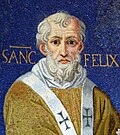 Felix IV of RomeSaint · Bishop of RomeSep 22
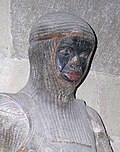 MauriceMartyr · Leader of the Theban LegionSep 22
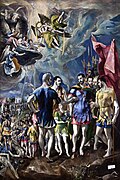 Maurice and the Theban LegionHoly MartyrsSep 22
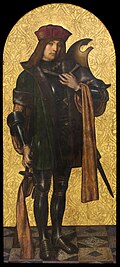 Candidus of AgaunumMartyr · Commander of the Theban LegionSep 22
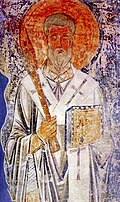 Phocas of SinopeHieromartyr · Bishop of SinopeSep 22
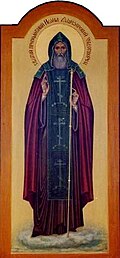 Jonah of YashezeroVenerable · Founder of Yashezero MonasterySep 22
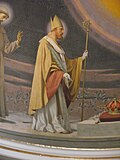 Septimius of IesiHieromartyr · First bishop of IesiSep 22
- Kosmas the ZographiteVenerable · Monk of Zographou MonasterySep 22
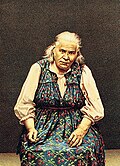 Paraskeva of DiveevoFool-for-Christ · Fool for ChristSep 22
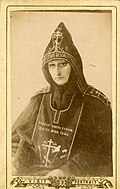 Sophia of ShamordinoVenerable · First abbess of ShamordinoSep 22
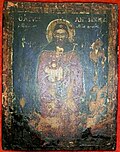 Anthony the New of VeriaVenerable MartyrSep 22
- Aedh son of SenachSaintSep 22