Hieromartyr
Felicissimus
Deacon of Rome
A deacon of Rome who died a martyr together with Pope Sixtus in 258.
Life
Holy Hieromartyr Felicissimus of Rome, a deacon, suffered in the year 258, in the time of the Emperor Valerian (253 to 259), together with Pope Sixtus II, the deacon Agapitus, the archdeacon Lawrence and the soldier Romanus.
Pope Sixtus, born in Athens, well educated, had preached in Spain and was made bishop of Rome after the martyrdom of Pope Stephen (253 to 257, commemorated on 2 August). It was a time when the pope was chosen for certain death. Soon Sixtus was seized and imprisoned together with two of his deacons, Felicissimus and Agapitus. When the archdeacon Lawrence met the pope being led to prison, he cried out in tears, "Where are you going, father, without your son? Where are you going, priest, without your deacon? Take your son with you, that I too may share in shedding blood for Christ." Sixtus answered that he was old and was going to an easy death, while harder sufferings lay ahead for Lawrence, who would follow him in three days. He told him to sell the treasures of the Church and give them to persecuted and needy Christians, and Lawrence zealously carried out the command.
When Lawrence heard that Pope Sixtus was being led with the deacons to trial, he went too, to see their struggle, and told him he had fulfilled the command. Hearing of a "treasure," the soldiers took him into custody, and the martyrs were put to the sword on 6 August 258, Felicissimus among them. The emperor imprisoned Lawrence and gave him into the keeping of Hippolytus, the prison commander. In prison Lawrence healed by prayer the sick who came to him and baptized many. Astonished, Hippolytus believed and was baptized with all his house. Soon Lawrence was brought again before the emperor, who demanded that he show the hidden treasures. Lawrence asked for three days and in that time gathered a multitude of the poor and sick who lived on the Church's charity and, bringing them, said, "Here are the vessels in which the treasures are laid. Whoever puts his treasures in these vessels receives them in abundance in the Kingdom of Heaven."
Then Lawrence was subjected to fierce torments. He was beaten with scorpions (thin iron chains with spikes), his wounds were burned and he was beaten with lead rods. During his sufferings the soldier Romanus suddenly cried out that he saw a radiant youth standing by Lawrence and wiping his wounds, and begged to be baptized. After baptism Romanus was beheaded, on 9 August. When Lawrence was led to his last trial, Hippolytus wished to declare himself a Christian and die with him, but the confessor told him to keep his confession hidden in his heart for a time. They laid him on an iron grate over burning coals, and the servants held down his body with forks. Lawrence told the judges to turn him over to the other side and eat his flesh, then thanked Christ for counting him worthy to enter His gates, and gave up his spirit. Hippolytus took the body at night, wrapped it in shrouds with spices and informed the priest Justin. The body was buried with honour in a cave on 10 August 258. Hippolytus and other Christians suffered three days later, on 13 August, as Lawrence had foretold.
Felicissimus is commemorated on 23 August (new style). Their story was also written down by Saint Demetrius of Rostov.
Commemorated the same day August 10
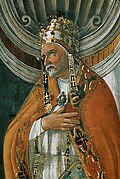 Sixtus IIHieromartyr · Bishop of RomeAug 10
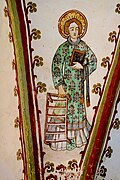 Lawrence of RomeHieromartyr · Archdeacon of RomeAug 10
 Laurentius of KalugaFool-for-Christ · Fool for ChristAug 10
- Agapitus of RomeHieromartyr · Deacon of the Church of RomeAug 10
- Agathonica of CarthageMartyrAug 10
- Agilberta of JouarreVenerable · Abbess of JouarreAug 10
- Aredius of LyonSaint · Bishop of LyonAug 10
- Asteria of BergamoMartyrAug 10
- Athanasius KislovHieromartyr · Archpriest of TverAug 10
- Bassa, Paula and AgathonicaHoly MartyrsAug 10
- Bertram of StaffordVenerableAug 10
- BlaneSaintAug 10