Hieromartyr
Gregory Kalamaras
Metropolitan of Argos
Metropolitan of Argos, who died in Tripoli in 1821; venerated by the faithful, not formally canonized.
- Feast
- September 23old style October 6
- Reposed
- 182119th century
- Place
- Tripoli (Metropolitan of Argos)
- Order
- Martyrs
Life
Gregory Kalamaras was Metropolitan of Argos and Nafplio from 1810 until his death in September 1821, dying of the illnesses of the prison at Tripolitsa. He is honoured by the faithful as an ethnomartyr, without synodal canonization; he is commemorated on 23 September.
He was born in 1769 at Alagonia near Kalamata. He rose to the throne of Argos and Nafplio in 1810, as nephew of his predecessor, Metropolitan Gregory (1800 to 1810). The nickname "Kalamaras" (scholar) was given him because he raised the School of Argos, the secondary school maintained by the merchants and the Church, to a level of brilliance that went beyond the locality. He moved the school from Panagia Portokalousa into the town. His house and the school were burned and destroyed by the Turkish-Albanians of Kehayabey at the end of April 1821.
In 1819 he was initiated into the Friendly Society (Filiki Etaireia) by Daniel Pampoukis, abbot of the Monastery of Vrachos in Nemea. He himself initiated the leading men of his province: Ioannis Iatrou and the Papalexopoulos brothers at Nafplio, Ioannis Peroukas, Stamatis Antonopoulos, the Vlassis brothers at Argos, the priest George Velinis at Platanizos, Theodosios Bouskos at Tzaferaga, George Kakanis at Chonika, his archdeacon Athanasios Soliotis, and the priest Papa-Constantis at Achladokambos. He hosted Papaflessas at Argos for a long time.
At the beginning of March 1821 the secret of the coming revolution was betrayed by a leading man of Tripolitsa named Kougias. At Tripolitsa there was no pasha, but a kaimakam, who as a precaution asked all the bishops and governors of the Peloponnese to gather there. Not all went. Gregory went, although he knew all the secrets of the Society, to reassure them, for fear the Turks could easily exterminate the Christians of Argos. When the Revolution began he was imprisoned, with others, in the basement of the Great Saragio of Tripolitsa, where they were held from March to September 1821. After their defeat at Grana (August 1821) the Turks, in a desperate position, tried to reach an agreement with the Greeks and took them out of the basement. This was even worse, because a contagious disease had spread which began to infect the weak and starved hostages. After 14 September they began to release them. Gregory, exhausted by the disease, died on the way to Argos, on 18 or 21 September 1821.
In the consciousness of many of the faithful he is a saint, though he is not officially canonized. His statue stands outside the church of St Peter in Argos.
Commemorated the same day September 23
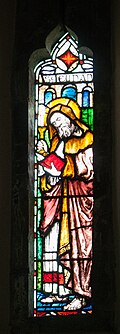 Adomnán of IonaVenerable · Abbot of IonaSep 23
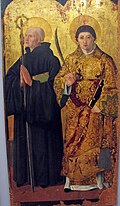 Sosius of MisenumMartyr · Deacon of MisenumSep 23
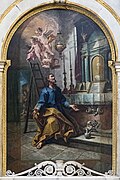 Constantius of AnconaVenerable · Monk of AnconaSep 23
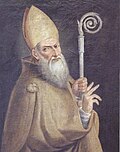 Proietto of ImolaSaint · Bishop of ImolaSep 23
 PolyxeneMartyrSep 23
- XanthippeMartyrSep 23
 BarypsabasHieromartyr · Keeper of the Blood of ChristSep 23
- Tychon the AthoniteVenerable · Monk of KapsalaSep 23
- Andrew of SyracuseMartyrSep 23
- Anthony of SyracuseMartyrSep 23
- Antoninus of SyracuseMartyrSep 23
- CissaVenerableSep 23