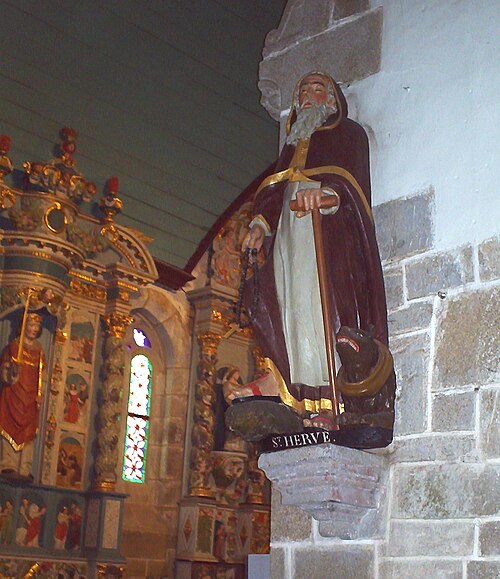
Saint
Hervé of Brittany
Breton saint
Breton saint of the sixth century, born at Guimiliau and among the most popular saints of Brittany.
- Feast
- June 17old style June 30
- Reposed
- 5566th century
- Place
- Lanhouarneau
Life
Saint Hervé was a Breton saint of the sixth century, born blind at Guimiliau, one of the best-loved saints of Brittany, with Saint Ivo. The Church remembers him on 17 June. He is shown with a tame wolf.
He was the son of a Welsh bard, Hyvarnion, who had studied under Cadoc and became a minstrel at the court of Childebert. His mother, Rivanone, was a woman of rare beauty who knew the properties of plants and herbs. He was nephew of the hermit Urfold. His father died when Hervé was small, and he inherited his father's harp. His mother became an anchoress and, when he was seven, entrusted him to his uncles, who placed him with a learned hermit in the forest. At about fourteen he went to the monastic school at Plouvien, where his maternal uncle Gourvoyed was abbot. He became a teacher and minstrel. With his disciple Guiharan he lived near Plouvien as hermit and bard. He had the power to heal animals and was accompanied by a tame wolf. The wolf devoured the ox or donkey with which he ploughed, and Hervé preached a sermon so eloquent that the wolf begged to serve in the ox's stead. From that day the wolf pulled the plough. He was joined by disciples and refused any ordination or earthly honour, accepting only to be ordained exorcist. He fell asleep in 556 and was buried at Lanhouarneau. At Lanrivoaré the hermitage of Saint-Hervé, built on the model of Irish hermitages, preserves the ruins of a chapel, a fountain and a stone cell said to have housed the saint. For fear of the Normans his relics were moved to a silver shrine in the chapel of the castle of Brest; given to the bishop of Nantes, they were lost in the Revolution.
Commemorated the same day June 17
- Hypatius of BithyniaVenerable · Abbot near ChalcedonJun 17
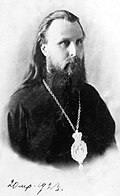 Hilarion TroitskyHieromartyr · Archbishop of VereyaJun 17
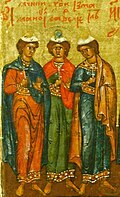 ManuelMartyrJun 17
 Himerius of CremonaSaint · Bishop of CremonaJun 17
- Manuel, Sabel and IsmaelHoly MartyrsJun 17
 Shalva of AkhaltsikheMartyr · Duke of AkhalkalakiJun 17
 PapinusSaintJun 17
- Averky SeverovostokovHieromartyr · Priest of UfaJun 17
- Ananias of NovgorodVenerable · Icon painter of Antoniev MonasteryJun 17
- PiorVenerableJun 17
- Joseph the AnchoriteVenerableJun 17
- Maxim PopovVenerable Martyr · HieromonkJun 17