Venerable
Iakovos Tsalikis of Evia
Abbot of the Monastery of Saint David
Abbot of the Monastery of Saint David the Elder on Euboea, born in 1920 and died in 1991, venerated as a saint.
- Feast
- November 22old style December 5
- Reposed
- 199120th century
- Place
- Euboea
- Order
- Venerables
Life
Saint Iakovos Tsalikis was a Greek hieromonk, a refugee from Asia Minor, who lived for nearly forty years in the monastery of Saint David the Elder on the island of Evia (Euboea), serving as its abbot from 1975. He is counted among the brightest figures of twentieth-century Greek monasticism, known for his severe asceticism, for the gentleness with which he received everyone, for his love of the Divine Liturgy and for his entirely natural closeness to the saints, whom he regarded as his friends.
He reposed in 1991, and the Ecumenical Patriarchate numbered him among the saints in 2017. His feast is kept on 22 November.
Childhood and exile
He was born on 5 November 1920 at Livisi in Asia Minor to Stavros and Theodora (Theodoroula) Tsalikis. His mother bore nine children, but because of hardship only three survived. There had been many priests in the family. As a child he lived through the Asia Minor Catastrophe and the uprooting of the Greeks from their homeland. His father, like all Christian men between twelve and sixty-five, was taken to the labour battalions deep in Anatolia.
Through the exchange of populations the family, with the father counted as missing, came to Greece and settled first in the village of Agios Georgios near Amfissa, where they lived in great poverty with other refugees in a storehouse. Stavros, however, survived the labour battalions, crossed to Greece by ship and, searching for his family and for work, found them again at Amfissa. In 1925 the family moved to the village of Farakla on Evia.
His devout mother taught him to pray and to serve God. It is said that by the age of seven he knew the whole Divine Liturgy by heart, though he could not yet read. From 1927 he learned his letters, both secular and ecclesiastical, in the village church of Saint Paraskevi. From a young age he longed to become a monk, and he fasted and prayed so much that the villagers called him the monk.
Saint Paraskevi
On a hill outside the village stood a chapel of Saint Paraskevi. Iakovos climbed up twice a day to clean it, light the lamps and pray before the icons. By his own account, one day as he was praying there Saint Paraskevi appeared to him; he was frightened and ran away. Some days later she appeared again, and this time he was not afraid. She told him that great wealth would pass through his hands but that he would keep none of it. The word was fulfilled: to the end of his life he was known for his boundless generosity and almsgiving. This vision marked him and confirmed him in his resolve to follow the monastic life.
Hard years of youth
In 1933 he finished primary school, but because of his family's poverty he could not go on to secondary school and worked from an early age beside his father in the fields, in gardens and at all kinds of crafts. At fifteen he fell gravely ill but recovered.
During the war his health was tested, and in 1942 he lost his mother. It is told that Theodora learned from an angel that she would die within a few days and told her son, and two days later she reposed. She had told him beforehand that he would be holy and could become a monk, but only after he had seen his sister Anastasia married. Iakovos was deeply grieved but was comforted after seeing her in a dream. In 1943 he was taken prisoner by the Germans together with many villagers and led to the village of Strofylia on Evia. In the years of the civil war, hunger and hardship weighed heavily on his family as well.
In 1947 he was called up into the army and served at the Supply and Transport Centre in Piraeus, without taking part in the fighting of the civil war. There too he kept his ascetic way of life: he observed the fasts of the Church and was given leave to attend the services of Holy Week and Pascha. His fellow soldiers mockingly called him Father Iakovos. Not wishing to harm anyone, he kept a small icon of Saint Haralambos on his rifle and prayed to the saint that he would never have to fight. He was discharged in 1949, the year his father died in an Athens hospital.
Entering the monastery
In 1951, after his sister married, he had fulfilled his promise to his mother and was free to follow his calling. At first he meant to go to the Holy Land, but before leaving he visited the monastery of Saint David the Elder on Evia, where, by his own account, he saw Saint David with heavenly beings and heavenly ascetics, and he resolved to stay.
The monastery was then almost a ruin: shepherds lived in it with their animals, and the three remaining monks each lived for himself, with no care for the community. They gave him a dilapidated cell with no floor and holes in the roof, so that some mornings he woke covered in snow, and they pressed him to leave. He went back for a time to Farakla, but despite every pressure he returned to the monastery, where he cleaned, worked the garden and repaired doors and roofs, enduring the mockery of one of the monks.
Hieromonk
At the end of November 1952 he was tonsured a monk, and the abbot made him steward of the monastery. On 17 December of that year he was ordained deacon at Chalcis, and two days later priest, by Metropolitan Gregory of Chalcis. He felt utterly unworthy of the priesthood and never sought any office, but he gave his life to the service of the Divine Liturgy, which he celebrated daily. One of the monks continued to treat him with hostility, but the abbot valued him. In 1953, exploring the surrounding area, he discovered the small cave where Saint David had once lived as a hermit.
Abbot and confessor
From around 1970 the faithful came to him in ever greater numbers, and in 1975 the new Metropolitan of Chalcis, Chrysostomos Vergis, appointed him abbot. Thousands of pilgrims sought him out during his life: some for confession, some for prayer, some simply to see his face. He heard confessions with understanding and leniency and was strict only with himself. Through the offerings of the faithful the monastery, which then had only three monks, could be restored: a bell tower, cells, chapels and other necessary buildings were raised.
Above all he loved the Divine Liturgy. He said that if people saw what happens in church during it, they would never leave. Once the monks heard him gently asking someone unseen to move back a little; it was the angels in the altar, whom he was asking to make room so that he could cense the Holy Table. He himself related that once he could not make the Great Entrance because of what he saw, and someone pushed him gently by the shoulder toward the table of preparation; thinking it was the chanter, he turned and saw a huge wing of the archangel laid on his shoulder.
Friend of the saints
Many saints appeared to him, and he spoke with them as with friends standing before him. He called above all on Saint David and on Saint John the Russian. To those who came to the monastery he would say that the real abbot there was Saint David. A novice once heard him scolding Saint David almost aloud because there was no food left in the monastery, telling him it was his duty to feed the monks and workers, and even threatening not to cense his icon at the Liturgy.
He was very close to Saint John the Russian, whom he called the divine John. He often visited his shrine, lit candles and prayed, and many times he saw the saint alive there. He noticed that when he called on both of them in need, Saint John came more quickly, and he would say with a smile that this was natural, since John had died young and David old.
Struggle with the enemy
Unable to overcome him through thoughts and temptations, the demons, by his own account, attacked him bodily several times. Once they pinned his arm so that he could not make the sign of the Cross and struck him on the jaw when he tried to call on the Mother of God; when he regained his strength and called on her, they scattered. Another time, while he was reading Compline with the fathers, he stepped out of his cell and saw the enemy in the form of a shameless woman; he took the icon of the Mother of God and drove him away with the prayer Beneath thy compassion.
God gave him the gift of freeing those tormented by unclean spirits. He blessed them with the skull of Saint David. The demons hated him above all for his humility: sometimes they threatened him, sometimes they tried to flatter him, crying out that he was a great saint, and he would answer that he was only dust and ashes.
Among his sayings is the word that a person is not sanctified by the place where he lives but by the way he lives: one can be on the Holy Mountain and have one's thoughts in the world, or be in the world in body and on the Holy Mountain in mind. He asked parents to pray with faith and to counsel their children with love and gentleness.
Illness
His severe asceticism undermined his health from his early years. From 1956 he suffered from his back; in 1964 he had infected tonsils that affected his kidneys; in 1967 he was operated on for an inguinal hernia and appendicitis with peritonitis and had prostate trouble. Long standing and prostrations brought on phlebitis, for which he had surgery in Athens in 1974. In 1980 he was found to have heart failure, and on 13 November 1986, against his wishes, he was fitted with a pacemaker. He fasted beyond measure despite his doctors' advice, and his legs had weakened from all-night vigils. He told his spiritual children that he would depart like a little bird.
Repose
On 21 November 1991 he attended the Divine Liturgy and received Communion, heard a few confessions and returned to his cell. Later that day, surrounded by several monks and priests, he gave up his soul in peace, as he had said, like a little bird. On the lower part of a cross in his cell he had written: Lord, remember Thy servant Iakovos the hieromonk. Thousands of faithful came to his funeral, many of them crying out that a saint had died.
Miracles and veneration
More than three hundred testimonies have been gathered from the faithful about healings, help and appearances after his death. Among them are a photograph taken in his cell in 1992 by a young deacon from Cyprus, on which, when developed, the elder appeared in his vestments, and the account of a passenger on an aircraft struck by lightning over the Atlantic in 2002, who says that after he called on Father Iakovos and Saint David he saw the elder halt the plane's fall.
On 27 November 2017 Ecumenical Patriarch Bartholomew numbered him among the saints. His memory was set on 22 November (5 December in the Julian calendar), the day after his repose, which falls on the feast of the Entry of the Mother of God into the Temple. His relics rest at the monastery of Saint David on Evia, and the Greek Orthodox Metropolis of New Jersey has him as its patron.
Commemorated the same day November 22
 CeciliaMartyr · of RomeNov 22
 Michael of TverPassion-Bearer · Grand Prince of VladimirNov 22
 Yaropolk IziaslavichRight-Believing · Prince of TurovNov 22
- Callistus II XanthopoulosSaint · Patriarch of ConstantinopleNov 22
 ApphiaApostle · Martyr of ColossaeNov 22
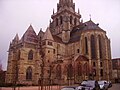 Pragmatius of AutunSaint · Bishop of AutunNov 22
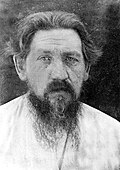 Alexei BenemanskyHieromartyr · ArchpriestNov 22
- Benignus of MilanSaint · Archbishop of MilanNov 22
 Michael the SoldierRighteousNov 22
- Procopius the ReaderMartyr · Martyr of Caesarea in PalestineNov 22
- MenignusMartyrNov 22
- AbbasVenerableNov 22