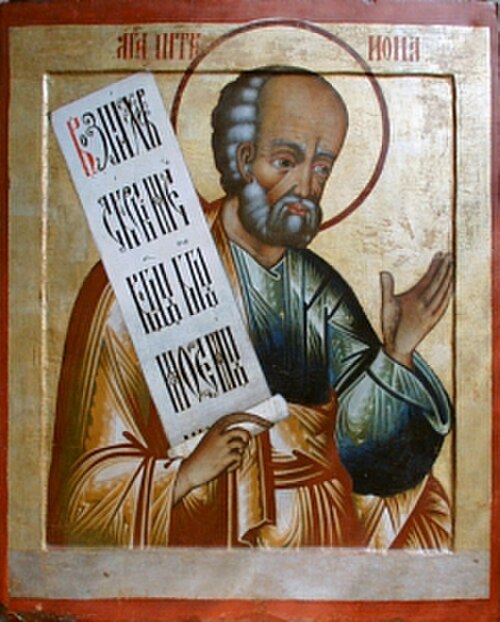
Prophet
Jonah
The Prophet
Prophet sent by God to Nineveh, three days in the belly of the great fish, a type of Christ's Resurrection.
- Feast
- September 21old style October 4
- Reposed
- 720 BC8th century BC
- Place
- Gath-hepher
- Order
- Prophets
Life
The holy Prophet Jonah is the fifth of the twelve minor prophets of the Old Testament and the central figure of the Book of Jonah. Sent by God to preach repentance to the pagan city of Nineveh, he spent three days and three nights in the belly of a great fish, and the Lord Himself showed in this sign a foreshadowing of His burial and Resurrection. The Orthodox Church commemorates him on 21 September (old style Menaion, which is 4 October in the civil calendar of the Julian Churches).
Origins
Jonah was the son of Amittai, from Gath-hepher, in the territory of the tribe of Zebulun. The Second Book of Kings (14:25) says that in the days of Jeroboam II of Israel he foretold, by the word of the Lord, that the borders of Israel would be restored, and the Synaxarion adds that his word encouraged the king in the war against Syria, which ended in victory. A tradition recorded in Jewish sources makes him the son of the widow whom Elijah raised from the dead, or of the woman of Shunem; the Scripture itself says nothing of this.
Fleeing from the Lord
The Lord commanded him to go to Nineveh, the great city of the Assyrians, and to cry out against it because its wickedness had come up before Him. Jonah rose up instead to flee from the presence of the Lord. He went down to Joppa and boarded a ship for Tarshish.
A great storm arose at sea. The sailors, who each called on his own god, cast lots to learn who had brought this evil on them, and the lot fell on Jonah. He confessed that he was a Hebrew who feared the Lord, the God of heaven who made the sea and the dry land, and that he was fleeing from His face. At his own word they cast him into the sea, though they first rowed hard to bring the ship back to land. The sea grew calm. The sailors feared the Lord greatly, offered Him a sacrifice and made vows.
In the belly of the fish
The Lord appointed a great fish to swallow Jonah, and he was in its belly three days and three nights. The Book of Jonah gives his prayer from there: he called to the Lord in his affliction, and the Lord heard him. A Romanian tradition notes that he prayed with his hands spread out in the form of a cross. His prayer is the model of the sixth ode of the canons of the Church. On the third day the Lord spoke to the fish, and it cast Jonah out on dry land, unharmed.
Nineveh repents
The word of the Lord came to Jonah a second time, and he went to Nineveh, a city so great that it took three days to cross. He walked a day's journey into it, crying, Yet forty days and Nineveh shall be overthrown. The people of the city believed God. They proclaimed a fast and put on sackcloth, from the greatest to the least, and the king rose from his throne, put on sackcloth and sat in ashes. At his command men and animals alike were to fast and to cry mightily to God, and each to turn from his evil way. God saw their deeds and did not bring on them the evil He had threatened.
Jonah was displeased and angry, and said that he had fled to Tarshish because he knew God to be gracious and merciful. He went out of the city and sat down to see what would happen. The Lord made a plant grow over him to shade him, and then sent a worm that withered it. When Jonah grieved for the plant, the Lord asked him whether he had a right to be angry. If you pity the plant, which you did not make grow, the Lord said, should I not pity Nineveh, with more than a hundred and twenty thousand people who cannot tell their right hand from their left, and much cattle. The book ends with this question, which is addressed to every reader.
The sign of Jonah
The Lord Jesus Christ speaks of the prophet in the Gospels. To the scribes and Pharisees who asked for a sign He answered that no sign would be given them but the sign of the prophet Jonah: as Jonah was three days and three nights in the belly of the fish, so the Son of Man would be three days and three nights in the heart of the earth. He added that the men of Nineveh would rise up in the judgment against that generation, because they repented at the preaching of Jonah, and something greater than Jonah was there (Matthew 12:38 to 41; Luke 11:29 to 32). Early Christian interpreters therefore saw in Jonah a type of Christ, and the Orthodox troparion of the prophet says that held in the belly of the fish he foretold the Saviour's rising on the third day.
Repose and veneration
According to the Greek Synaxarion, Jonah died in the land of Sarar, near the oak of Deborah, and was buried in a cave. The Church commemorates him on 21 September. The Book of Jonah is read among the Old Testament readings at the Vespers of Holy Saturday, and the Syriac and Oriental Orthodox Churches keep the Fast of Nineveh in memory of his mission. In the Roman Catholic Church his memory is also kept on 21 September.
Commemorated the same day September 21
 Quadratus of AthensApostle · Bishop of AthensSep 21
 Demetrius of RostovSaint · Metropolitan of RostovSep 21
 Castor of AptSaint · Bishop of AptSep 21
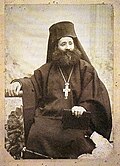 Plato AivazidisHieromartyr · Archimandrite and theologianSep 21
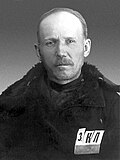 Basil KondratyevMartyrSep 21
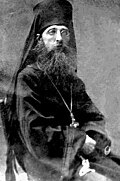 Mavriky PoletaevVenerable Martyr · ArchimandriteSep 21
- Jerome of the CavesVenerable · Recluse of the Kyiv Caves LavraSep 21
- Daniel of ShuzhgoraVenerable · Founder of a monasterySep 21
- Acacius of SitiaSaint · Bishop of SitiaSep 21
- Aedhan son of OissinSaintSep 21
- Alexander BelyakovHieromartyrSep 21
- Alexander FedoseevHieromartyrSep 21