Hieromartyr
Lucian of Antioch
Presbyter and scholar of Antioch
Learned and ascetic presbyter of Antioch, who died a martyr in 312.
- Feast
- October 15old style October 28
- Reposed
- 3124th century
- Place
- Nicomedia
- Order
- Martyrs
Life
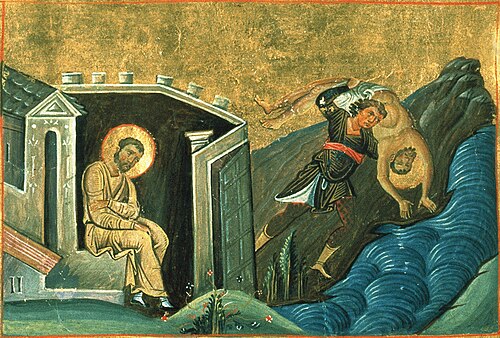
The holy hieromartyr Lucian of Antioch was a priest, scholar and ascetic, killed for the faith in 312, at Nicomedia. He was renowned both for his learning and for his austere life. He is commemorated on 15 October, and in the Catholic Church on 7 January.
His life
According to Suidas, Lucian was born at Samosata, in Syria, of Christian parents, and studied at Edessa, in the school of Macarius. Some sources say he was orphaned at twelve and gave his property to the poor. At Antioch he was ordained priest; Eusebius of Caesarea praises his learning, and his Life says he founded a school there. He did a notable work on the Bible: he checked the Greek text of the Septuagint against the Hebrew original and corrected passages spoiled by copyists, and the resulting text was called the “Lucianic recension”. After the deposition of Bishop Paul of Samosata he fell under suspicion of heresy and was put out of communion, remaining so through the time of three bishops, until he was reconciled with the Church, probably around 285.
Martyrdom
In the persecution of Maximinus Daia, Lucian was arrested at Antioch and sent to Nicomedia, where he endured many torments in a long imprisonment. Eusebius says he was brought twice for examination and each time defended himself with strength and would not renounce Christ. His death is not certain: perhaps he died of hunger, perhaps he was beheaded; the traditional date is 7 January 312. The Life written by Symeon Metaphrastes relates that, wishing to receive communion on Theophany, bound in chains on his bed, the martyr-priest celebrated the Liturgy on his own chest, and all the Christians in the prison received communion. His body was thrown into the sea, but, according to the Life, a dolphin brought it to shore after some days. He was buried at Drepanum, on the gulf of Nicomedia, which was later named Helenopolis, in honour of Saint Helena.
His teaching
What Lucian taught is not clearly known, and attempts to reconstruct his theology have given contradictory results. Arius called Eusebius of Nicomedia “fellow-Lucianist”, and so some have linked him with the Arian heresy, but others think the word shows only the honour Eusebius paid to the martyr. His veneration grew in the second half of Constantine’s reign, especially through the care of the empress Helena.
Commemorated the same day October 15
 Sarbelus and BebaiaHoly Martyrs · Martyrs of EdessaOct 15
 Aurelia of RegensburgSaintOct 15
 Athanasius SakharovConfessor · Bishop of KovrovOct 15
- Euthymius the YoungerVenerable · Monk of ThessalonicaOct 15
 John of SuzdalSaint · Bishop of SuzdalOct 15
 Lucian of the Kiev CavesHieromartyr · Presbyter of the Kiev CavesOct 15
- Magdalene of MălainițaSaintOct 15
- Agileus of CarthageMartyrOct 15
- Antiochus of LyonSaint · Bishop of LyonOct 15
- Aurelia of StrasbourgSaintOct 15
- Baoithin of Le'sSaintOct 15
- Bebaia of EdessaMartyrOct 15