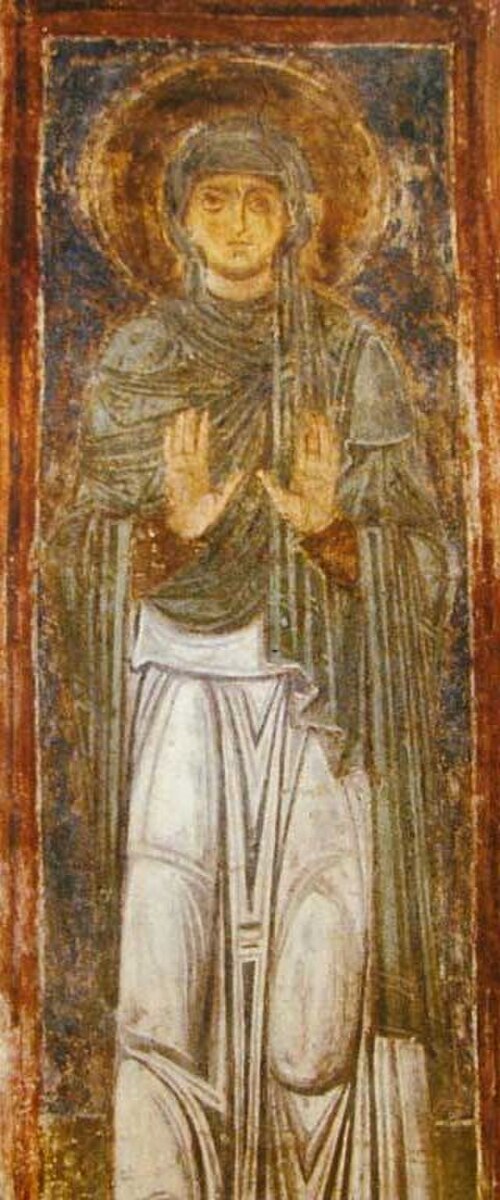
Venerable
Macrina the Younger
Sister of St. Basil the Great
Consecrated virgin, elder sister of Basil the Great and Gregory of Nyssa, who died in 379.
- Feast
- July 19old style August 1
- Reposed
- 3794th century
- Place
- Amasya
- Order
- Venerables
Life
Saint Macrina the Younger, venerable, was a consecrated virgin, elder sister of Saints Basil the Great, Gregory of Nyssa and Peter of Sebaste, and founder of a monastic community of women in Pontus. She was born around 324 to 327 in Caesarea of Cappadocia and fell asleep on 19 July 379. The chief testimony about her is the Life of Macrina, written by her brother, Saint Gregory of Nyssa. The Church commemorates her on 19 July.
Family and childhood Her parents were Basil the Elder, a lawyer and teacher of rhetoric, and Emmelia, and her grandmother was Macrina the Elder, a disciple of Saint Gregory the Wonderworker and a confessor in the time of persecutions. Macrina was the eldest of ten children. According to her Life, an angel appeared to her mother in a dream and told her to give the girl the name Thecla, but relatives called her Macrina, after her grandmother. Her mother taught her to love the services and prayer. She received a thorough education, but studied above all Holy Scripture, in particular the Wisdom of Solomon and the Psalms.
When she was twelve her father betrothed her. Her fiancé died before the wedding. Macrina judged that it was not fitting to marry another and regarded Christ as her eternal bridegroom. After her father's death she helped her mother run the household and raise the younger brothers, among them Gregory, Peter and Basil, over whom she had a great influence. Basil, who had returned from Athens proud of his learning, she urged to leave his worldly career and lead the monastic life. Gregory called her his teacher.
The community at Annisa Around 357 Macrina withdrew with her mother and the maidservants from the life of the world to one of the family estates, at Annisa, on the river Iris in Pontus. They lived there a common life, together with virgins from noble and ordinary families, among whom all were free, and slave women had the same rights and duties as their mistresses. Macrina became abbess of one of the first communities of women in Asia Minor. Across the river Basil founded a monastery for men, where Peter also lived, who later became its abbot. So a kind of double monastery came into being. The community was also visited by Eustathius of Sebaste and Gregory of Nazianzus. The death of her brother Naucratius shook their mother and gave Macrina a leading place in the life of the household.
Repose In 379, a few months after the death of Basil, Macrina fell ill. Gregory, bishop of Nyssa, came to see her. Though gravely ill, she rose and glorified God that He had given her the grace to see him. Gregory recounted their conversation on the soul and the resurrection in the Dialogue on the Soul and Resurrection, also called the Macrinia, in which she is the principal character, which makes it one of the few philosophical dialogues with a woman at its centre. Even on her deathbed she refused a bed and chose to lie on the ground. The words of her prayer before the end are preserved, in which she asks God to forgive her sins and grant that, freed from the garment of the body, her soul might stand without blemish before Him. She died in Gregory's hands, and he buried her with honour in the church of the forty martyrs of Sebaste, where her parents were also buried.
Commemorated the same day July 19
 Symmachus of RomeSaint · Bishop of RomeJul 19
 Stefan LazarevićFool-for-ChristJul 19
 Milica of SerbiaVenerable · Empress of Serbia, later a nunJul 19
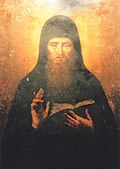 Paisius of the CavesVenerable · Monk of the Kyiv Caves LavraJul 19
- DiocletusSaintJul 19
- Ambrose AutpertusVenerableJul 19
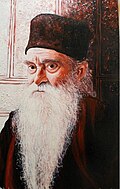 Arsenie PapaciocConfessor · Elder of TechirghiolJul 19
- Aurea of CórdobaMartyrJul 19
- BabilaMartyrJul 19
- Cobran of CluainSaintJul 19
- Corban of CluanaVenerableJul 19
- DioclesVenerableJul 19