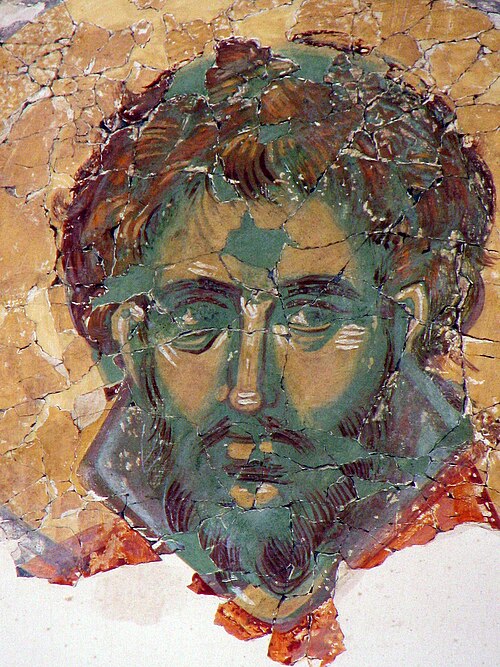
Confessor
Nicetas of Medikion
Abbot of Medikion Monastery
Monk and abbot of Medikion, a confessor who opposed Byzantine iconoclasm; commemorated on 3 April.
- Feast
- April 3old style April 16
- Reposed
- 8249th century
- Place
- Princes' Islands
- Order
- Confessors
Life
Saint Nicetas the Confessor was abbot of the Medikion monastery in Bithynia and a confessor against Byzantine iconoclasm. He was born around 760 at Caesarea in Bithynia and fell asleep in 824 on the Princes' Islands. The Church remembers him on 3 April.
He was of a pious family. His mother died eight days after his birth, and his father, Philaretos, became a monk, so the boy was raised by his grandmother. From youth he served in church and was a disciple of the hermit Stephen, who sent him in 782 to the Medikion monastery. The monastery was led by Abbot Nicephorus the Confessor and was famed for its strict rule. After seven years, in 790, Patriarch Tarasios ordained him priest. When Nicephorus fell ill he entrusted the monastery to Nicetas, and after Nicephorus's death the monks chose him abbot. The number of brethren grew to a hundred. His life was marked by the gift of miracles: at his prayer a mute boy recovered his voice, two women possessed by evil spirits were healed, a madman regained his mind, and many sick were freed from illness.
In the time of Emperor Leo V the Armenian (813 to 820) the iconoclast heresy revived, and after the council of 815 Patriarch Nicephorus was removed and an iconoclast, Theodotus, put in his place. The abbots of the monasteries were called before the emperor to be won over to the false teaching about icons. Nicetas firmly defended the veneration of icons, and by his example all the abbots present remained faithful. All the confessors were imprisoned, and Nicetas was sent into exile at the fortress of Masalaion, where he endured trials, strengthening the spirit of the other prisoners. He was moved from prison to prison, tormented by hunger, thirst and cold, and mocked. It is told that one of his tormentors, a certain Nicholas, saw in a dream one night his dead father, who told him to stop troubling the servant of God, and from then on Nicholas repented and held others back too.
When Leo perished, in 820, Emperor Michael II freed those imprisoned for the icons. Nicetas did not return to Medikion but withdrew to a strict monastery near Constantinople, where he died in 824. His body was carried to Medikion, and at that procession many sick who touched it were healed. He was laid beside the tombs of Nicephorus and his friend Athanasios. Medieval Lives of him survive, among them one by his disciple Theosterictus, and Saint Joseph the Hymnographer wrote a canon describing his life as ascetic, God-pleasing and full of charity. A church of the eighteenth century on the island of Lefkada is dedicated to him.
Commemorated the same day April 3
 Sixtus ISaint · Bishop of RomeApr 3
 Agape of ThessalonicaMartyrApr 3
- UlphianusMartyrApr 3
- Nectarius of BezhetskVenerableApr 3
- Aristus of SicilySaintApr 3
- Attalus of TaorminaVenerableApr 3
- Benignus of TomisMartyrApr 3
- BithoniusMartyrApr 3
 BurgundofaraVenerable · Abbess of FaremoutiersApr 3
- Chrestus and PappusHoly MartyrsApr 3
- Comman son of DomainghinSaintApr 3
- DiusMartyrApr 3