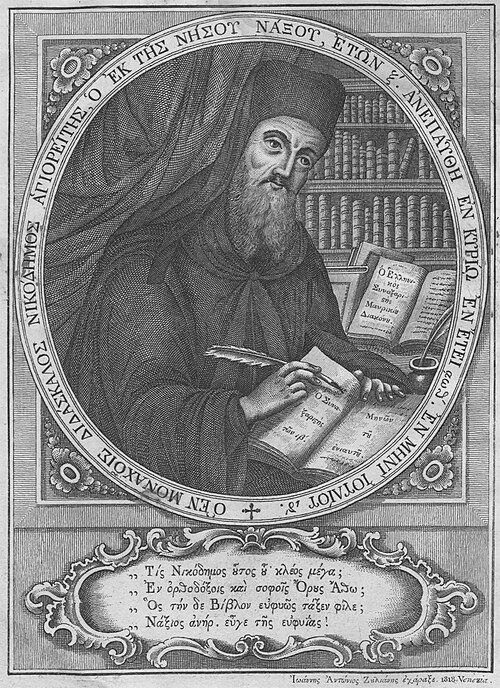
Venerable
Nicodemus the Hagiorite
Athonite monk
Athonite monk, mystic and theologian, editor of the Philokalia, who died in 1809.
- Feast
- July 14old style July 27
- Reposed
- 180919th century
- Place
- Karyes
- Order
- Venerables
Life
Saint Nicodemus the Hagiorite (Nicodemus of the Holy Mountain), a venerable father, was an Athonite monk, mystic, theologian and great editor of the writings of the holy Fathers, whose work breathed new life into hesychast prayer and patristic reading in the Orthodox world. He was born in 1749 on the island of Naxos and fell asleep in 1809 on Mount Athos. His feast is on 14 July.
Childhood and education
He was born in 1749 on Naxos, of upright parents, Antonios and Anastasia Kallivourtzis. At Holy Baptism he received the name Nicholas. From childhood he was brought up in the Christian faith by his parents. He attended the school of Saint George on Naxos, where his teacher was the archimandrite Chrysanthos, brother of Saint Cosmas of Aetolia, then went to higher studies at Smyrna, where he studied for five years at the Evangelical School. He studied theology, ancient Greek, Latin, French and Italian, and according to some sources he also had knowledge of philosophy and other sciences. Later scholars have been cautious about the foreign languages his biographers credited him with. The persecution of Christians by the Turks cut his schooling short, and in 1770 he returned to Naxos, where he became secretary to Metropolitan Anthimos.
The name Hagiorite, recent research holds, should be regarded rather as a worldly nickname than a name coming from a monastery in which he had struggled; the true family name was Kallivourtzis.
The monastic path
A few years later he met Macarius of Corinth, beginning a lifelong friendship. It was then that he decided to embrace the monastic life, following the example of three monks he had met, Gregory, Niphon and Arsenios. Coming from Athos, they urged him to go there. He arrived in 1775, at the age of 26, and was tonsured a monk at the monastery of Dionysiou, receiving the name Nicodemus, as is the custom for those who renounce the world. He was initiated into hesychia, the way of prayer with inner stillness, controlled breathing and repetition of the Jesus Prayer. He joined the monks called Kollyvades, who sought a revival of old Orthodox practices and of patristic reading, along with Saint Macarius Notaras and Saint Athanasios Parios, and spent the rest of his life translating and publishing such works. He also received the Great Schema, the highest monastic degree.
Two years after his arrival, on the commission of Metropolitan Macarius, he began preparing for print a manuscript of spiritual texts, the Philokalia, made up of manuscripts found in 1777 at the monastery of Vatopedi. The work appeared at Venice in 1782. Immediately afterwards he edited the Evergetinos, a classic collection of spiritual teachings, and the book on unceasing Holy Communion (both with Metropolitan Macarius, Venice, 1783). So began his work as writer and theologian.
From Dionysiou he went to an elder of the Kollyvades, Arsenios of the Peloponnese, at the monastery of Pantokrator, where he gave himself to prayer, to the study of Holy Scripture and the writings of the Fathers. For a time he stayed with the elder on the island of Skiropoula, where, at the request of his cousin Hierotheos, bishop of Euripos, he wrote the guide on the guarding of the five senses, the imagination, the mind and the heart, also called the Enchiridion of Counsels, a work that remains influential in Greek spirituality to this day. In 1783, returned to Athos, he received the schema and shut himself in seclusion, where he stayed six years; he came out when Metropolitan Macarius, visiting Athos again, entrusted him with the editing of the works of Saint Symeon the New Theologian. From then until his death he gave himself to literary and theological work.
His works
The best known is the Philokalia, but not the only one: together with the hieromonk Agapios he compiled the Pedalion (The Rudder), the collection of the canons of the Church with their commentaries. He wrote the Teaching on Confession, the Evergetinos, the New Eclogion (1803), the New Martyrologion (1799), the Synaxaristes of the twelve months (1805-1807, printed at Venice in 1819), the Wreath of the Ever-Virgin (62 canons to the Mother of God gathered from Athonite manuscripts), the New Ladder, a commentary on the 75 gradual songs of the Octoechos, a commentary on the Paschal canon, the Heortodromion, and commentaries on the rules of the seven Ecumenical Councils. He also composed hymns: the canon to the icon of the Mother of God the Quick to Hear, the service for the Venerable and God-bearing Fathers who shone on Athos, the akathist to the Holy Apostles Peter and Paul and that to the Holy Archangels Michael and Gabriel. He was not a stranger to Western spiritual writers: he published in reworked versions the Spiritual Exercises of Ignatius of Loyola and the Spiritual Combat of Lorenzo Scupoli, later rendered into Russian by Saint Theophan the Recluse as Unseen Warfare.
Repose and veneration
He fell asleep in 1809 (by the old calendar on 1 July, that is 14 July; some sources give 1808) and was buried in the cell of Skourtaioi at Karyes. He was canonized on 31 May 1955 by Ecumenical Patriarch Athenagoras. The saint's head is kept on Athos, at the monastery of Saint Nicodemus, a dependency of Simonopetra, and the rest of his relics at the monastery of Saint Nicodemus in Goumenissa. In April 2010, two wrongdoers stole two of the three portions of the head; after a few days the thief returned the relic himself and gave himself up to the police, because he had seen Saint Nicodemus in dreams four times.
Commemorated the same day July 14
 Heraclas of AlexandriaSaint · Patriarch of AlexandriaJul 14
 Vincent MadelgariusVenerable · Benedictine monkJul 14
 Stephen of MakhrishchVenerableJul 14
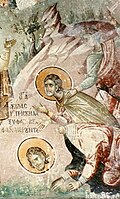 AquilaApostle · Apostle of the SeventyJul 14
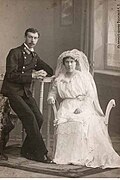 Konstantin BogoyavlenskyHieromartyr · Priest of MerkushinoJul 14
- Arsenius of AgiofarangoSaintJul 14
- Basinus of DrongenSaintJul 14
- Colman son of AingenSaintJul 14
- Deusdedit of CanterburySaint · Archbishop of CanterburyJul 14
- Emmanuel, Anezina, George and MariaHoly New Martyrs · Crypto-Christian New MartyrsJul 14
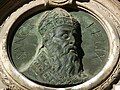 Felix of ComoSaint · Bishop of ComoJul 14
- Hellius of EgyptVenerableJul 14