Saint
Pharaildis
Patron of Ghent
Virgin of the eighth century, patron of Ghent, who lived to a great age and died at ninety.
- Feast
- January 4old style January 17
- Reposed
- 7408th century
- Place
- Bruay-sur-l'Escaut
Life
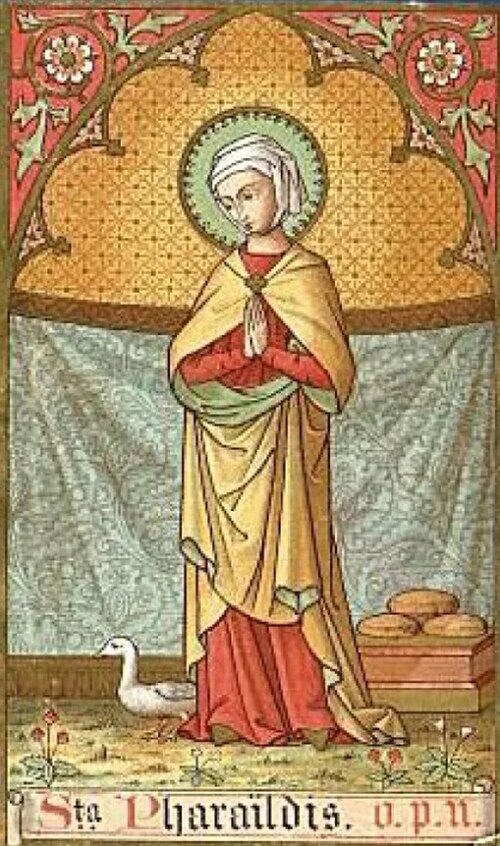
Saint Pharaildis was a virgin of eighth-century Belgium, the patron of the city of Ghent. The dates of her life are uncertain, but tradition says that she lived to a great age and died at ninety, in the first days of January.
She was born in Ghent, the daughter of Witger, Duke of Lorraine, and of Saint Amalberga of Maubeuge. Her siblings were Emebert, Reineldis, Ermelindis and Gudula, all honoured as saints. She was brought up by Saint Gertrude of Nivelles.
As a child she had made a private vow of virginity, but at a young age she was married against her will to a nobleman. Her husband demanded his marital rights, saying that her fidelity was owed to him and not to God. Because of her refusal, and her visits to churches late at night, he beat her.
When she was widowed she was still a virgin, and she gave herself to works of charity, living so to the end of her life.
Her veneration is attested as early as the eighth century. About the year 754 Agilfrid, abbot of Saint Bavo's Abbey, obtained her relics and brought them to Ghent. Her feast, kept on 4 January and called “Fru Verelde,” was a major festival of the city in the late nineteenth century. She is shown with a goose. Several miracles are attributed to her: she is said to have caused a spring to rise whose waters cured sick children, to have turned into stone some bread hidden by a miserly woman, and to have revived a cooked bird from only its skin and bones (the “goose miracle”). She is considered patron of Ghent, of Belgium, of marriage and of widows.
Commemorated the same day January 4
 ApollosApostle · Apostle of the SeventyJan 4
 Symeon of JerusalemHieromartyr · Bishop of JerusalemJan 4
 EpaphroditusApostle · Envoy of the Church of PhilippiJan 4
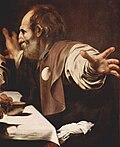 CleopasApostle · Disciple on the road to EmmausJan 4
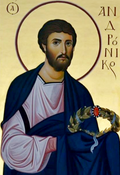 Andronicus of PannoniaApostle · Bishop of PannoniaJan 4
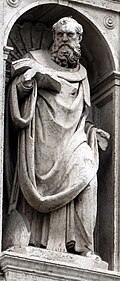 EpaphrasApostle · Companion of the Apostle PaulJan 4
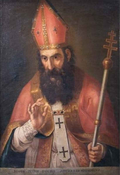 EvodiusApostle · Bishop of AntiochJan 4
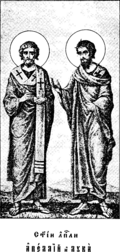 Apelles of SmyrnaApostle · Bishop of HeracleaJan 4
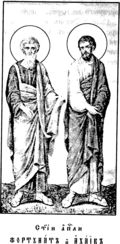 AchaicusApostle · Of CorinthJan 4
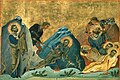 AmpliatusApostle · Greeted by the Apostle PaulJan 4
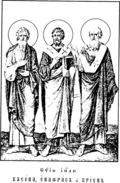 Crispus of CorinthApostle · Bishop of ChalcedonJan 4
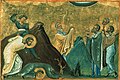 Quartus of BerytusApostle · Bishop of BeirutJan 4