Venerable
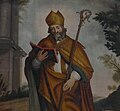
Savvas the New of Kalymnos
Patron of Kalymnos
Priest and spiritual father of the nuns of Kalymnos, a great ascetic and icon painter; died in 1948.
- Feast
- March 25old style April 7
- Reposed
- 194820th century
- Place
- Kalymnos
- Order
- Venerables
Life
Saint Savvas the New of Kalymnos was a hieromonk, great ascetic, confessor, iconographer and wonderworker. Born in 1862 in Eastern Thrace, he struggled on Mount Athos, in the wilderness of the Jordan and on Aegina beside Saint Nektarios, and spent the last twenty years of his life on the island of Kalymnos as priest and spiritual father of the nuns of the Convent of All Saints. He is the patron saint of Kalymnos and one of the saints recognized in recent times by the Ecumenical Patriarchate.
Childhood and flight to Athos
He was born in 1862 in the village of Herakleitsa in Eastern Thrace, in the district known as Ganochora. He was the only child of Constantine, a small trader, and Smaragda, devout people who were very poor. At baptism he was named Basil.
From his early years he longed for the monastic life, and his favourite occupation was reading the lives of the saints. After primary school he did not go on to secondary school. According to some sources his parents, learning of his desire, took him out of school at twelve and set him to work in trade, and his mother threatened that she would die if he became a monk.
At the age of twelve he left secretly for Mount Athos and entered the Skete of Saint Anne, a dependency of the Great Lavra. There, besides his monastic duties, he learned iconography and Byzantine chant.
In the Holy Land
Later he went on pilgrimage to Jerusalem. He arrived in 1887 and entered the monastery of Saint George of Choziba, where after a period as a novice he was tonsured a monk in 1890 with the name Savvas. According to some sources, the abbot then sent him back to Athos to perfect his iconography and church music, and in 1897 he returned to the Holy Land.
He joined the brotherhood of Abbot Kallinikos, a native of Alatsata in Asia Minor. In 1902 he was ordained deacon, and in 1903 priest, by Archbishop Nikodemos of Diocaesarea. For a time he served at the Patriarchal School of the Holy Cross in Jerusalem.
For almost ten years he lived in the desert near the Jordan, leading a very austere life devoted to prayer and the painting of icons. His dwelling consisted of two cells in the rock, which he reached by climbing a rope ladder. This solitude served his inner recollection and noetic prayer, and he made great spiritual progress there.
Because of the disorder caused by Arab raids in the Holy Land, and because of his health, he was forced to leave. In 1916, after some twenty-six years in the Holy Places, he returned to Greece.
In search of stillness
He looked for a quiet place to continue his monastic struggle. He went first to Patmos, where he lived for a while in the hermitage of Grava and later in the Monastery of Saint John the Theologian.
For three years he travelled throughout Greece looking for a suitable place. He visited Athos again, the monastery of Phaneromeni, Salamis and the island of Hydra.
In Athens he met a disciple of Saint Nektarios, who told him that the saint was looking for him. He went at once to Aegina, to the Convent of the Holy Trinity, where he served Saint Nektarios as the community's priest until the saint's repose in 1920. Other sources say that Saint Nektarios invited him there in 1919.
With Saint Nektarios
On Aegina he taught the nuns iconography and Byzantine chant. These were among the most important years of his life because of his friendship with Saint Nektarios, who was then at the height of his spiritual life. Father Savvas confessed to him and received his counsel, and the two held each other in the highest esteem as spiritual brothers, each regarding the other as a saint.
Father Savvas served the funeral of Saint Nektarios and painted his first icon. After the funeral he asked the abbess to let no one disturb him for forty days and shut himself in the cell near the saint's tomb. The nuns said they could hear two voices conversing in the cell and believed the second was that of Saint Nektarios.
After forty days he came out holding an icon of Saint Nektarios and asked the abbess to place it in the church for veneration. The abbess objected, since Nektarios had not yet been glorified by the Church, and she feared trouble. Father Savvas, usually meek and humble, insisted this time with authority and told her to be obedient and not to question the will of God, for he knew the holiness and purity of Saint Nektarios.
After the death of his spiritual father he lived in a cell near the Convent of the Holy Trinity. Whatever he earned he gave to the poor. The growing fame of Saint Nektarios as a wonderworker soon brought crowds of pilgrims to the convent, and the stillness that Father Savvas loved was lost.
Spiritual father on Kalymnos
Encouraged by Gerasimos Zervos, a wealthy and influential Kalymnian, he left for Kalymnos in 1926 (other sources say 1925). There he became priest and confessor of the Convent of All Saints, and near it he built himself a small cell in which he lived until the end.
Most of the men of Kalymnos were sponge divers who brought up sponges from the sea bed to feed their families. Many were crippled or died in this work, and their families lived in constant fear of losing their breadwinner. Father Savvas prayed above all for orphans, the poor and widows.
Many came to him for comfort of soul and body, help and advice, and he refused no one. Even in his lifetime he was revered as a saint, and people called him simply "Father Savvas". He taught everyone around him, children included. Many sensed a heavenly fragrance in his presence, and some saw him rise above the ground as he stood in prayer.
As a confessor he combined gentleness with severity. He was lenient toward some sins and strict toward others, and he counted blasphemy against God and the saints, and the condemning of others, among the gravest. He could hear confessions for hours, reading all the prayers attentively.
His ascetic life
He remained an ardent ascetic to the end, practising extreme restraint in food, drink and sleep. He lived on prosphora and a little wine and slept no more than two hours a day, sitting on a broken chair. The rest of his time he gave to God and to his neighbours.
In the evenings he painted icons, heard confessions, or took up a crowbar and cut stone so as not to eat his bread for nothing, as he put it. At times he set aside his stillness for the sake of his brethren, comforting people in their trials and sharing with them his burning love for Christ.
Any money that came to him he gave at once to the poor. Workmen who laboured at his cell took their wages themselves from the box where he kept all his money. During the Second World War he spent whole nights in prayer for the people, and when enemy aircraft flew over the convent he made the sign of the cross over them.
Repose
Toward the end of his life he remained in a state of intense prayer and holy compunction. For three days he shut himself in his cell and received no one, and his last counsels were about love and obedience in Christ.
At the moment of death he suddenly gained strength, joined his hands and clapped them several times, saying "Lord" four times. Then he chanted the hymn of the Annunciation, which puzzled the nuns, since by the new calendar the feast had passed. Only later did they realize that those following the old calendar were then beginning the vespers of the feast.
He reposed on 7 April 1948 (other sources say 1947), which was 25 March by the Old Calendar, the eve of the Annunciation in the Julian reckoning. One of the nuns saw his soul rising to heaven in a golden cloud amid heavenly singing.
Relics and veneration
According to the accounts that have come down, a few years after his death he appeared to the nuns and asked them to exhume his remains, because water from a cistern next to the grave was soaking his head. The local bishop, Isidoros, at first refused his blessing but in the end allowed the exhumation.
The relics were brought out in 1957. It is said that a heavenly fragrance poured from the grave and spread across the whole island, witnessed by many, including the bishop. The body was found whole, except for a small area on the crown of the head where water had seeped in, just as the saint had told the nuns.
Since then many miracles and healings have been attributed to him. The Ecumenical Patriarchate formally numbered him among the saints by a patriarchal and synodal act of 19 February 1992.
The hymns of the Church praise him as the offspring of Thrace and the glory and beauty of Kalymnos, and say that the island possesses his holy body as a God-given treasure from which the faithful receive health of soul and body. His relics are venerated at the Convent of All Saints on Kalymnos.
Saint Savvas the New is commemorated on 7 April (25 March, Old Style) and, in some places, on the fifth Sunday of Great Lent together with Saint Mary of Egypt.
Commemorated the same day March 25
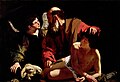 IsaacRighteous · The PatriarchMar 25
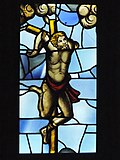 The Wise ThiefMartyr · The Thief on the CrossMar 25
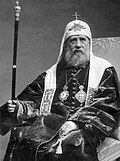 Tikhon of MoscowSaint · Patriarch of MoscowMar 25
- Aelfwold of SherborneSaint · Bishop of SherborneMar 25
- Barontius and DesideriusHoly VenerablesMar 25
- Columba daughter of BaoitSaintMar 25
- DulaMartyrMar 25
- Dulas of NicomediaMartyrMar 25
- Enan son of MuadanSaintMar 25
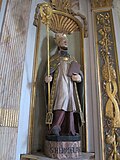 HermelandVenerableMar 25
 Humbert of MaroillesVenerableMar 25
- KennochaVenerableMar 25