
Hieromartyr
Vladimir Petrek
Priest of Prague
Orthodox priest of Prague, executed in 1942 during the German occupation.
- Feast
- September 5old style September 18
- Reposed
- 194220th century
- Place
- Prague
- Order
- Martyrs
Life
Saint Vladimir Petrek (Vladimír Petřek, 19 June 1908 - 5 September 1942), hieromartyr, was an Orthodox priest in Prague in the Orthodox Church of the Czech Lands and Slovakia, then under the shelter of the Serbian Orthodox Church, and was executed during the German occupation for helping those who killed Reinhard Heydrich. He was canonized by the Orthodox Church of the Czech Lands and Slovakia, together with the other Czech martyrs, on 8 February 2020. His own source breaks off before the arrest; this is completed from the source on Václav Čikl.
Youth and studies
He was born in 1908 at Chodolanech, near Olomouc, in Czechoslovakia, the second of ten children of Josef, a teacher, and Maria. His father was a member of the Sokol movement and a fighter for the independence of Czechoslovakia, and his mother an educated woman from a family of teachers. He finished school at Olomouc, and in 1923 came to Sremski Karlovci, where he enrolled in the seminary. He took the maturity examination in July 1928. After the seminary he enrolled, on 29 September 1928, at the Faculty of Theology in Belgrade. He passed all examinations by June 1932 and his diploma was issued at the end of September 1932. He returned to his homeland after ten years, with good knowledge of theology, philosophy and literature, at the call of Bishop Gorazd, who needed priests.
He knew German very well and also used literature in English and French. In the Kingdom of Yugoslavia he learned Serbian very well, and knew Bulgarian, Macedonian and Slovene well. On his return to Czechoslovakia he did his military service in the 3rd infantry regiment at Kroměříž (17 July 1933 - 17 September 1934). Because of his knowledge of the languages, culture and mentality of the South Slavs, he was offered a career as a general-staff officer in charge of relations of the Czechoslovak army with Yugoslavia. Petrek refused, as a pacifist.
At Rožnov pod Radhoštěm he met his future wife, Jiřina Rýnlová, whom he married on 7 December 1934 at Olomouc. Soon, on 15 December 1934, Bishop Gorazd ordained him deacon, and the next day priest. He was a priest at the cathedral of Saints Cyril and Methodius in Prague. Moved to Prague, he served Orthodox faithful not only in Prague but in Litoměřice, Karlovy Vary and other towns. He often wrote and published articles, mostly in the Bulletin of the Czech diocese, wrote fables and translated poems from Serbian, and led the organization of Orthodox youth in Prague. As a diligent pastor he gathered round him a strong Orthodox community, not only of Czech Orthodox but of Serbs, Russians, Ukrainians, Subcarpathian Rusyns, Bulgarians and Romanians. He was one of the chief organizers of the preparation of the pilgrimage of Czech Orthodox to the Kingdom of Yugoslavia in 1937, when nearly two hundred faithful visited the Serbian holy places with Bishop Gorazd.
Although he was to take his doctorate in Belgrade, because of the question of nostrification of his diploma and for financial reasons he decided to take it at the Hus Czechoslovak Evangelical Theological Faculty of Charles University in Prague. After two years of hard work he defended the dissertation "Church and State in the writings of Christians of the first four centuries". At the ceremony were present Bishop Gorazd, the Serbian priest Milivoje Crvčanin as delegate of the Serbian Orthodox Church, many Czech, Serbian, Russian and Bulgarian Orthodox. This success in the "professional field" was not followed by success in family life: after a fine start of the marriage and the birth of a little girl, Petrek divorced his wife before the civil court in 1937. The divorce weighed heavily on him, and in 1940 he tried to bring wife and daughter back to his home, but without success. On the other hand, this gave occasion in some circles to consider the possibility that he might be the one who could, in time, succeed Bishop Gorazd. In 1938, instead of Bishop Gorazd, Dr. Petrek represented the Czech Orthodox Church at the XIV International Old Catholic Congress in Zürich. The occupation of Czechoslovakia followed, and soon the beginning of the Second World War. During the general mobilization of September 1938 he volunteered for the Czechoslovak army.
The assassination of Heydrich
From the beginning of the war he joined the Czechoslovak resistance together with the priest who was his superior, Václav Čikl. The two, among other things, issued false baptismal certificates to persecuted Jews. They hid prominent Czechoslovak politicians and officers hunted by the Gestapo, such as Dr. Přemysl Šámal and Major Josef Sadilek. The terror of the German occupiers grew greatly with the arrival of Reinhard Heydrich in the Protectorate of Bohemia and Moravia. The Czechoslovak government in exile in London resolved to kill Heydrich. From London a group of parachutists trained by the British Special Operations Executive (SOE) was sent. The team that was to eliminate Heydrich was led by Jan Kubiš and Jozef Gabčík. Operation "Anthropoid" was carried out in Prague on 27 May 1942. Heydrich was only wounded in the attack, but died of his injuries on 4 June 1942. His death brought a wave of merciless reprisals by Nazi SS troops, including the destruction of whole villages and the killing of civilians. After the assassination the Orthodox Church gave the assassins shelter in the crypt of the church of Saints Cyril and Methodius in Resslova Street.
Resistance members who were helping the parachutists turned, through Jan Zelenka Hajský, to a member of the church committee of the Orthodox church in Prague, Petr Fafek. He turned to the chairman of the church committee, Jan Sonnevend, for help in hiding "a larger number of unregistered persons", explaining that it was a patriotic undertaking. Jan Sonnevend spoke with the priest Dr. Petrek, and they agreed that the persons could hide for a short time in the crypt of the Orthodox church of Saints Cyril and Methodius in Resslova Street in Prague. When the parachutists were brought into the crypt of the Orthodox church, each was received individually by Fr. Petrek. Petrek procured foodstuffs for them from the café-keeper František Jarolím of Libeň, a member of the church committee. Regularly he brought them food. Of his care it is known, from Gestapo notes, that he went so far as to empty himself the bucket that served them as a toilet. Fr. Petrek was arrested in the night of 17 to 18 June 1942. In the early morning of 18 June SS men surrounded and attacked the hiding place and, in the attack, used the arrested priest as a shield; the parachutists refused to surrender and took their own lives so as not to fall alive. Mass arrests of Orthodox in Prague followed, and at the trial of September 1942, with Bishop Gorazd, Fr. Čikl and Jan Sonnevend, he bore himself bravely and with dignity. His death is dated to 5 September 1942, in Prague.
Commemorated the same day September 5
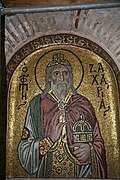 ZechariahProphet · Father of John the BaptistSep 5
 ElizabethRighteous · Mother of John the BaptistSep 5
 Athanasius of Brest-LitovskVenerable Martyr · Monk of BrestSep 5
 Rhais of AlexandriaMartyr · Martyr of AlexandriaSep 5
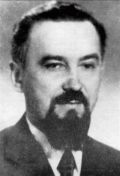 Vaclav ČiklHieromartyr · Priest of PragueSep 5
- AbdasSaintSep 5
- Abdias of PersiaMartyrSep 5
- Acontius of PortusMartyrSep 5
- Alvitus of LeónSaint · Bishop of LeónSep 5
 BertinVenerable · Abbot of SithiuSep 5
- DubhscuileSaintSep 5
- Eighty PriestsSaintSep 5