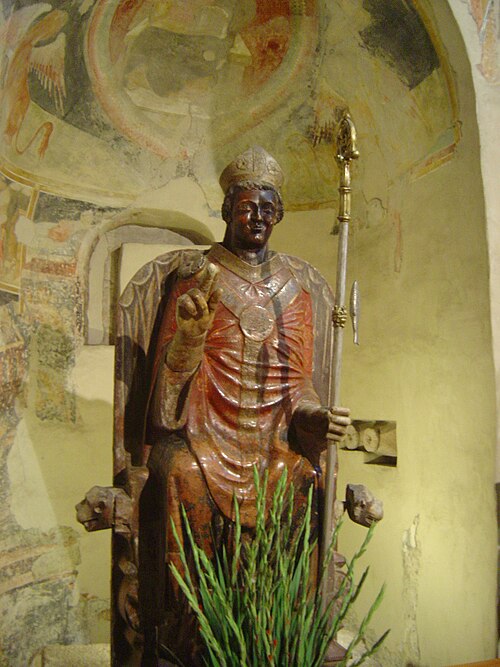
Saint
Zeno of Verona
Bishop of Verona
Bishop of Verona in the fourth century, of African origin, author of sermons.
Life
Saint Zeno, hierarch, was bishop of Verona in the fourth century, of African stock, and left a body of sermons. He is commemorated on 12 April.
His life
In the seventh century a notary of Verona named Coronatus wrote the life of Zeno and said of him that he was a native of Mauretania, in Africa, and that he taught children the faith there and helped in their schooling. Other accounts show him as a disciple of Saint Athanasius of Alexandria, whom he is said to have accompanied when Athanasius visited Verona, in 340. What is certain is that he lived at Verona and became a monk, and around 362 was elected bishop of the city, after the death of the bishop before him. He had a good classical education. As bishop he baptized many people and won some back from the Arian heresy; he lived in poverty, trained priests for the diocese and founded a convent for women. He also reformed how the agape was held and forbade loud groaning and wailing at funerals. He baptized by immersion, and gave newly baptized persons a medal. His episcopate lasted about ten years; some give the day of his death as 12 April 371, others the year 380.
The sermons
Zeno left more than ninety sermons, gathered in two books, one of 62 and one of 30, of which only some are of any length. Many comment on the Old Testament and see in its persons foreshadowings of Christ. Their lively language, with new words and wordplay, is taken as evidence that the author was African. They contain valuable information about Christian teaching and the old customs of the Church.
Veneration
The early martyrologies call him a confessor of the faith, and Saint Gregory the Great, in his Dialogues, calls him a martyr, which Saint Ambrose does not; Ambrose speaks of his happy death. The same Gregory tells that in 558 a river at Verona overflowed and the water stopped at the threshold of the church where Zeno’s relics lay. A poem from the eighth or ninth century calls him the eighth bishop of Verona. His relics lie in the basilica of San Zeno Maggiore at Verona, and the saint is the protector of the city. On the bronze doors of the basilica are shown, besides biblical scenes, the miracles attributed to him. According to tradition he fished on the banks of the Adige to feed himself, and for this he is regarded also as patron of fishermen.
Commemorated the same day April 12
 Julius ISaint · Bishop of RomeApr 12
 Sabbas the GothMartyrApr 12
 Athanasia of AeginaVenerable · Abbess of AeginaApr 12
- Damian of PaviaSaint · Bishop of PaviaApr 12
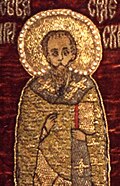 Basil of PariaConfessor · Bishop of PariaApr 12
- Akakios the New of KafsokalyviaVenerable · Hermit of Mount AthosApr 12
- Philophthea of PasăreaVenerable · Schemanun of PasăreaApr 12
- Isaac of SpoletoVenerableApr 12
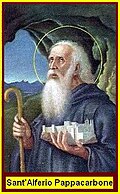 AlferiusVenerableApr 12
- Basil of ParionConfessor · Bishop of ParionApr 12
- Conda of Daire DachoimaVenerableApr 12
- Constantine of GapSaint · Bishop of GapApr 12