Righteous
Abibas of Jerusalem
The son of Gamaliel, whose relics were found together with those of Saint Stephen.
- Feast
- August 2old style August 15
- Era
- 1st century
- Order
- The Righteous
Life
Holy Righteous Abibas of Jerusalem lived in the first century, as the son of the righteous Gamaliel, the teacher of the Law. He received Holy Baptism with his father. He was buried in the tomb at Kafargamala, beside the Holy Protomartyr Stephen, the righteous Nicodemus and his father, Gamaliel. In the year 415 their relics were found in a wondrous way, after Gamaliel appeared to the priest Lucian, and were carried to Jerusalem. He is commemorated on 15 August.
Burial at Kafargamala
After the Holy Protomartyr and Archdeacon Stephen was stoned by the Jews, his body was left unburied, as food for beasts and birds. On the second night, the renowned Jewish teacher Gamaliel, who had begun to lean toward faith in Jesus as the Messiah and had defended the apostles in the Sanhedrin, sent trusted men to take the protomartyr's body. Gamaliel buried it on his own land, in a cave not far from Jerusalem. When Nicodemus died, the secret disciple of the Lord who had come to Him by night, Gamaliel buried him in the same place, near the tomb of the archdeacon Stephen. Then Gamaliel too, baptised, according to tradition by the apostles Peter and John, together with his son Abibas, was buried beside the tomb of the protomartyr and of Saint Nicodemus. After a time, in the days of the Christian emperors following Constantine the Great, the relics were found by divine revelation.
The appearances to the priest Lucian
They were found by Lucian, the priest of the village, after a vision. One night, at the third hour, a venerable old man appeared to him in a dream, tall, grey-haired, with a long beard, dressed in a white robe adorned with golden crosses and holding a golden rod. The old man called him three times by name and told him to go to Jerusalem and tell Archbishop John to open the tomb in which their relics lay in neglect, sometimes wetted by rain, sometimes trodden by unbelievers. He said that he was Gamaliel, the teacher of the apostle Paul, and that with him rested Stephen, Nicodemus and his son Abibas, who died at the age of twenty, baptised together with him. Where should they seek them? In the field before the village, to the south, called Delagavri.
Lucian was afraid to believe and asked that the vision be repeated three times. He fasted and prayed. The second time, Gamaliel reproached him for not going and showed him four baskets: three of gold and one of silver. One, with red flowers, was the tomb of Stephen, reddened with the blood of martyrdom; another, with white flowers, that of Nicodemus; the third, also with white flowers, that of Gamaliel; and the silver one, full of fragrant saffron, that of Abibas, who had been pure from sin in body and soul from his mother's womb and died a virgin. The third time Gamaliel spoke to him sternly, reminding him of the drought and the distress in the world. Then Lucian went in haste to Jerusalem and told Archbishop John. The archbishop wept for joy and sent him to dig.
The finding of the relics
Lucian gathered pious men and went to the field; on a hill, thinking the relics were there, he spent the night in prayer. In the same night Gamaliel appeared to a monk who lived nearby, Nugetius, saying that they lay not on the hill but by the thicket on the south side, and that the hill had been heaped up when the saints were carried to burial. The monk told Lucian. By the thicket they found a stone with a Hebrew inscription, moved it aside and found the narrow entrance of a cave. Inside, with a candle, they saw the tombs in the walls, with the relics of the saints arranged as the baskets had shown.
Archbishop John came with the bishops Eleutherius of Sebaste and Eleutherius of Jericho. When they opened the tomb of the protomartyr, the earth shook and worthy men heard above the voices of angels singing glory to God in the highest. From the relics there came a fragrance such as no one had ever perceived, which spread for ten miles. Many sick, blind, lame, tormented by spirits and sores, received healing, to the number of seventy-three. The relics of the four saints were carried out onto the hill with psalms and hymns, and the archbishop built a church there. He placed in it the relics of Nicodemus, Gamaliel and Abibas, and carried the relics of Saint Stephen with honour to Jerusalem, to the church on Sion. Later they came, by the providence of God, to Constantinople, where a church was built for them.
Commemorated the same day August 2
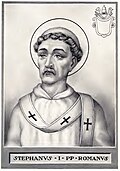 Stephen I of RomeHieromartyr · Bishop of RomeAug 2
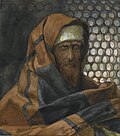 NicodemusRighteous · Disciple of the LordAug 2
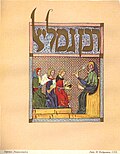 GamalielRighteous · Teacher of the Apostle PaulAug 2
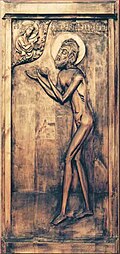 Basil the BlessedFool-for-Christ · Fool for Christ of MoscowAug 2
 Maximus of PaduaSaint · Bishop of PaduaAug 2
- Theodore of the DardanellesNew Martyr · New Martyr of the DardanellesAug 2
- Aelfthryth of CrowlandSaintAug 2
- AlfredaVenerableAug 2
- Athanasius ZhulanovMartyrAug 2
- Auspicius of AptSaint · Bishop of AptAug 2
- BasilMartyrAug 2
- Basil of VologdaFool-for-ChristAug 2