Venerable
Adrian of Solovki
Hermit
A Russian monk who lived as a hermit in the Solovki lands on the White Sea, dying in 1633.
- Feast
- August 9old style August 22
- Reposed
- 163317th century
- Order
- Venerables
Life
The Venerable Adrian of Solovki was one of the hermits who struggled in solitude on the island of Solovki in the White Sea in the sixteenth and seventeenth centuries. He is said to have lived near a lake in the middle of the island, two versts from the cell built by Hegumen Irinarch, in a severe ascetic life; there he reposed and was buried in the wilderness. He is commemorated on 11 July, in the synaxis of the saints of Novgorod, and on 22 August, in the synaxis of the saints of Solovki. No other details of his life are known.
Tradition keeps more details about the hermits around him. In the time of Hegumen Antonius (1605 to 1612), the disciple Basil of Kenozero, wandering in the forest, came upon a hermit named Andrew, who lived in a cave and ate only an herb that a holy man had shown him. Andrew had once been a labourer of the monastery at the saltworks, when Varlaam, later Metropolitan of Rostov, was hegumen. He told how he had struggled for three years with grievous temptations and then found peace; for thirty-eight years he had lived on that herb. He sent Basil back to the monastery and asked him to tell no one what he had heard while he lived. Later no one could find the cave again.
Basil's account kindled in the disciple Damian the desire to find such strugglers. After much searching and prayer to Saints Zosimas and Sabbatius, Damian found many hermits on Solovki and on Anzer, among them the elder Ephraim the Black, Nicephorus of Novgorod, Alexis of Kaluga, Tikhon of Moscow, Theodulus of Ryazan, Timothy of Aleksin and others. He visited them, brought them what they needed from the monastery, and buried with his own hands those who died. Then he too withdrew into the wilderness and, after various trials, settled on Yuriev Hill by Lake Bodlo. There he set up a cross, began to build a church of the Holy Trinity, and reposed as the schemamonk Diodorus on 27 November 1633.
The same company of strugglers included the layman Sabbas, who lived eleven years in the forests of the island, known only to God, and the monk Nestor, who prayed and fasted day and night near Sabbas's cell. Both were buried in Damian's hermitage.
Commemorated the same day August 9
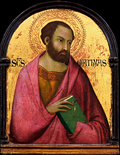 MatthiasApostle · Apostle chosen in place of JudasAug 9
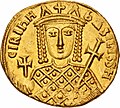 Irene of AthensRight-Believing · Byzantine EmpressAug 9
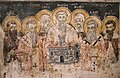 Sava of OhridSaint · Disciple of Saints Cyril and MethodiusAug 9
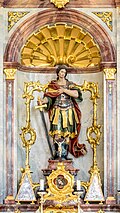 Romanus OstiariusMartyr · Doorkeeper of the church in RomeAug 9
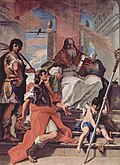 Firmus and RusticusMartyr · Martyrs of VeronaAug 9
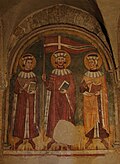 Secundianus, Marcellianus and VerianusHoly Martyrs · Martyrs of ItalyAug 9
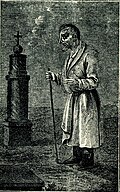 Anthony MonkinFool-for-ChristAug 9
- Jacob of SolovkiVenerable · Abbot of Solovki MonasteryAug 9
- Marcellus of VologdaSaint · Archbishop of VologdaAug 9
- Alexis of ConstantinopleMartyrAug 9
- Alexis of SolovkiVenerable · HermitAug 9
- AmorSaintAug 9