Hieromartyr
Agathodorus of Chersonesus
Bishop of Chersonesus
A bishop of Chersonesus in Crimea who died a martyr for his faith in Christ.
Life
Saint Agathodorus of Chersonesus, Hieromartyr and bishop, was one of seven bishops of Tauric Chersonesus: Basil, Ephraim, Capito, Eugenius, Etherius, Elpidius and Agathodorus. They carried the Gospel to the lands from the Danube to the Dnieper, including the Crimea, and sealed their apostolate with the death of martyrdom in the fourth century at Chersonesus. Agathodorus was stoned to death on 7 March 311. Their synaxis is commemorated on 20 March (7 March by the old calendar), and on 28 December in the synaxis of the saints of Crimea.
The Christian faith had reached the Crimea long before the Baptism of Vladimir. The beginning of the enlightenment of Taurica by faith in Christ was made by the holy Apostle Andrew the First-called. The spread of Christianity there was helped, against their will, by its very enemies: the Roman emperors sent state prisoners into exile there, among whom in the first three centuries were also confessors of Christ. So Saint Clement, bishop of Rome, was sent in the time of Trajan to the quarries of Inkerman. The pagans of the Crimea resisted stubbornly, but the faith of Christ grew stronger through self-sacrificing preachers, and many gave their lives in this struggle.
Basil and Ephraim
At the beginning of the fourth century the episcopal see of Chersonesus was established. It was a time of transition: Chersonesus, which served as a base for Roman soldiers, was gradually passing under Byzantine rule. In the reign of Diocletian, in the year 300, Patriarch Hermon of Jerusalem (303 to 313) sent many bishops to different lands to preach. Two of them, Ephraim and Basil, reached Chersonesus and planted the Word of God there. Ephraim then went to the peoples of the Danube, where he suffered many afflictions; in the time of the persecution he was beheaded (only the day of his death is known for certain, 7 March). Basil continued to preach in Chersonesus and turned many idolaters to the truth. Others, embittered by his work, offered fierce resistance; the holy confessor was seized, beaten without mercy and driven out of the city. Withdrawing to the mountains, he lived in a cave and prayed unceasingly for those who had expelled him. The Lord sent the unbelievers a wonder: the only son of a prominent citizen of Chersonesus died. The dead youth appeared in a dream to his parents and told them that a certain Basil, by his prayers to the true God, could raise him from the dead. The parents sought out the bishop and asked him to work the wonder. Basil answered that he was a sinful man, but the Lord is almighty and could grant their request if they believed in Him. He prayed long, calling on the Name of the Holy Trinity, blessed water and poured it over the dead youth, who came to life. The bishop was brought back to the city with honour, and many believed and were baptized.
Soon, by the order of the emperor Maximian Galerius (305 to 311), the persecution broke out with new force. On 7 March 309 the enemies of Christ burst into Basil's house at night, bound him, dragged him through the streets and beat him to death with stones and clubs. His body, thrown outside the city to be eaten by dogs and birds, lay many days unburied but untouched. Christians then buried it secretly in a cave.
Eugenius, Elpidius and Agathodorus
A year later, learning of Basil's martyrdom, three of his fellow bishops, Eugenius, Elpidius and Agathodorus, left their preaching in the Hellespont region and came to Chersonesus to continue his work. They laboured greatly for the salvation of souls. All three shared the fate of their predecessor: the raging pagans stoned them on 7 March 311.
After some years, in the time of Saint Constantine the Great, Bishop Etherius came from Jerusalem to Chersonesus. He too first met opposition, but the emperor, who had declared freedom of the Christian faith in the whole empire, did not allow violence against him, and issued an edict allowing the Christians of Chersonesus to hold services unhindered. Through Saint Etherius' care a church was built in the city, where he shepherded his flock in peace. To thank the emperor, he travelled to Constantinople, but on the return he fell ill and died on the island of Amos on 7 March. In his place Constantine sent Bishop Capito to Chersonesus. The pagans demanded a sign in order to believe in the God he preached; Saint Capito, in his episcopal vestments, entered a kindled fire, prayed long in the flames and came out unharmed, bringing live coals in his phelonion. Many unbelievers then understood the power of the Christian God. Of this wonder and of Capito's great faith the holy Constantine and the fathers at the First Ecumenical Council in Nicaea (325) were told. Some years later, travelling to Constantinople, he was caught in a storm and the ship was driven to the mouth of the Dnieper; the pagans drowned all aboard, among them Capito, on 21 December. The Church decided to commemorate this bishop together with the other martyrs of Chersonesus, on 7 March.
The legacy of Chersonesus
The preaching of the holy martyrs strengthened the faith of Christ in Chersonesus, which from the fifth century became the spiritual centre from which Christianity spread north toward Rus. Archaeological excavations have shown that more than fifty churches stood in the city, dating from the fifth to the fourteenth centuries. In the year 987 Saint Vladimir, equal to the apostles, received Baptism at Chersonesus.
Commemorated the same day March 7
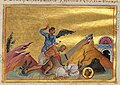 EubulusApostle · One of the SeventyMar 7
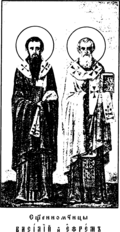 Hieromartyrs of ChersonHoly HieromartyrsMar 7
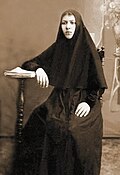 Catherine KonstantinovaVenerable Martyr · Novice of the Sorrows ConventMar 7
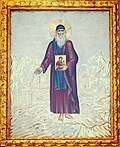 Lavrentios of MegaraVenerableMar 7
- Basil of ChersonesusHieromartyr · Bishop of ChersonesusMar 7
- AemilianusVenerableMar 7
- Anna GorokhovaVenerable MartyrMar 7
- Antonina NovikovaVenerable MartyrMar 7
- Ardo SmaragdusVenerableMar 7
- Artaxus of ThraceSaintMar 7
- Bishops of TremithusSaintMar 7
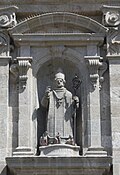 CapitoSaintMar 7