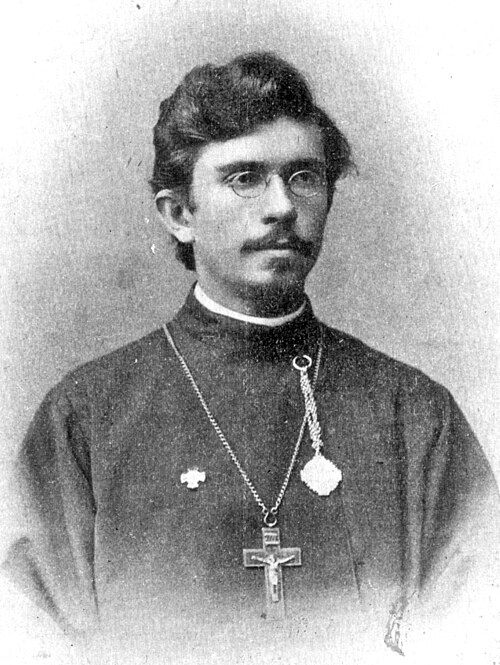
Hieromartyr
Alexander Hotovitzky
Priest and missionary
Russian priest ordained in the United States in the 1890s, who died a martyr in Moscow in 1937.
Life
Saint Alexander Hotovitzky, Hieromartyr, was a Russian archpriest, ordained priest in the United States in the 1890s, who died a martyr in Moscow on 19 August 1937, in the time of the Great Purge. The Russian Church canonized him in 1994. He is remembered on 7 August (old style) and on the third Sunday after Pentecost, in the Synaxis of the saints of Galicia.
Youth and America
He was born on 11 (23) February 1872 at Kremenets in Volhynia, in the family of an archpriest, rector of the Volhynia Theological Seminary. He graduated from the Volhynia Seminary (1891) and the Saint Petersburg Theological Academy, with a degree in theology (1895). While still a student he asked to be sent to the Diocese of the Aleutians and North America. From 1895 he was second reader in the parish of Saint Nicholas in New York. In 1896 he married Maria Vladimirovna Shcherbukhina, a graduate of the Pavlovsk Institute of Saint Petersburg, and in the same year he was ordained priest by Bishop Nicholas Ziorov, at the diocesan cathedral in San Francisco; the bishop said to him: “I saw that you have that spark of God which makes every service truly the work of God.” He was pastor of Saint Nicholas church and initiated the building of a new cathedral to replace the small parish church, for which he travelled throughout the United States and even to Russia to raise funds; Tsar Nicholas gave five thousand rubles. The cathedral was consecrated by Bishop Tikhon on 23 November 1902; in the chronicle of the church it was recorded that it was built through the labours of Archpriest Alexander Hotovitzky.
In March 1906 he was sent on a mission to Montreal, where he celebrated the first Orthodox Liturgy in the city's history and helped to found the parish of the Holy Apostles Peter and Paul. He laboured much in mission and preaching; he was editor-in-chief and one of the main authors of the “American Orthodox Messenger,” in Russian and English. He took part in founding the Russian Orthodox Catholic Mutual Aid Society (ROCMAS), serving as treasurer, first secretary and then president; under his leadership the society helped not only immigrants but also the Rusyns of Austria-Hungary, the Macedonian Slavs and, in the time of the Russo-Japanese War of 1904-1905, Russian soldiers in Manchuria and prisoners of war. He was secretary of the first All-American Council, at Mayfield, in March 1907, and, with Saint Alexis Toth, helped bring the Carpatho-Rusyns from the Uniate Church to Orthodoxy. On his initiative twelve parishes were founded on the east coast of the United States. He was raised to archpriest. He served in America eighteen years, under Bishop Nicholas, the future Patriarch Tikhon and Archbishop Platon, until 26 February 1914.
In Finland and in Moscow
In 1914, on the initiative of Archbishop Sergius of Finland (Stragorodsky), he was transferred to Helsingfors, as rector of the Dormition cathedral and of the Holy Trinity church. He was editor of the “Helsingfors Parish Leaflet” and a member of the Society for the Rapprochement of the Anglican Church with Orthodoxy, and there he also laboured against Lutheran proselytizing. From August 1917 he was the sacristan of the church of Christ the Saviour in Moscow, one of the closest helpers of Saint Tikhon in running the Moscow diocese. He was a member of the Local Council of 1917-1918, elected by the clergy of the diocese of Finland. In 1919 he received the mitre.
In May 1920 and November 1921 he was arrested on the charge of teaching the Law of God to children. During the authorities' campaign of confiscating church valuables, meetings of clergy and laity were held in his apartment, who drafted a resolution of the parish council demanding from the authorities a guarantee that the offerings would really be used for the starving and protesting against the harassment of Church people in the press. He was arrested and became one of the main defendants at the second Moscow trial, against more than a hundred clergy and laity, held in November-December 1922. At interrogations he stayed calm and tried to shield others, but did not admit guilt himself. In his last word he tried to defend the other defendants: “I ask you to pay attention to those who were at my apartment: some of them are old, others very young and not at all guilty.” He was sentenced to ten years in prison, with confiscation of property and loss of rights for five years. In October 1923 he was amnestied, but in autumn 1924 he was arrested again. He passed through several arrests and exiles, and on 19 August 1937, in the time of the Great Purge, he was executed in Moscow.
Commemorated the same day August 7
 Narcissus of JerusalemSaint · Bishop of JerusalemAug 7
 Donatus of ArezzoSaint · Bishop of ArezzoAug 7
 Dometius the PersianMartyr · Martyr of PersiaAug 7
- Donatus of BesançonSaint · Archbishop of BesançonAug 7
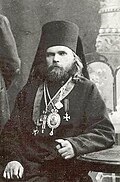 Pimen BelolikovHieromartyr · Bishop of Semirechye and VernyAug 7
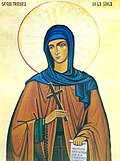 Theodora of SihlaVenerable · Hermit in the Neamț MountainsAug 7
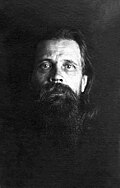 Alexei VorobyovHieromartyr · ArchpriestAug 7
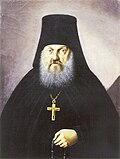 Anthony of OptinaVenerable · Elder of OptinaAug 7
 Marinus and AsteriusHoly MartyrsAug 7
 Pârvu MutuVenerableAug 7
 Donatus of ImolaSaint · Archdeacon of ImolaAug 7
- MiklosSaintAug 7