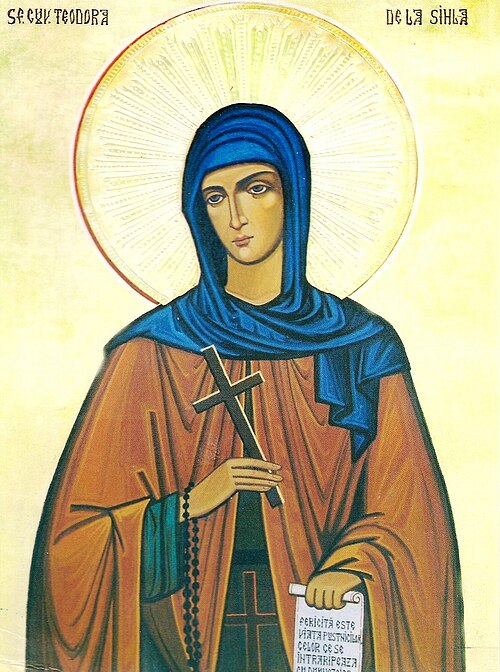
Venerable
Theodora of Sihla
Hermit in the Neamț Mountains
Ascetic of the Neamț Mountains at Sihla in the seventeenth century, commemorated on 7 August.
- Feast
- August 7old style August 20
- Reposed
- 170017th century
- Place
- Vânători-Neamț Natural Park
- Order
- Venerables
Life
Saint Venerable Theodora of Sihla (born around 1650 at Vânători-Neamț, died at the beginning of the eighteenth century) was a hermit of the Neamț Mountains, called the "Spiritual Flower of Moldavia". She was canonized by the Holy Synod of the Romanian Orthodox Church on 20 June 1992, with commemoration on 7 August.
Family and monastic life
She was born in the time of the reign of Basil Lupu and of the learned Metropolitan Varlaam Moțoc, the daughter of the master of arms of the Neamț citadel, Ștefan Joldea, a boyar with the rank of comis. She was married against her will. Being childless, the spouses resolved together to become monastics: he withdrew to the Poiana Mărului monastery, with the name Eleftherios, and she, at the age of nearly thirty, to Vărzărești.
The Sihla wilderness
Foreign invasions forced her to retreat into the Buzău Mountains (she seems to have passed also by the rock hermitage of Fundătura), where she lived nearly a decade; her name is mentioned in a memorial list carved in stone on the altar of the rock hermitage in the Buzău Mountains, at New Agathon. From there she went first to the Neamț Monastery, from where she was directed to the Neamț Mountains, to Sihăstria skete, recently founded, in 1655. With the guidance of the elder there and the blessing of the skete's abbot, she climbed the mountains to struggle in the Sihla wilderness. The word "sihlă" means a thick forest of young trees, a thicket. Over a century later, Calistrat Hogaș described the hermits' place thus: if Sihla does not pass beyond the natural bounds of imagination, it has at least the quality of nearly touching the summit of harshness, loneliness and wildness.
At first Theodora lived in a cell under the rocks of Sihla, left to her by an elderly hermit. Oral tradition says that, at the time of other foreign invasions, refugee nuns came also to the venerable one's cell, and she gave them the place and moved to a cave, harder still to reach. There she is said to have spent most of her time.
After her death
After her death the body remained in the cave where she had spent most of her hermit life. The news of her life and death is said to have reached her husband, tonsured with the name Eleftherios, who left Poiana Mărului and spent the last decade of his life at Sihăstria, near his wife's resting place. About 1725 the Sihla skete was founded in her memory. She remained buried there until about the years 1828 to 1834, when, during the Russian occupation of the Romanian Principalities, she was taken to the Kyiv Caves Lavra. Our record gives her birth in 1650 and death in 1700, while the Romanian source says only that she died at the beginning of the eighteenth century. On 20 June 1992 the Synod of the Romanian Orthodox Church proclaimed her canonization and set her feast day on 7 August.
Commemorated the same day August 7
 Narcissus of JerusalemSaint · Bishop of JerusalemAug 7
 Donatus of ArezzoSaint · Bishop of ArezzoAug 7
 Dometius the PersianMartyr · Martyr of PersiaAug 7
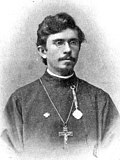 Alexander HotovitzkyHieromartyr · Priest and missionaryAug 7
- Donatus of BesançonSaint · Archbishop of BesançonAug 7
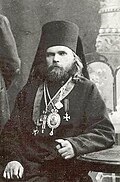 Pimen BelolikovHieromartyr · Bishop of Semirechye and VernyAug 7
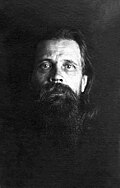 Alexei VorobyovHieromartyr · ArchpriestAug 7
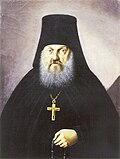 Anthony of OptinaVenerable · Elder of OptinaAug 7
 Marinus and AsteriusHoly MartyrsAug 7
 Pârvu MutuVenerableAug 7
 Donatus of ImolaSaint · Archdeacon of ImolaAug 7
- MiklosSaintAug 7