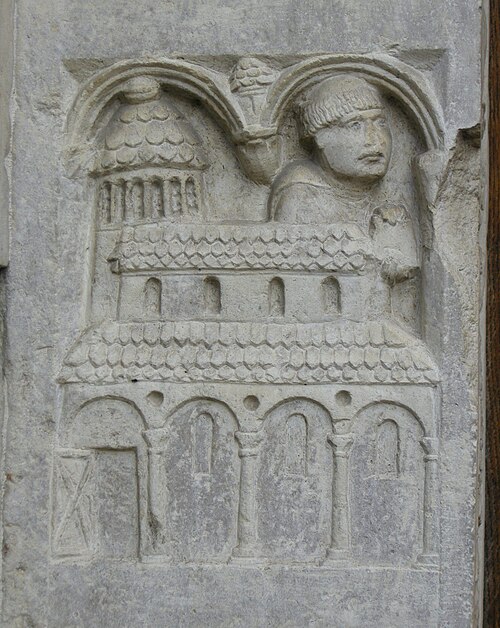
Venerable
Anselm of Nonantola
Abbot of Nonantola
Lombard duke of Friuli from 749 to 751, then founding abbot of the monastery of Nonantola.
- Feast
- March 3old style March 16
- Reposed
- 8039th century
- Place
- Nonantola
- Order
- Venerables
Life
Saint Anselm of Friuli (Anselm of Nonantola), a venerable father, was a Lombard duke of Friuli and then the first abbot of the monastery of Nonantola, in Italy. According to some sources he was born around 720 and he fell asleep at Nonantola in 803 or 805. His feast is on 3 March.
The sources
Several sources speak of him: a Life of Anselm and two recensions of the Catalogue of the Abbots of Nonantola (of the tenth and eleventh centuries), and the founding of his monasteries is also mentioned in the Chronicle of Salerno. Several papal bulls and charters of the Lombard kings speak of his work, but some of them are forgeries. Anselm is the only saint of the Lombard period of Italy who appears in trustworthy medieval sources.
Family and duchy
He is thought to have been born in the early part of the eighth century; no sure information about his origin has survived. In charters of 797 and 820 a certain Adoin, owner of property at Verona and Vicenza, is called the brother of Anselm and son of Wechtari, perhaps a descendant of the duke of Friuli of the same name. It is known for certain that his sister Gisaltruda was the wife of King Aistulf, which shows that his family belonged to the high Lombard nobility.
The lives say he fought for a long time under the command of his brother-in-law Aistulf. After the latter became king of the Lombards in 749, Anselm became duke of Friuli. But he ruled only a short time: being a very devout man, he renounced power in 749 or 750, leaving the duchy to Peter.
The monasteries
Leaving worldly life, he received the monastic habit and joined the Benedictines. In 750 he built the monastery at Fanano, on a site given by King Aistulf, and two years later that at Nonantola, a short distance from Modena, which Aistulf endowed. According to the lives of the saint, he went to Rome, where Pope Stephen II (III) placed him in the rule of Saint Benedict, gave him relics of Saint Sylvester and appointed him abbot of Nonantola. A more secular source says, however, that he received the relics of Saint Sylvester from King Aistulf, who had taken them in the winter of 755-756, during the siege of Rome, from the catacombs on the Via Salaria; the monastery then took the name of this saint. Some charters of Nonantola, which assigned the two foundations to Anselm, appear to have been drawn up later.
As abbot, Anselm founded many hospices, where the poor and the sick were sheltered and cared for by the monks.
Exile and end
According to the twelfth-century Catalogue of Abbots, Desiderius, who succeeded Aistulf as king of the Lombards in 756, drove Anselm out of Nonantola in favour of his own protégé. Anselm spent the seven years of his exile at the Benedictine monastery of Monte Cassino and returned to Nonantola after Desiderius was taken prisoner by Charlemagne, in the war of 774. This exile is not mentioned in the older Life of Anselm. Having been abbot for fifty years, he fell asleep at Nonantola, where the community still honours him as patron. Until 1083 Nonantola was an imperial monastery and, after Anselm's death, its discipline suffered much from imperial interference in the election of its abbots.
Commemorated the same day March 3
 CunigundeVenerable · Holy Roman EmpressMar 3
 Basiliscus of ComanaMartyr · Martyr of Comana in PontusMar 3
 Cleonicus of AmasiaMartyr · Martyr of Amasia in PontusMar 3
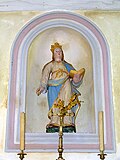 Camilla of AuxerreVenerableMar 3
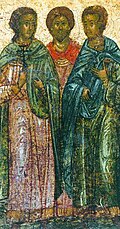 Eutropius of AmaseaMartyrMar 3
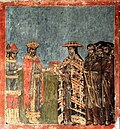 John I of MtskhetaSaint · First Archbishop of GeorgiaMar 3
- Asterius of CaesareaMartyr · Roman senatorMar 3
- Titian of BresciaSaint · Bishop of BresciaMar 3
- ArthelaisSaintMar 3
- CalupanVenerableMar 3
- Cele-ChristVenerableMar 3
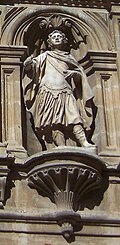 CeledoniusMartyrMar 3