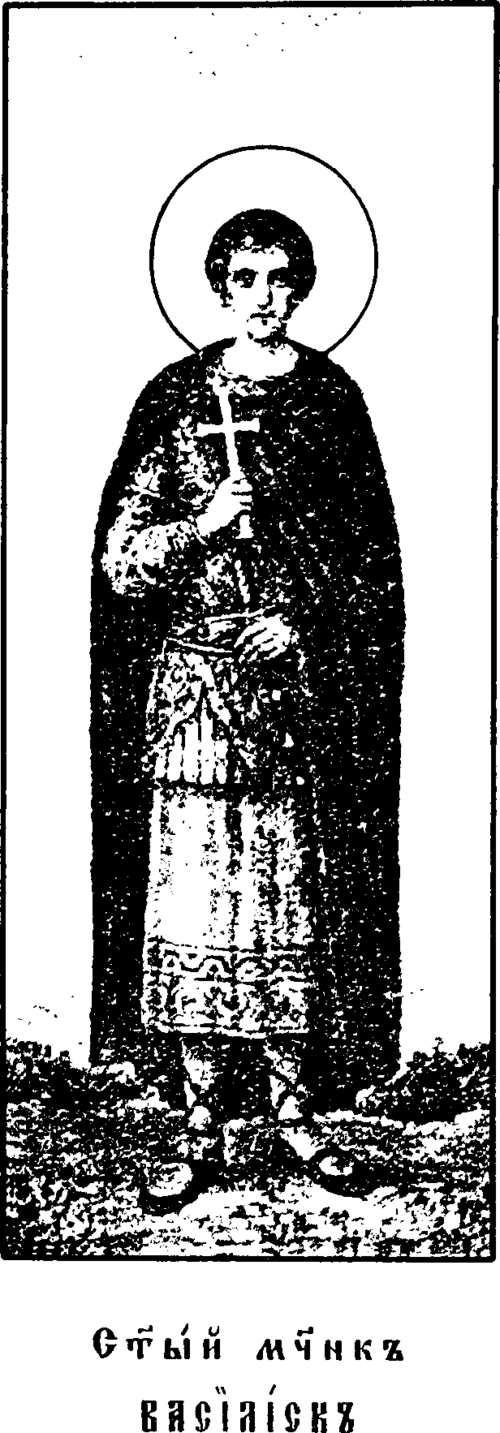
Martyr
Basiliscus of Comana
Martyr of Comana in Pontus
Martyr of Comana Pontica who died around 310 and is remembered on 22 May.
Life
Saint Basiliscus of Comana was, according to tradition, a nephew of the Great Martyr Theodore the Recruit, and received the crown of martyrdom at Comana in Pontus, in the persecution of the early fourth century. The Church remembers him on 3 March, together with his companions in martyrdom, and on 22 May.
He was born in Amasia in Pontus, into a Christian family. Together with Cleonicus and Eutropius, kinsmen of his, he proclaimed the wonders of his uncle Theodore and tried to bring the pagans of the region to the faith. Seized by the governor Asclepiodotus, they were beaten without mercy, but according to the account the Lord and Saint Theodore appeared to them, and their wounds were healed at once. Many pagans, amazed at the miracle, believed in Christ and were beheaded. The prayer of the three made the statue of Artemis fall, and they were bound to stakes, drenched with boiling pitch, torn with iron hooks and had their wounds rubbed with a mixture of mustard, salt and vinegar. On the morning of 3 March Eutropius and Cleonicus were crucified, and Basiliscus was sent to Comana in Pontus and imprisoned.
When the new governor Agrippa arrived, Basiliscus was preparing in his cell for martyrdom. The Lord appeared to him in a dream, promised him help and foretold that he would die at Comana. His guards, who held him to be a holy man, let him go to his village to bid farewell to his mother and brothers, whom he urged to hold firmly to the faith.
When he learned of it, Agrippa was enraged, punished the guards and sent soldiers to bring him back. They put heavy chains on Basiliscus, shod him with nailed shoes and led him toward Comana. At a halt the soldiers went into a woman's house to eat, and Basiliscus was tied to a tree under the burning sun. Then a voice was heard: “Do not be afraid, I am with you,” and a spring burst from the rock. Struck with fear, the soldiers and the woman set him free. The sick of the village came to him and were healed by his prayer.
Brought before Agrippa and told to sacrifice to the gods, he answered that he offered God a sacrifice of praise every hour. It is said that at his prayer the idol fell to dust and the temple was consumed by fire from heaven. The governor ordered him beheaded and his body thrown into the river. The same Agrippa, tradition says, went mad, found a little of the martyr's blood in the dust, tied it under his belt, was healed and received Baptism.
Later Marinus, a citizen of Comana, built a church over his relics, which the faithful hold to be wonder-working. Tradition recalls that in this church Saint John Chrysostom spent his last night, in the year 407. Another version of the story makes him bishop of Comana, put to death at Nicomedia, but the most widespread tradition keeps him as a martyr of Pontus.
Commemorated the same day March 3
 CunigundeVenerable · Holy Roman EmpressMar 3
 Anselm of NonantolaVenerable · Abbot of NonantolaMar 3
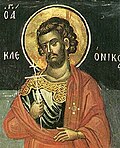 Cleonicus of AmasiaMartyr · Martyr of Amasia in PontusMar 3
 Camilla of AuxerreVenerableMar 3
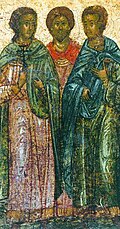 Eutropius of AmaseaMartyrMar 3
 John I of MtskhetaSaint · First Archbishop of GeorgiaMar 3
- Asterius of CaesareaMartyr · Roman senatorMar 3
- Titian of BresciaSaint · Bishop of BresciaMar 3
- ArthelaisSaintMar 3
- CalupanVenerableMar 3
- Cele-ChristVenerableMar 3
 CeledoniusMartyrMar 3