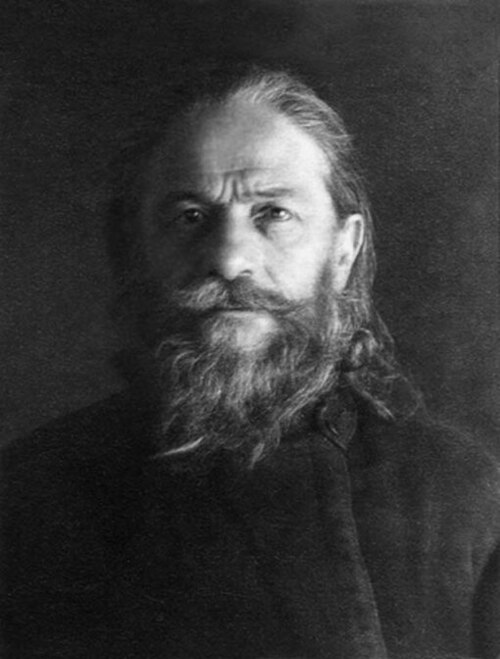
Hieromartyr
Basil Arkhangelsky
Priest
Priest born in 1874 in Tula province, shot at the Butovo firing range in 1937; canonized in 2000.
- Feast
- November 3old style November 16
- Reposed
- 193720th century
- Place
- Butovo firing range
- Order
- Martyrs
Life
Saint Basil Arkhangelsky, hieromartyr (20 January 1874 to 16 November 1937), was a priest in a village in the Tula region, shot at the Butovo firing range near Moscow. He was canonized for veneration in the whole Church by the Jubilee Council of Bishops of the Russian Orthodox Church, between 13 and 16 August 2000. He is commemorated on 16 November, the day of his death (3 November Old Style), and in the Synaxis of the new martyrs and confessors of Russia.
Life
He was born in the village of Rusalkino, in the Kashira district, Tula province, in the family of the deacon of the Protection church, Michael Prokhorovich Arkhangelsky; he had three brothers and two sisters. His father gave the sons a church education, while the daughters, for lack of means, had none, but married priests. Basil studied at the church school at Venev and the seminary at Tula, which he finished in 1897. He was a teacher (1897 to 1902) at the church school at Spas-Detchino. In 1902 he was ordained by Bishop Pitirim of Tula for the church of the Dormition in the village of Lyublino, in the Kashira district, where he served until the end of his life; he also taught religion in three village schools. In 1931 he was sentenced to three years of exile because the church could not pay the tax in agricultural produce, but, for illegality, he asked for a review and was acquitted by the regional court. He married Vera Ivanovna; they had six children.
Arrest and martyrdom
He was arrested a second time on 27 October 1937, on the charge of counter-revolutionary and anti-Soviet activity. At the interrogation he was told that he had agitated among the people "for the destruction of the communists" and for the obligatory attendance of children at church. He answered: "I never agitated for the destruction of the communists. I spoke with some women in church and asked them whether they teach their children to pray, and their relatives too." In the record it was written that until 1917 he had had 390 desyatinas of land, hired labourers, five horses, three cows and up to twenty seasonal workers; that the property was the church's and was confiscated after the revolution was not taken into account. He was held in the prison at Kashira and did not admit guilt. On 14 November 1937 a special troika of the NKVD for the Moscow region sentenced him to death, and on 16 November he was shot and buried in an unknown common grave. His son Leonid left memoirs of his father.
Commemorated the same day November 3
 PirminVenerable · Missionary and founder of monasteriesNov 3
 WinefrideMartyr · Virgin of WalesNov 3
 Libertinus of AgrigentoHieromartyr · First bishop of AgrigentoNov 3
 Acepsimas, Joseph and AeithalasHieromartyr · Martyrs of PersiaNov 3
 Rumwold of BuckinghamConfessorNov 3
 Alexander ZverevHieromartyr · ArchpriestNov 3
 Anna Vsevolodovna of KyivVenerable · Princess of KyivNov 3
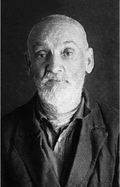 Peter OrlenkovHieromartyr · PriestNov 3
- AcepsimasVenerable · Syrian priest and hermitNov 3
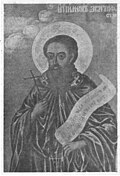 Pimen of ZografVenerable · Monk and icon painterNov 3
- Nikoloz MnatobiSaintNov 3
- Theodorus of AncyraConfessorNov 3