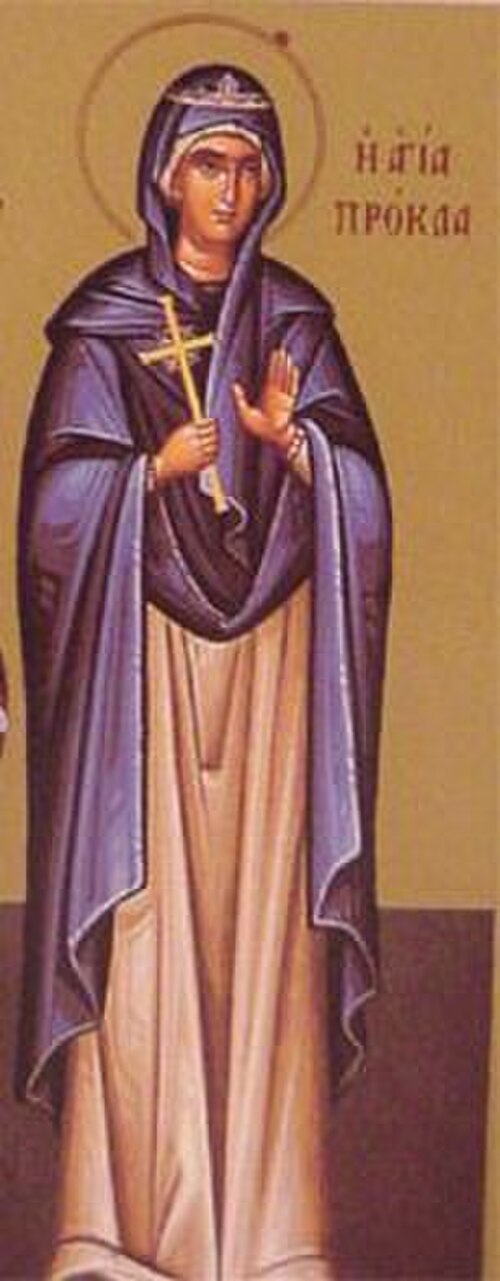
Martyr
Claudia Procula
Wife of Pilate
Wife of Pontius Pilate, who sent him word to have nothing to do with the trial of the Righteous One.
- Feast
- October 27old style November 9
- Born
- 61st century
- Place
- Rome
- Order
- Martyrs
Life
Saint Claudia Procula, called Procla in Greek, is by tradition the wife of Pontius Pilate, the Roman governor of Judea. The Gospel of Matthew mentions her once, without giving her name, when she sent word to her husband during the trial of Jesus. The Orthodox tradition remembers her as a woman who came to believe in Christ and died in peace, though other accounts make her a martyr. Her day in the Greek calendar is 27 October. She is not in the present calendar of the Russian Church.
In the Gospel
Matthew 27:19 is the only place in the New Testament where she appears. While Pilate sat on the judgment seat, his wife sent him word: "Have nothing to do with that righteous man, for I have suffered many things today in a dream because of him." Pilate did not heed her. Afraid of the crowd, he washed his hands and handed Jesus over to be crucified.
It is likely that Pilate was married. Under the Republic and Augustus, Roman governors were forbidden to take their wives to their posts, but the law was later repealed, so she could have been with him in Judea. Some modern scholars think the incident in Matthew is legendary rather than historical.
Her name and tradition
The Gospel does not name her. The name Procla or Procula first appears in the apocryphal Gospel of Nicodemus, written about the fourth or fifth century, and in the chronicle of John Malalas in the sixth. She is called Claudia Procula in Western tradition, and the Syrian writer Dionysius bar Salibi calls her Longina. The apocryphal Acts of Paul says that she was baptized by the Apostle Paul.
Origen wrote that she may have come to believe in Christ, or that God sent her the dream to bring her to faith. In the Western Church, writers such as Rabanus Maurus, Bede and Bernard of Clairvaux held that the devil had sent the dream so as to hinder the salvation of men, while Augustine and Jerome held that the dream came from God. Western tradition never canonized her.
The Greek synaxarion says that Pilate feared the Jews and did not free Christ, and that after his dreadful death Procla came to the Christian faith, lived with goodness and piety, and gave up her spirit in peace. The Orthodox Church in America adds that other accounts make her a martyr.
Other traditions
Eastern Christians produced a rich body of apocryphal writing about Pilate and his wife. In some of these, Procula and Pilate die as martyrs. In the Ethiopian tradition both are honoured as saints on 25 June, and the Book of the Cock, read there in Holy Week, tells that Procla's daughters were healed by Jesus. These stories are late and legendary.
Tombs of women named Claudia Procula have been found at Beirut, Cyrene and Patara, but nothing shows that any of them was the wife of Pilate.
Commemorated the same day October 27
 EvaristusSaint · Bishop of RomeOct 27
 Nestor the ChroniclerVenerable · Monk of the Kiev Caves LavraOct 27
 Gaudiosus of AbitinaSaint · Bishop of AbitinaOct 27
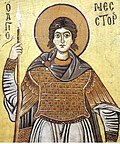 Nestor of ThessalonicaMartyr · Companion of Saint DemetriusOct 27
 Oran of IonaVenerable · Companion of Saint ColumbaOct 27
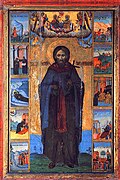 Demetrius of BasarabovVenerable · Patron of BucharestOct 27
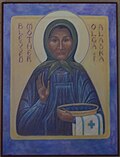 Olga of AlaskaRighteous · Priest's wife of AlaskaOct 27
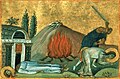 Capitolina and ErotiidaHoly Martyrs · Martyrs of CappadociaOct 27
 Alexander OkropiridzeSaint · Bishop of Guria and SamegreloOct 27
- Abraham the SimpleVenerableOct 27
 Andrew of SmolenskRight-Believing · Prince and asceticOct 27
- Protus of Porto TorresHieromartyr · Priest of Porto TorresOct 27