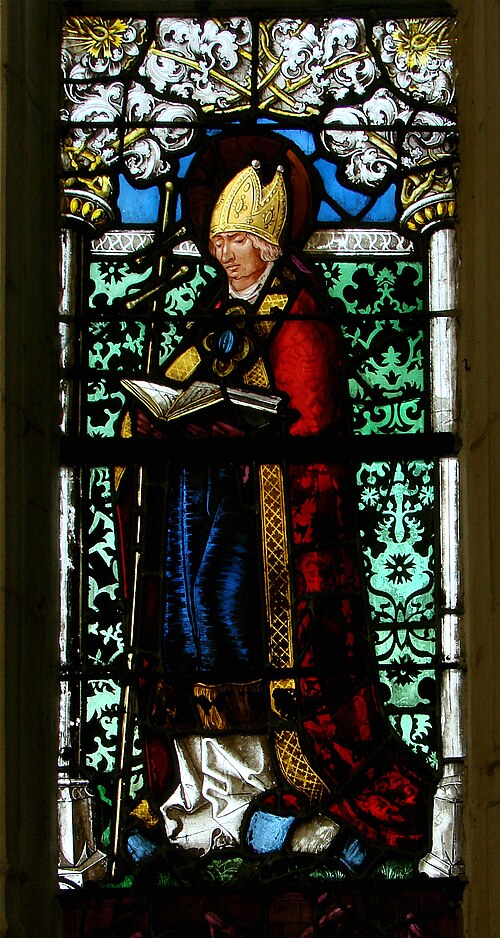
Saint
Claudius of Besançon
Bishop of Besançon
Priest, monk, abbot and then bishop, a native of Franche-Comté; died around 696.
Life
Saint Claudius (Claude) of Besançon, also called Claude the Thaumaturge, was a priest, monk, abbot and then bishop, born in Franche-Comté around 607. He fell asleep on 6 June 696 or 699. He is commemorated on 6 June.
According to an old tradition from Salins-les-Bains, he was born in the castle of Bracon near Salins, of a Gallo-Roman family named Claudia, which had produced another Saint Claudius in the sixth century. The Russian source says he was the son of a senator. His life has been the subject of much controversy: Georges Goyau wrote in the Catholic Encyclopedia that it has been "the subject of much controversy," and the Anglican Henry Wace said that inventors of legends have compiled around him many improbabilities, though he found no reason to doubt his noble origin. Laurentius Surius, one of his biographers, writes that he was given to tutors at a young age and that, besides his studies, he spent hours reading devotional works, especially the lives of the saints. Until the age of twenty he served as a border guard, but in 627 Bishop Donatus of Besançon appointed him a canon. Donatus had written regulations for his canon priests, and Claudius followed them assiduously. He became known as a teacher and ascetic, eating only one frugal meal a day.
After serving as a priest at Besançon, according to one tradition after twelve years, he entered the abbey of Condat, in the Jura mountains (today Saint-Claude, named after him), where he lived an ascetic life. In 641 or 642, in the time of Pope John IV, at thirty-four, he was elected the twelfth abbot of Condat. He brought the Benedictine Rule, received support from King Clovis II (at the urging of his wife, Balthild) and was granted an annuity. Under his rule the abbey thrived: he built new churches and reliquaries and fed the poor and the pilgrims of the region.
After the death of Saint Gervase, bishop of Besançon, the clergy of the city elected him bishop in 685, although he was unwilling, as the twenty-ninth bishop in the episcopal catalogues. But seeing that discipline had become lax at Condat, he abdicated his see, according to some sources in 687 or 692, and returned as abbot. The Russian source says he governed the diocese seven years. There is also the view that he remained a parish priest until elected bishop and withdrew to the monastery only after his episcopal service. He fell asleep at a great age, in 696 or 699.
After death he became one of the beloved saints of France. In the ninth century Rabanus Maurus mentions him in his Martyrology as an intercessor, under "VII idus junii". His body, said to have remained incorrupt, hidden during the Arab invasions, was rediscovered in 1160 and visited in 1172 by Peter II of Tarentaise. The relics were solemnly carried through Burgundy, then brought back to Condat. A document of the ninth century shows, however, that his body was already in the abbey of Saint-Claude (Saint-Oyend). The town was at first called Saint-Oyand or Saint-Oyend, after Saint Eugendus, but the crowds of pilgrims at Claudius's grave led, from the thirteenth century, to the name "Saint-Claude" replacing it. The cathedral in the town is dedicated to him. His relics were burned in March 1794 during the French Revolution. Queen Claude of France, first wife of Francis I, was named after him.
Commemorated the same day June 6
 Agobard of LyonSaint · Archbishop of LyonJun 6
 Bessarion the GreatVenerable · Desert FatherJun 6
 Eustorgius IISaint · Archbishop of MilanJun 6
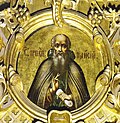 Paisius of UglichVenerable · Founder of the Protection MonasteryJun 6
- Ceratus of GrenobleSaint · Bishop of GrenobleJun 6
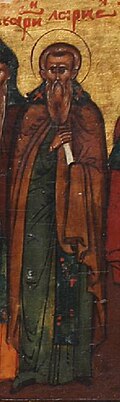 Hilarion the NewVenerableJun 6
 Gregory of NovgorodSaint · Archbishop of Novgorod and PskovJun 6
- BranwaladerSaintJun 6
- Thecla, Mariamne, Martha, Mary and EnataHoly Martyrs · Martyrs of PersiaJun 6
- Jonah of KlimenetsVenerable · Founder of Klimenets MonasteryJun 6
- Valeria, Kyriake and Maria of CaesareaHoly Martyrs · Martyrs of CaesareaJun 6
- Alexander of FiesoleHieromartyr · Bishop of FiesoleJun 6