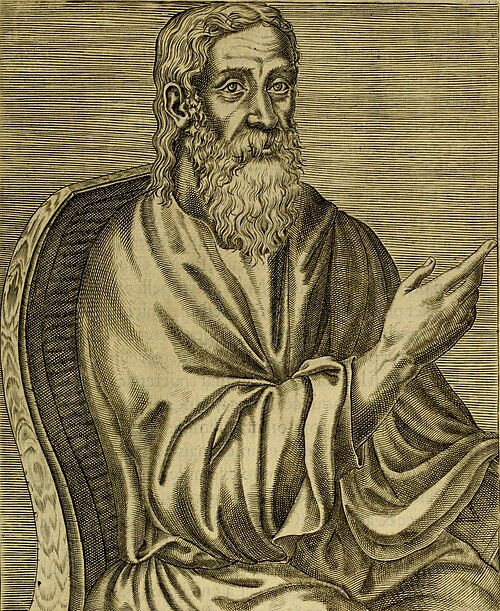
Saint
Clement of Alexandria
Teacher at the school of Alexandria
Christian theologian of the second and third centuries, who taught at the catechetical school of Alexandria.
Uncertain source. We are looking to verify this information as soon as we can.
- Feast
- December 4old style December 17
- Reposed
- 2153rd century
- Place
- Kayseri
Life
Clement of Alexandria, whose full name was Titus Flavius Clemens, lived from about 150 to about 215. He was a Christian teacher, apologist and philosopher at the Catechetical School of Alexandria, and one of the earliest Church writers whose works survive in large part. He is venerated as a saint in the Coptic Church and in other Oriental Churches, and he was long venerated in the West until his name was removed from the Roman Martyrology. The Eastern Orthodox Church does not count him among its saints, although Orthodox authors often call him a Father of the early Church and give him the title out of habit.
A seeker of the truth
His birth is uncertain. Epiphanius of Salamis says that some called him an Athenian and others an Alexandrian, and the Athenian origin is the more usual guess. His parents were pagans and he was a convert. His writings show how well he knew Greek religion and the mystery cults, knowledge that could only come from having lived among them. As a young man he turned away from the moral corruption of paganism and travelled through Greece, Asia Minor, Palestine and Egypt in search of Christian teachers. Later writers have tried to identify some of these teachers, among them an Ionian theologian, an Assyrian and a Jew, but the names remain uncertain.
Around the year 180 he came to Alexandria and met Pantaenus, who taught at the Catechetical School of the city. Clement studied under him and was ordained a priest by Patriarch Julian before the year 189. Of his personal life in Alexandria almost nothing is known, and from his writings it has been guessed that he was married.
Teacher of the Catechetical School
Clement taught at the school and is counted as its leader before Origen. Among his pupils were Origen and Alexander, later bishop of Jerusalem. He lived in a city of philosophers, Gnostics and Jews, and tried to show the educated that Christ is the Word, the Logos, through whom all truth comes. In his view, philosophy was given to the Greeks by God as a preparation, as the Law was for the Jews, and it leads the soul toward the Logos. He admired Plato in particular, and was also marked by the Stoics. He held that faith is the foundation of all knowledge, and that the true gnostic is the perfect Christian who lives by the rule of the Church, not the heretic who claims secret knowledge.
His works
Three works that survive in full form a trilogy. The Exhortation to the Greeks (Protrepticus), written about 195, calls the pagans to turn from their myths and mysteries to the new song of the Word. The Instructor (Paedagogus), written about 198, presents Christ as the teacher of all, and gives rules for a Christian life: moderation at table, simplicity in dress and furnishings, and care in choosing one's company. It closes with a hymn to Christ. The Stromata, meaning Miscellanies, written between about 198 and 203, is a free and varied work on faith, knowledge, marriage, asceticism and martyrdom. It also holds a long chronology of the world, through which Clement tried to prove that Moses is older than the Greek sages. Of its eight books attested by Eusebius, only seven are certainly preserved.
His short treatise Who Is the Rich Man That Shall Be Saved?, based on Mark 10:17 to 31, teaches that wealth is not condemned in itself, but only the attachment to it and its misuse. Fragments of other works survive, among them the Hypotyposes, a set of short comments on the Scriptures. A saying of his that is often quoted says that the Word of God became man so that you might learn from a man how man may become God.
Last years
During the persecution under Septimius Severus in 202 or 203, Clement left Alexandria. In 211 Alexander of Jerusalem wrote a letter commending him to the Church of Antioch, which suggests that he was then in Cappadocia or in Jerusalem. He died around 215, in a place that is not known.
Veneration and judgment of the Church
Eusebius was the first to write the story of his life and works, and he gave a list of them. In the West Clement was commemorated on 4 December until his name was struck from the Roman Martyrology on the advice of Cardinal Baronius, because little was known of his life, he had no public cult, and some of his teaching was held to be doubtful. The Patriarch Photius of Constantinople admired his learning but, in the Library, found fault with the Hypotyposes and listed ideas he held to be heretical: the eternity of matter, a created Logos, an unclear view of Christ's body, and others. The Eastern Orthodox Church officially stopped any veneration of him in the tenth century. In the Coptic tradition he is honoured as a saint. His works are still read as a witness to how the Church of Alexandria met the philosophy of the Greeks in the second century.
Commemorated the same day December 4
 John of DamascusVenerable · Hymnographer and theologianDec 4
 BarbaraGreat Martyr · of NicomediaDec 4
 Gennady of NovgorodSaint · Archbishop of NovgorodDec 4
- AdaVenerable · AbbessDec 4
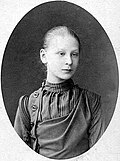 Catherine of PetrogradNew MartyrDec 4
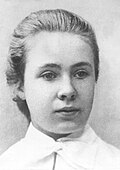 Kira ObolenskayaNew Martyr · Princess and teacherDec 4
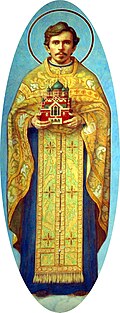 Alexander PosokhinHieromartyrDec 4
- Alexis SaburovHieromartyrDec 4
- Anastasia TitovaVenerable MartyrDec 4
- Barbara and JulianaHoly Great MartyrsDec 4
- Basil KashinHieromartyrDec 4
- Bearchan of Cluain SostaSaintDec 4