Saint
Cyril the New of Paros
A saint of the island of Paros who departed this life in 1833.
- Feast
- July 11old style July 24
- Reposed
- 183319th century
- Place
- Paros
Life
Venerable Cyril the New of Paros was born in 1748 in Marpissa on the island of Paros and bore the family name Papadopoulos. As a young man he went to Mount Athos and studied at the Athoniada School of Vatopedi. His teacher was his fellow islander Saint Athanasios Parios (24 June), from whom he took a fiery zeal and untiring labour for the glory of God.
On Athos he stayed for many years as a monk, learning sacred letters and secular wisdom, and he joined the renewal movement of the Kollyvades, among whose representatives were the brothers Hierotheos and Philotheos Georgiou, who later came to Paros and restored the Monastery of the Life-giving Spring at Longovarda. Through living with holy elders and by his desire to grow in virtue, he became a distinguished father.
After leaving Athos, the Patriarch of Constantinople appointed him, for his virtues and knowledge, general preacher of the Aegean. He was a zealous preacher of the word of God and, like Saint Kosmas the Aitolian, he would set up a large cross wherever he went and deliver fiery sermons. His preaching was edifying but also gently corrective; in confession and private talks he was kind, consoling and strengthening. In 1811 he was preacher and confessor in Attica; he travelled the Aegean islands and the villages of Greece, reached Caesarea in Cappadocia and Aivali in Asia Minor, and in 1823 he baptized a Turkish woman on Paros. He spoke boldly before the powerful, lay and ecclesiastical, and did not hesitate to rebuke injustice, which cost him dearly: he was threatened, ill-treated and survived several attempts on his life by unbelievers.
His presence on Paros kindled in the faithful a warm love of monasticism and a renewal of monastic life on the island. While he lived at the Monastery of Saint Anthony in Marpissa he was visited by Saint Arsenios and his elder Daniel, who had fled the campaign of Dramalis in 1822. He restored the nuns' monastery of Christos tou Dasous on Paros and the Monastery of Saint George at Langada, and helped bring about the revival of the monastery of Longovarda and the Phaneromeni monastery on Naxos. He is said to have had the gifts of foresight and wonderworking: he made the sign of the cross over a snake and it died, spread his cassock on the sea and travelled on it, and struck a rock at the waterless Monastery of Saint George so that a spring gushed out, which still flows today.
He fell asleep in the Lord on 11 July 1833 at the Monastery of Saint George, which he had restored and where he was abbot, and was buried there. His honoured skull is kept at the same monastery. He is commemorated on 11 July, according to the calendar of the Church of Greece (new style).
Commemorated the same day July 11
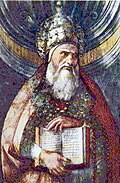 Pius ISaint · Bishop of RomeJul 11
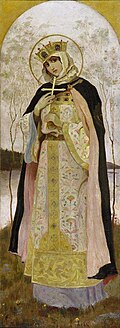 Olga of KievEqual-to-the-Apostles · Princess of KievJul 11
 EuphemiaGreat Martyr · of ChalcedonJul 11
 Abundius of CórdobaHieromartyr · PriestJul 11
 Theodore the VarangianHoly MartyrsJul 11
- Arcadius of VyazmaVenerable · Recluse of VyazmaJul 11
- Nektarios of AthosVenerable MartyrJul 11
- Nicodemus of ElbasanNew Martyr · Albanian New MartyrJul 11
- Achilleus of RomeSaintJul 11
- AmabilisVenerableJul 11
- Anicius of RomeSaintJul 11
- Arcadius of NovotorskVenerableJul 11