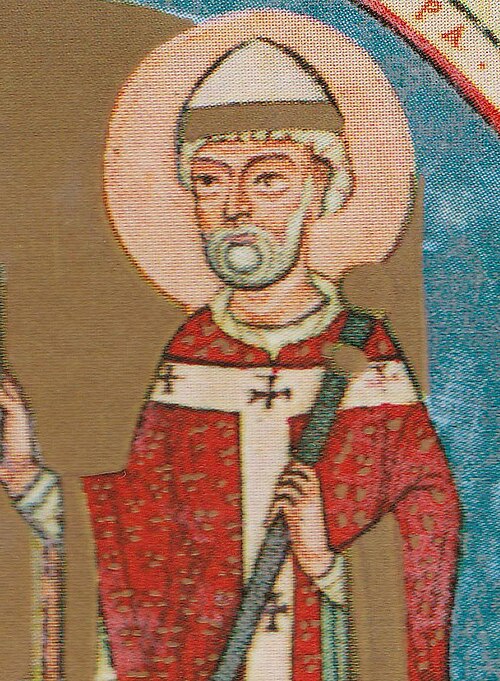
Saint
Damasus I
Bishop of Rome
Bishop of Rome from 366 to 384, under whom the scriptural canon was set and the Vulgate begun.
- Feast
- December 11old style December 24
- Reposed
- 3844th century
- Place
- Rome
- Order
- Hierarchs
Life
Pope Damasus I was bishop of Rome from October 366 to 11 December 384, in the years when the faith of Nicaea finally prevailed over Arianism. He is honoured as a saint of the undivided Church: OrthodoxWiki and the Western calendar commemorate him on 11 December, the English-language calendar of saints on 13 November.
Beginnings
He was born around 305, probably in Lusitania or in Rome, the son of Antonius and Laurentia. His father became a priest of the church of Saint Laurence in Rome, and Damasus served there as deacon and priest, then as archdeacon. In 354 he accompanied Pope Liberius when Emperor Constantius II exiled him to Beroea, but he soon returned to Rome and had a great share in governing the Church until Liberius came back.
The election
After Liberius died on 24 September 366, Damasus was elected amid disorder: part of the clergy and people chose the deacon Ursinus. The fighting between the two parties was bloody, with dozens or hundreds killed according to the surviving accounts, which are partisan on both sides. Emperor Valentinian I recognised Damasus, and Ursinus was exiled. In 378 Damasus was accused, among other things, of adultery, but the synod of that year found him innocent, and Emperor Gratian confirmed this.
Defender of the faith
In two Roman synods, in 368 and 369, he condemned Apollinarianism and Macedonianism, and he sent legates to the Second Ecumenical Council at Constantinople in 381. With Athanasius of Alexandria and his successor Peter II, he backed the party of Paulinus at Antioch as more faithful to Nicaea; Peter he received at Rome when he fled the Arians. Toward Basil the Great, who had asked his help against Arianism, he kept some reserve. In 380 he lived to see the edict of Theodosius I, which made the faith preached by Peter the religion of the state.
Scripture and the martyrs
In 382 he presided over the council of Rome at which a list of the books of Holy Scripture was drawn up. He took Jerome, who had come to Rome for that council, as his secretary and urged him to revise the Old Latin texts of the Bible by the Septuagint and the Greek New Testament; the Vulgate came from this work.
He greatly honoured the martyrs of Rome: he restored or opened access to their tombs in the catacombs and set up tablets with verse inscriptions of his own composing, several of which survive. He rebuilt his father's church, Saint Lawrence outside the Walls.
He ruled for eighteen years and two months and reposed on 11 December 384, at almost eighty years of age. He was buried beside his mother and sister in a funerary basilica between the Via Appia and the Via Ardeatina, the exact site of which is lost.
Commemorated the same day December 11
 ReubenRighteous · The PatriarchDec 11
 Daniel the StyliteStylite · Stylite near ConstantinopleDec 11
 Acepsimas and AithalasHoly Martyrs · Martyrs of PersiaDec 11
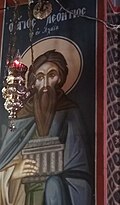 Leontius of MonemvasiaVenerableDec 11
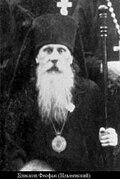 Theophan IlminskyHieromartyr · Bishop of SolikamskDec 11
 Luke the StyliteStyliteDec 11
- Mirax of EgyptMartyrDec 11
- Benjamin of JerusalemSaint · Bishop of JerusalemDec 11
- Nikon the DryVenerable · Monk of the Caves LavraDec 11
- AemilianMartyrDec 11
- Aithalas of ArbelaMartyrDec 11
- Akepsius of ArbelaMartyrDec 11