Saint
Epiphanius of Constantinople
Patriarch of Constantinople
Patriarch of Constantinople from February 25, 520 until his death in 535, successor of John of Cappadocia.
Life
Saint Epiphanius was patriarch of Constantinople from 25 February 520 until his death on 5 June 535, successor of John the Cappadocian. He led the Church in the time of the emperors Justin I and Justinian I, in an age of reconciliation of the Churches after the Acacian schism. He is venerated as a hierarch and remembered on 7 September (according to the Greek source, on 25 August).
Before the patriarchate
Before his election Epiphanius was a priest, syncellus of Patriarch John II the Cappadocian and overseer of the catechumens and of the orphan institutions of Constantinople. In 519, a year before his election, he was sent, with John the Cappadocian and Count Licinius, to Macedonia, to collect the libelli, that is, the subscriptions of those seeking reunion with the Catholic Church, at the request of the apocrisiarius of Dorotheus of Thessalonica. After John's death the emperor Justin I, with the consent of bishops, monks and people, elected him patriarch, and on 25 February 520 he was enthroned. In a letter from the synod of Constantinople to Pope Hormisdas he is described as a man of the right faith and with a fatherly concern for orphans.
Peace with Rome
The chief task of the beginning of his patriarchate was to carry out the agreement of 519 with Pope Hormisdas, made by his predecessor. Epiphanius accepted the conditions of peace and ratified them at a council held at Constantinople, where he also confirmed the decrees of Chalcedon. On 9 July 520 he wrote to the pope, informing him of his election, sending him his creed and condemning those whose names the pope had forbidden to be mentioned in the diptychs; four of his letters to Hormisdas survive. Epiphanius adhered to the symbols of Nicaea and the decrees of Ephesus, Constantinople and Chalcedon, as well as the letters of Pope Leo I in defence of the faith. His second letter was accompanied by gifts for the Church of Rome: a gold chalice adorned with precious stones, a gold paten, a silver chalice and two silk veils. The pope's demand to remove from the diptychs the names of bishops who had supported the Henotikon caused difficulties, for some of them were at the same time supporters of Chalcedon, and the local communities did not wish to condemn their predecessors. Epiphanius asked Hormisdas to soften the conditions, to keep the peace just restored; he recommended leniency toward those returning and severity toward the obstinate. The correspondence also concerned the return of exiled bishops to their sees.
Under Justin and Justinian
In 525 Pope John I came to Constantinople, sent by the Ostrogothic king Theodoric the Great, to seek the end of measures against the Arians. The people greeted him twelve miles outside the city with tapers and crosses. Epiphanius invited him to celebrate, but the pope refused until he was given the place of honour; on Easter Day he celebrated according to the Latin rite. In 531 the dispute between Rome and Constantinople flared again through the appeal of Stephen, metropolitan of Larissa, who had been ordained irregularly, to Pope Boniface II against a decision of Epiphanius; Stephen was nevertheless deposed by the synod. After Justinian I came to the throne in 527 imperial power actively intervened in the settling of church disputes. Epiphanius accepted the imperial edict of 533 on the Incarnation, which confessed the four ecumenical councils and stated that Jesus Christ is one of the Trinity; it was part of the attempts at reconciliation with the opponents of Chalcedon. In Justinian's legislation he is called “ecumenical patriarch.” In 532 the “Nika” revolt broke out; in the fires the then church of Saint Sophia burned, and the emperor began the building of the new one, consecrated after Epiphanius' death. Under him the synod also ruled against Severus of Antioch and Peter III of Alexandria. Epiphanius also convened a synod on matters of the Patriarchate of Antioch. Forty-five canons are attributed to him.
He died after an episcopate of fifteen years and three months. The information preserved shows him in a favourable light. He was succeeded by Anthimus I, until then bishop of Trebizond.
Commemorated the same day August 25
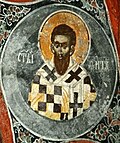 TitusApostle · Bishop of CreteAug 25
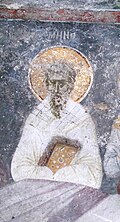 Menas of ConstantinopleSaint · Patriarch of ConstantinopleAug 25
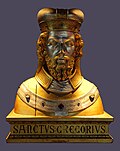 Gregory of UtrechtSaint · Abbot at UtrechtAug 25
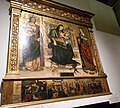 Patricia of NaplesSaintAug 25
- John II the CappadocianSaint · Patriarch of ConstantinopleAug 25
- John of KarpathosVenerable · Bishop of KarpathosAug 25
- Eulogius of EdessaConfessor · Bishop of EdessaAug 25
- Genesius of BrescelloSaint · Bishop of BrescelloAug 25
- Moses OlenitskyVenerable Martyr · HieromonkAug 25
- Confessors of EdessaHoly ConfessorsAug 25
- 202 Martyrs of EikosiphoinissaHoly MartyrsAug 25
 ArediusVenerableAug 25