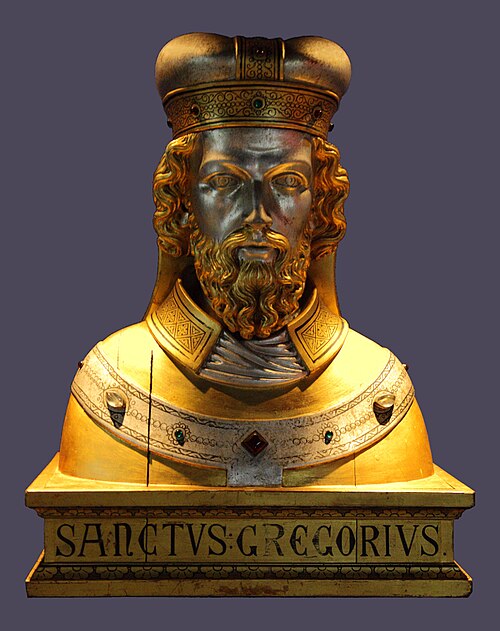
Saint
Gregory of Utrecht
Abbot at Utrecht
Disciple of Boniface whom he accompanied on his missionary journeys; abbot at Utrecht from 750, died in 776.
Life
Saint Gregory of Utrecht was a disciple and missionary companion of Saint Boniface, abbot of Saint Martin's monastery in Utrecht and for twenty-three years the guardian of the diocese there. He passed to the Lord on 25 August 776. His feast is kept on 25 August.
Youth and discipleship
He was born around 700 at Trier, of a noble family. His father Alberic was the son of Addula, who in her widowhood became abbess of Pfalzel near Trier. Because of the similarity of names and a forged will, Addula has often been confused with Saint Adela of Pfalzel, daughter of Dagobert II, and so Gregory was wrongly placed in the Merovingian royal house. He received his first education at Pfalzel. In 722 Boniface passed through Trier on his way to Hesse and Thuringia and stopped at that convent. Abbess Addula called her fifteen-year-old grandson to read the Scriptures at the meal. Boniface explained them and spoke of the merits of the apostolic life, and Gregory, inspired, wished to follow him. As he persisted, his grandmother gave him servants and horses. He became Boniface's disciple, who sent him to the monastery of Saint Michael at Ohrdruf to continue his studies, then took him as helper and he accompanied him on all his missionary tours. In 738 he went with him to Rome, Boniface's third journey, and brought back many valuable additions for his library.
Abbot at Utrecht
In 744 Saint Willibrord, the first bishop of Utrecht, had died without a successor being named. Boniface had taken charge of the diocese and appointed an administrator, Saint Eoban. About 750 Gregory was made abbot of Saint Martin's in Utrecht, which became a centre of learning and mission. In 754 Boniface set out on his last missionary journey with Eoban, who was to share his martyrdom, and then Pope Stephen II and Pepin the Short ordered Gregory to look after the diocese. For this reason he is sometimes called bishop, though he never received episcopal consecration. The school of his abbey, a kind of missionary seminary, was a centre of learning for many nations: Franks, Frisians, Saxons, even Bavarians and Swabians, and England too sent scholars. Among his disciples the best known is Saint Ludger, later first bishop of Münster and author of the Life of Gregory, in which he describes Gregory's virtues, his contempt of riches, his sobriety, his forgiving spirit and his alms.
When the murderers of Gregory's two half-brothers were sent to him by the magistrates, for him to decide the punishment, according to the custom of the time, which left punishment to the relatives of the dead, he gave each of them a suit of clothes, alms and good advice, and let them go. He welcomed Lebuinus of Ripon and entrusted him with the mission of Overijssel on the borders of Westphalia, giving him as companion Marchelm, a disciple of Willibrord. In 767, not wishing to receive episcopal consecration himself, he sent Alubert, who had come from England to help him, to York to be consecrated bishop.
Repose and veneration
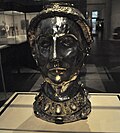
About three years before his death paralysis attacked his left side and gradually spread through his whole body. As death approached he had himself carried into church and there he fell asleep, at Maastricht, on 25 August 776. He was succeeded by his nephew Alberic of Utrecht, prior of Saint Martin's. His relics were kept at Utrecht and were examined in 1421 and 1597 at episcopal visitations. A large portion of his head is in the church of Saint Amelberga at Susteren, where an official recognition took place on 25 September 1885. A letter written by Saint Lullus, bishop of Mainz, to Gregory survives.
Commemorated the same day August 25
 TitusApostle · Bishop of CreteAug 25
 Menas of ConstantinopleSaint · Patriarch of ConstantinopleAug 25
- Epiphanius of ConstantinopleSaint · Patriarch of ConstantinopleAug 25
 Patricia of NaplesSaintAug 25
- John II the CappadocianSaint · Patriarch of ConstantinopleAug 25
- John of KarpathosVenerable · Bishop of KarpathosAug 25
- Eulogius of EdessaConfessor · Bishop of EdessaAug 25
- Genesius of BrescelloSaint · Bishop of BrescelloAug 25
- Moses OlenitskyVenerable Martyr · HieromonkAug 25
- Confessors of EdessaHoly ConfessorsAug 25
- 202 Martyrs of EikosiphoinissaHoly MartyrsAug 25
 ArediusVenerableAug 25