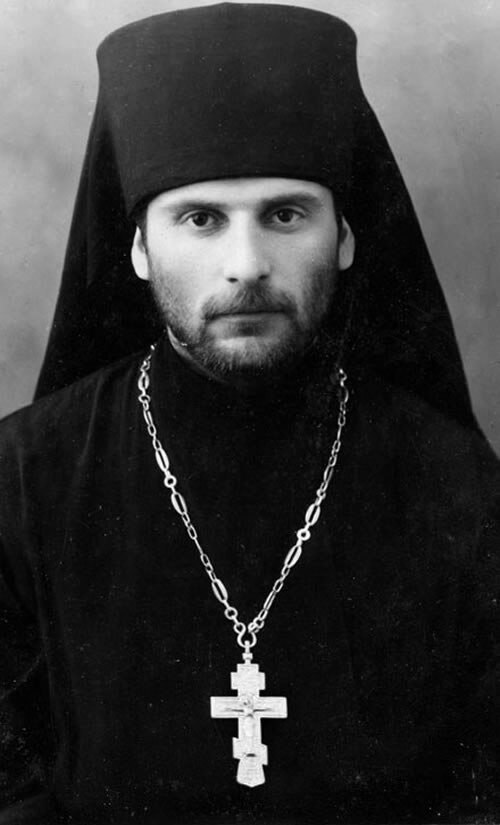
Fool-for-Christ
Gabriel of Georgia
Georgian Monk
Georgian monk, a fool for Christ, who died in 1995, honored for his humility and ascetic labor.
- Feast
- October 20old style November 2
- Reposed
- 199520th century
- Place
- Mtskheta
- Order
- Fools-for-Christ
Life
Saint Gabriel of Georgia, born Goderdzi Urgebadze, was an archimandrite of the Georgian Orthodox Church, a confessor and fool for Christ, who lived in the time of communist persecution. He died at Mtskheta in 1995, and his grave is a place of pilgrimage with many worshippers. He was canonized by the Holy Synod of the Georgian Church on 20 December 2012 and is commemorated on 2 November.
Childhood and youth
He was born at Tbilisi on 26 August 1929 and was baptized as an infant, in the church of the Holy Martyr Barbara in the Navtlugi district. His father, Vasili Urgebadze, a communist, died in unclear circumstances when the boy was two, and for this reason he was called “Vasiko” in the family. He started school at six and, as he said, heard the name of Christ at seven; he saved money and bought a Gospel. In the time of persecution people hid icons in attics, and Goderdzi asked them to give them to him if they no longer wanted them. These icons are kept today in the church he built and in the tower of the Samtavro convent. His mother, Varvara, though not irreligious, opposed his religious life at first; later she became a nun under the name Anna and is buried beside her son in the courtyard of Samtavro. Because of his mother’s opposition he left home and went to the monasteries of Samtavro, Svetitskhoveli, Shio-Mgvime, Zedazeni and Betania, the last of which became the most important to him.
After school, in 1949, he was called into the Soviet army. At Batumi he fasted in secret and went to services at the church of Saint Nicholas. After he returned, in the 1950s, he devoted himself more steadily to the spiritual life, building in the courtyard of the house a small hut in which he lived and prayed in solitude. He went to Sioni Cathedral and, with the blessing of Catholicos-Patriarch Melchizedek III, was taken in there first as a watchman, then as a psalm-reader.
The monk
In January 1955 he was ordained deacon. On 23 February of the same year, at Motsameta Monastery in Kutaisi, he received the monastic tonsure with the name Gabriel, in honour of Saint Gabriel. On 26 February 1955 Bishop Gabriel Chachanidze ordained him hieromonk. He served at Sioni Cathedral from 1955 to 1960, then at Betania Monastery until 1962, beside his spiritual father, Father George Mkheidze. After the deaths of Fathers Vasil and George, in 1962, the monastery was closed by the authorities. Father Gabriel returned to Tbilisi, where he finished building a house-church with seven domes in the yard of his house, and served from 1962 to 1965 at the old church of the Holy Trinity.
The confession
On 1 May 1965, at the May Day demonstration, Hieromonk Gabriel set fire to a huge portrait of Lenin and told the crowd that one cannot worship a man and that in place of the portrait the Crucifixion of Christ should hang. The crowd beat him terribly, and he was saved from death only with difficulty by soldiers. He was arrested, with a broken jaw and many fractures, and taken to a KGB isolation facility. The investigators wanted him to confess that the act had been ordered by the leadership of the Church, but he refused and was beaten again. The case was reported in European and American newspapers. Instead of the death penalty, he was committed in August 1965 to a psychiatric hospital and released after three months, in part through the intervention of academician Avlipi Zurabashvili. He remained a priest but was forbidden to serve; he went to church as a layman and was repeatedly summoned to the KGB. In that time he took up the labour of folly for Christ and preached in the streets. In 1969 the authorities demolished his small church, and he rebuilt it with a single dome.
Last years and veneration
In 1971, by decision of Catholicos-Patriarch Ephraim II and Metropolitan Ilia (later Ilia II), he was appointed abbot of the Samtavro convent at Mtskheta. Toward the end of his life he became much loved in Georgia; he is credited with the gifts of foresight and healing and was visited daily by pilgrims from many countries. He preached above all about love and the end of the world. He died on 2 November 1995 and was buried in the courtyard of Samtavro. Accounts of healings are tied to his grave; the oil from the lamp at the grave is regarded as miracle-working. In 2012 the Holy Synod counted him among the saints, and in 2014 his name entered the calendar of the Russian Church. His relics were placed in a crypt at Samtavro in 2014. Saint John of Shanghai greatly honoured him.
Commemorated the same day October 20
 Artemius of AntiochGreat Martyr · Roman general, commander of EgyptOct 20
 Nicholas LyubomudrovHieromartyr · PriestOct 20
 Herman KokelHieromartyr · Bishop of BlagoveshchenskOct 20
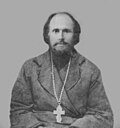 Zosimas PepeninHieromartyr · PriestOct 20
- John of BakuNew Martyr · Priest of BakuOct 20
- BarsabiasVenerable Martyr · Abbot and missionary in PersiaOct 20
- Acca of HexhamSaint · Bishop of HexhamOct 20
- Aderald of TroyesVenerableOct 20
- Aidan of MayoSaint · Bishop of MayoOct 20
- Alexander OrlovHieromartyrOct 20
- BachthesonMartyrOct 20
- BasilSaint · Bishop of TrebizondOct 20